Get Full Government Meeting Transcripts, Videos, & Alerts Forever!
Get email alerts on the State Legislation topic
No spam. Unsubscribe anytime.
Summit County outlines legislative priorities as 2025 Utah session opens
Summary
County staff and council previewed the 2025 legislative session, highlighting priorities such as Kimball Junction transportation, transit funding flexibility, housing reporting changes and a controversial county-classification bill.
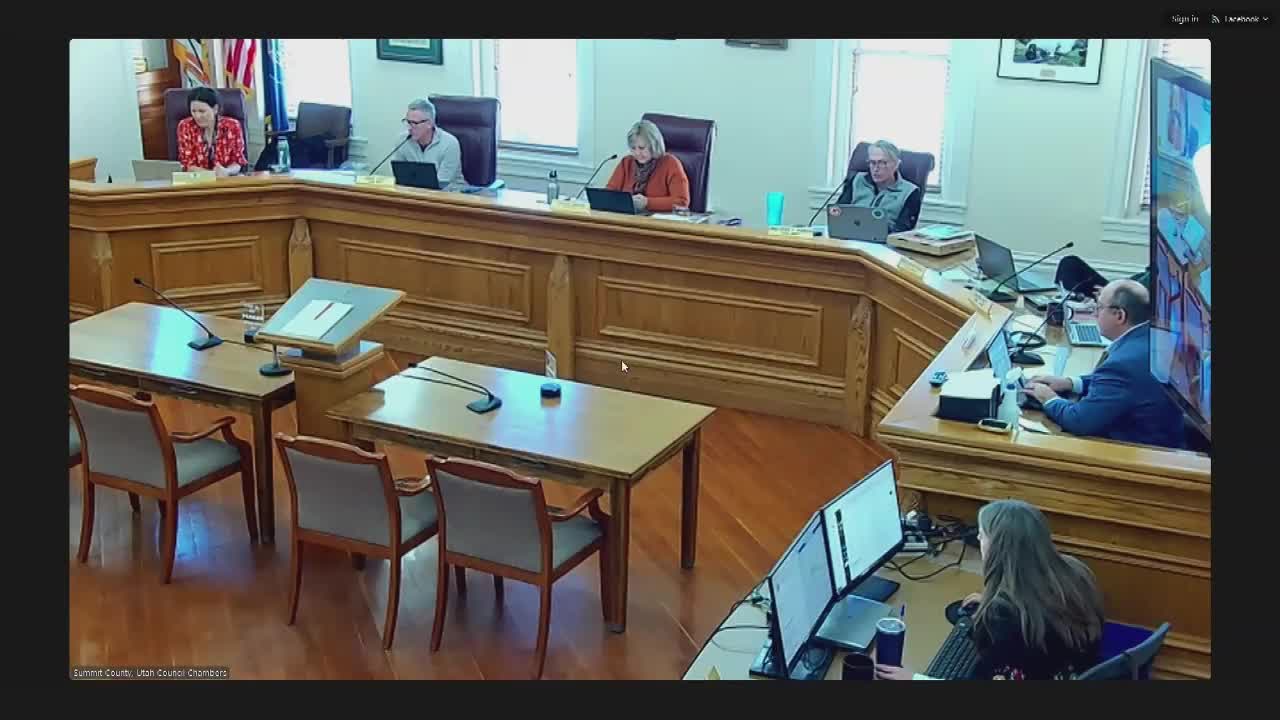
Summit County officials outlined the county’s legislative priorities for the 2025 Utah General Session at the Jan. 20 council meeting, focusing on transportation projects tied to the 2034 Winter Olympics, transit funding flexibility, affordable-housing reporting and concerns about a bill that would change county classification thresholds.
County staff described efforts to advance a Kimball Junction I-80 interchange alternative for inclusion on the statewide transportation improvement plan, and said officials are also supporting potential funding for High Valley Transit and bus-rapid-transit planning along State Route 224. County staff and its contracted lobby team will track related bills and push for funding that explicitly supports mitigation of tourism impacts.
On housing, staff flagged HB 37, a bill proposing a density overlay that would require municipalities — and potentially counties in later reporting years — to enable denser affordable housing development (the bill’s overlay contemplates housing affordable to a percentage of AMI). County staff said the proposal could change reporting requirements for Summit County and that officials are monitoring how AMI would be defined for the overlay (national or metropolitan area metrics will affect local applicability).
A separate, contentious proposal would change population thresholds that define county classes in state code. Staff explained that Summit County is currently designated a third-class county and that the draft bill would move the county to a fourth-class designation by changing the population bracket. Staff said the change could have many ripple effects because hundreds of state statutes reference county class, and that Summit County has for decades secured specific carve-outs tied to its current classification. County analysts were asked to assemble targeted analysis and to work with the Utah Association of Counties to pursue clarifying or hold-harmless language for Summit County.
County staff also listed other priority topics for the session: water conservation tied to the Great Salt Lake, energy policy, education funding, short-term-rental regulation and childcare workforce supports. Staff said it will return to the council each week with updates during the 45-day session and will coordinate testimony and lobbying through a combination of county staff, contracted lobbyists and the Utah Association of Counties.
Ending: Council members asked staff to develop a short list of statutes that would be affected by the county-class change and to continue coordinating with UAC and the bill sponsors to narrow adverse operational impacts.