Get Full Government Meeting Transcripts, Videos, & Alerts Forever!
Get email alerts on the Wildfire Resilience topic
No spam. Unsubscribe anytime.
Cal Fire outlines expanded staffing, year‑round response and aviation practices amid questions on retardant use
Summary
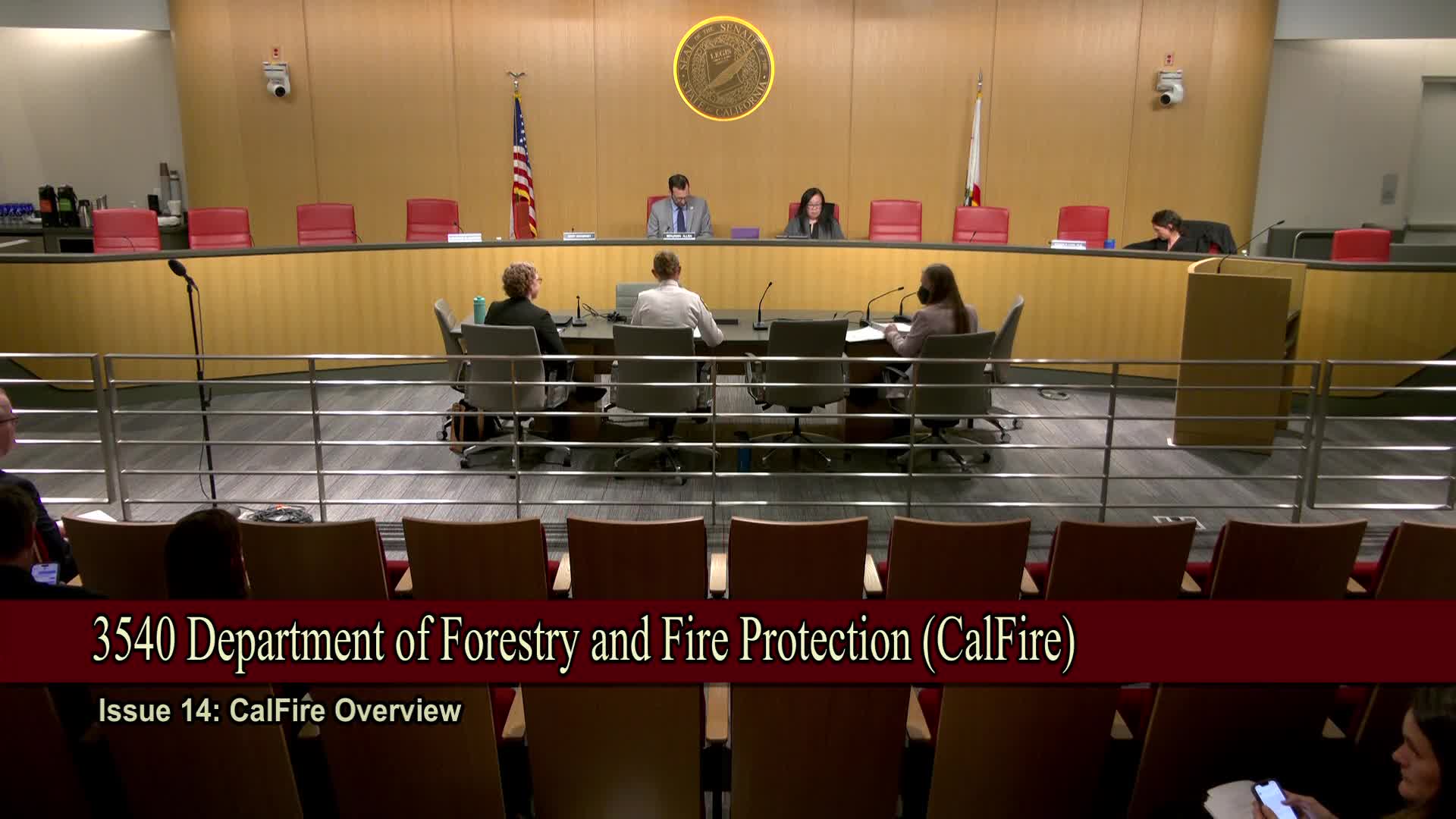
Cal Fire described a five‑year plan to extend staffing and shift to a 66‑hour workweek for firefighters, while chief deputies defended use of aviation assets and said policies limit retardant drops near waterways. Senators pressed the department on environmental impacts and regional equity of prevention funding.
Cal Fire officials told the Senate subcommittee the department is implementing a five‑year plan to move firefighters toward a 66‑hour workweek that will increase peak-season staffing and extend higher staffing nine months per year.
Annalee Berlou, Cal Fire chief deputy director, said the year‑one implementation focused on building personnel and training to support the shift. “A big focus of the 66‑hour work week is health and wellness of our employees,” Berlou said, and the change will reduce time away from home and increase availability during longer fire seasons.
Berlou provided staffing figures the department expects at scale: in the base (winter) months the department said it previously had about 65 engines available and expects to reach roughly 152 staffed engines in those months at full implementation, with 156 staffed during the nine peak months once fully implemented.
Aviation and retardant: Cal Fire officials discussed the tactical differences between retardant and water drops. Chief Steve Robinson noted aircraft retardant is tested and qualified by the U.S. Forest Service (Missoula) and said policy restricts retardant drops within 100 feet of waterways and requires reporting when a drop enters water. Robinson said retardant is applied ahead of a moving fire to slow spread so ground crews can engage; helicopters generally use water for direct suppression.
Senators pressed on environmental impacts. Chair and members requested more detail about coordination with agencies that oversee aquatic and habitat protections and asked whether less‑toxic alternatives to retardant have been evaluated. Cal Fire said it will follow up with technical documentation of testing and approvals and emphasized that the department is reviewing effectiveness of fuel breaks and other prevention projects after recent fires.
Regional prevention funds and equity: Cal Fire and the Office of State Fire Marshal described efforts to make grant allocations more transparent and to expand local capacity (for example, county coordinators and Fire Safe Councils) to increase competitiveness for prevention grants in Southern California. Officials acknowledged historical concentration of grants in northern parts of the state and said a new public dashboard and grants page will show allocations across grant programs.
Why it matters: Cal Fire’s staffing model, aviation policy and fuel‑reduction decisions determine how the state responds to and limits catastrophic fires and how those responses interact with sensitive ecosystems and local communities. Questions about retardant, aviation mix and regional grant distribution will affect both operational choices and post‑fire environmental outcomes.
Outlook: Cal Fire said it will provide more documentation on aviation testing and on fuel‑reduction effectiveness and update its grant allocations dashboard to make regional grants clearer to legislators and the public.