Get Full Government Meeting Transcripts, Videos, & Alerts Forever!
Get email alerts on the Reentry Education Programs topic
No spam. Unsubscribe anytime.
Underground Scholars and Project Rebound programs expand; campuses seek equitable allocations and improved data tracking
Summary
The subcommittee received updates on Underground Scholars (UC) and Project Rebound (CSU), which provide supports for incarcerated and formerly incarcerated students; UC said the Legislature provided $4 million ongoing for Underground Scholars and CSU reported Project Rebound serves more than 1,500 students with $11.2 million in state support.
The subcommittee heard program updates on the Underground Scholars network (UC) and Project Rebound (CSU), two state‑funded efforts that provide recruitment, advising, financial and basic‑needs support to incarcerated, formerly incarcerated and carceral‑system‑impacted students.
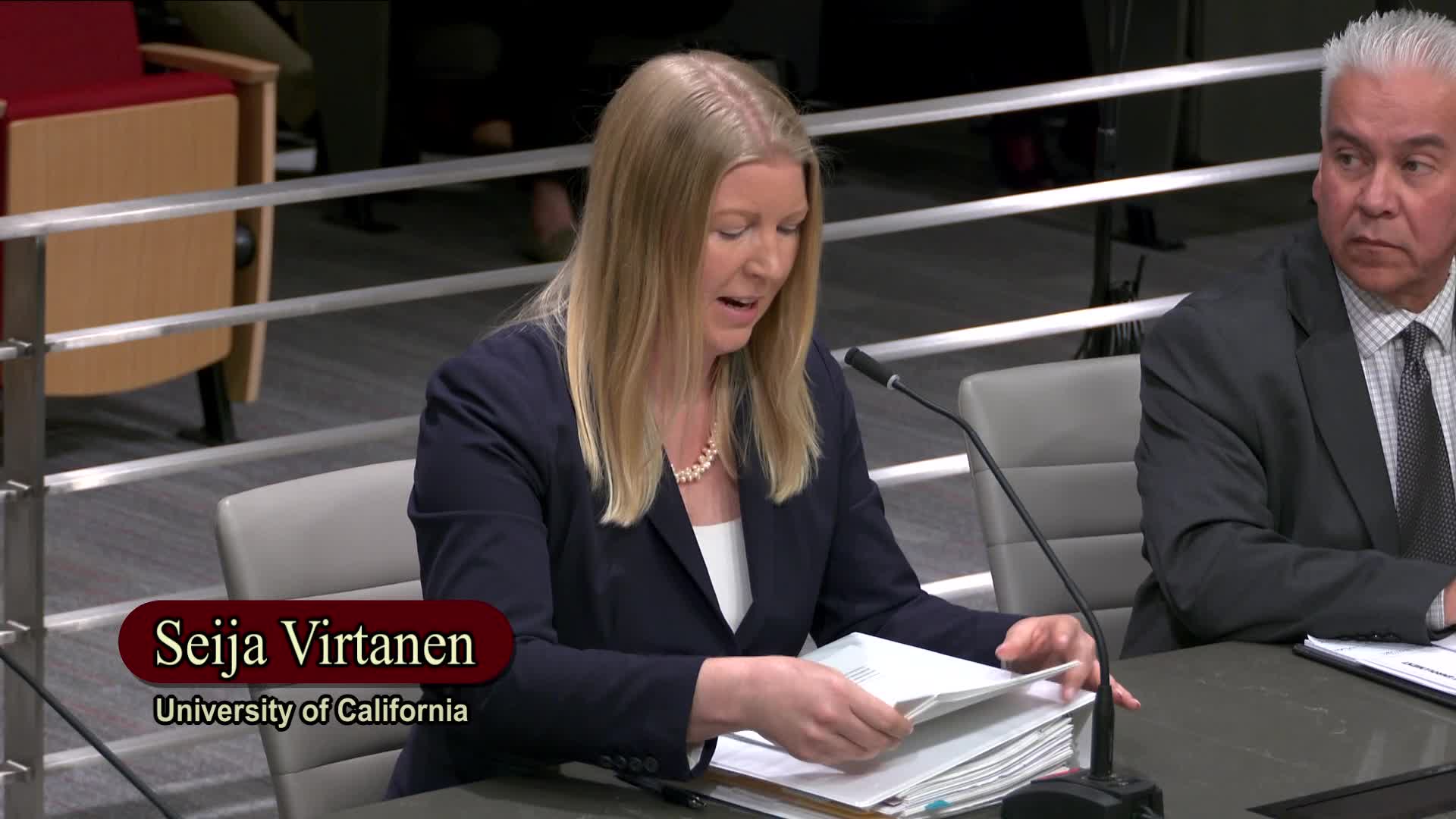
Seiya Vertanin (University of California) explained that the 2022 Budget Act allocated $4,000,000 ongoing for Underground Scholars across the UC campuses that serve undergraduates. UC distributed a base allocation of $250,000 per participating campus with the remainder allocated by undergraduate enrollment share; UC said allocations will be revisited on a three‑year cycle using updated participation and outcome data. Vertanin said UC programs use the funds for a mix of advising, academic and basic‑needs services and reported campuses are actively recruiting students through multiple outreach channels.
Ray Murillo (California State University) reported that Project Rebound has expanded under stable state funding to 20 of 23 CSU campuses, serving 1,522 students in 2023‑24. Murillo said Project Rebound offers outreach, transitional support, mentoring, academic advising and career services; he reported a program recidivism figure of 0.59 percent, compared with California's statewide recidivism rate reported in testimony of about 42 percent. Murillo also flagged a need for stronger centralized data collection to measure outcomes systemwide.
The Legislative Analyst's Office said there were no new budget proposals for the programs and noted a related LAO report showing community college programs inside prisons could draw down Pell grant funding in some implementations. UC representatives acknowledged campus‑level variation in program scale and called for further system coordination.
Public commenters and program leaders told senators they are concerned about equitable allocations and implementation. Multiple Underground Scholars students and program staff from UC Berkeley said Berkeley receives a smaller share relative to the number of students served and requested closer UC Office of the President collaboration, ongoing communication and equity in funding allocations. Commenters credited the programs with improving access and retention for formerly incarcerated students and urged continued and stable budget support.
Ending: Senators asked system staff to provide updated allocation tables, program participation metrics and a plan to improve centralized outcome tracking.