Get Full Government Meeting Transcripts, Videos, & Alerts Forever!
Get email alerts on the Heat And Cooling topic
No spam. Unsubscribe anytime.
CDCR proposes pilot to address extreme indoor heat; LAO urges reporting requirements
Summary
CDCR requested one‑time funds to pilot air‑cooling and insulation alternatives at four prisons, citing indoor temperatures rising above 90°F; the LAO recommended interim and final reports and warned statewide rollout could cost billions.
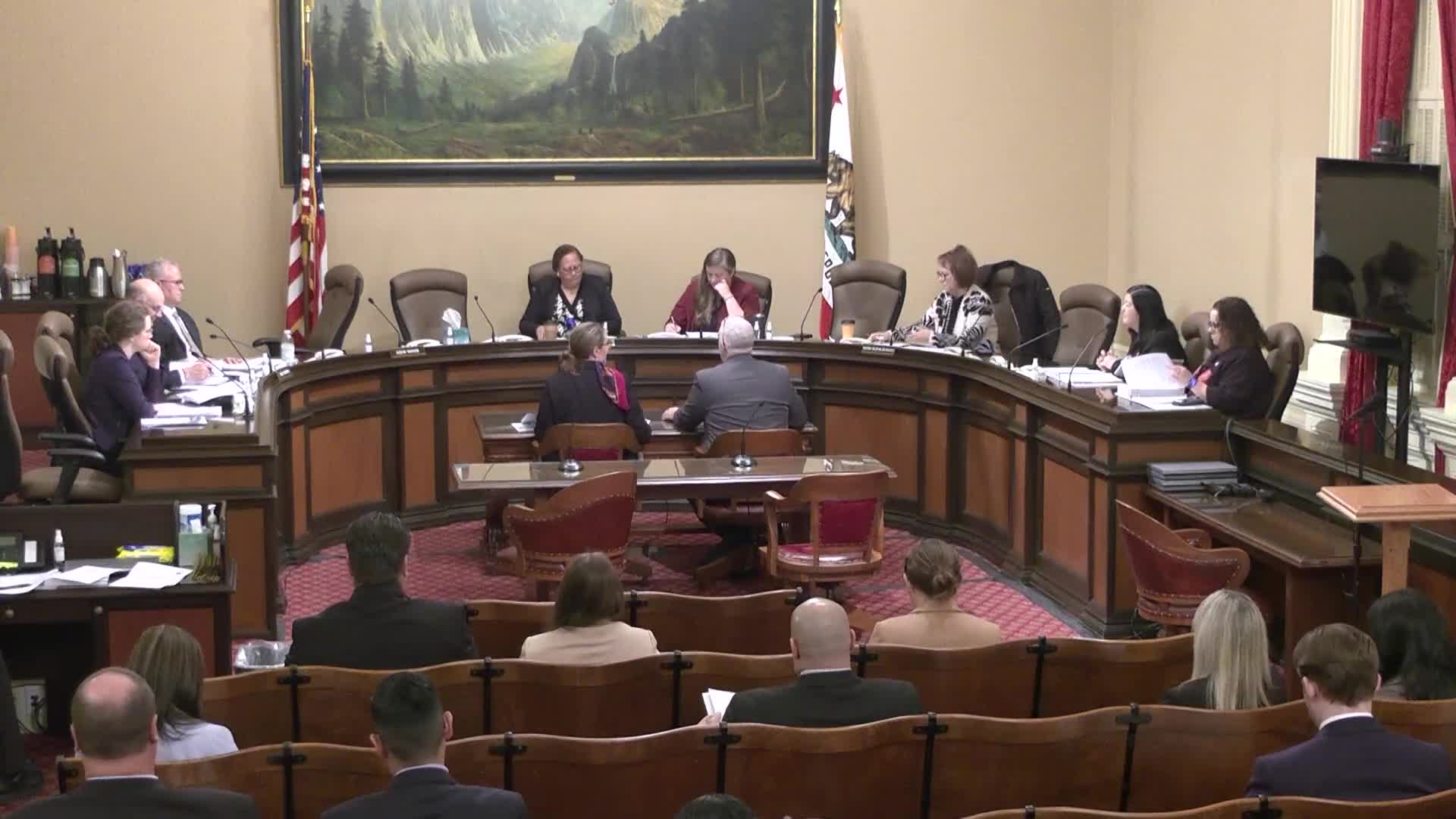
The California Department of Corrections and Rehabilitation asked the Senate subcommittee for $23.6 million in 2025‑26 and $45.4 million in 2026‑27 for a pilot program to evaluate air‑cooling alternatives at four prisons and develop a statewide strategy.
Dave Lewis, director of facilities planning and construction management, told the committee that CDCR’s housing‑unit summer indoor standard is 89°F and described widespread reliance on evaporative cooling, which “becomes less effective when the temperatures exceed 100 degrees outside” and increases humidity. Lewis said about 52 percent of housing units use evaporative cooling, 24 percent use some mechanical cooling, 19 percent use no cooling and roughly 5 percent rely on fans only.
“We have struggled to even meet that temperature often inside of our housing units, and you will see temperatures that far exceed that temperature, well into the nineties, and even on the worst days, over a hundred degrees inside,” Lewis said.
LAO analysts supported the goal of reducing heat exposure but cautioned the pilot as proposed does not include reporting language. The LAO recommended two reports: an interim report due 01/10/2026 describing near‑term steps, and a final assessment and statewide scaling plan due 01/10/2031. LAO said a full statewide retrofit could cost in the low billions and will present project‑management and electrical‑capacity challenges; the office recommended the pilot define evaluation metrics (for example, targeted temperature reductions, wet‑bulb measures and electrical load) and clarify how success will be measured.
CDCR said it will install automatic temperature monitoring for pilot sites rather than rely on hourly hand recordings and that the pilot will gather indoor/outdoor temperature and humidity (wet‑bulb) and electrical load data to inform engineering decisions.
Committee members asked about interim protections for heat‑sensitive incarcerated people. Lewis described CDCR’s heat plan that increases mitigation steps as temperatures rise (showers, ice water, relocation to mechanically cooled program spaces) and acknowledged the department expects heat to become the subject of litigation in some cases.
Ending: The subcommittee signaled interest in the pilot but directed CDCR to work with legislative staff on evaluation metrics and reporting timelines for the May revision and beyond.