Get Full Government Meeting Transcripts, Videos, & Alerts Forever!
Get email alerts on the Humanitarian Funding topic
No spam. Unsubscribe anytime.
UN allocates $110 million from CERF as global humanitarian funding falls to record lows
Summary
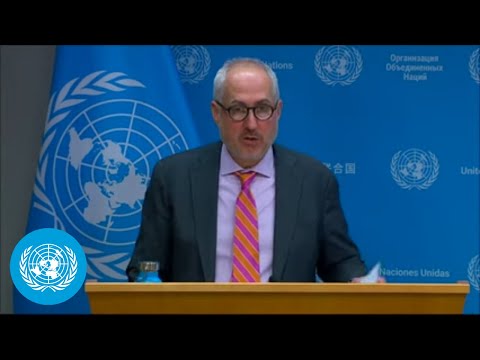
A United Nations spokesperson announced a $110 million Central Emergency Response Fund (CERF) allocation Tuesday to support life‑saving aid in 10 underfunded crises, and warned that shrinking global funding is forcing painful program reprioritization across Afghanistan, Gaza, Ukraine, the Democratic Republic of the Congo and elsewhere.
A United Nations spokesperson announced Tuesday that $110,000,000 has been allocated from the Central Emergency Response Fund to boost life‑saving assistance in 10 of the world’s most underfunded crises across Africa, Asia and Latin America.
The funding targets urgent needs in Afghanistan, the Central African Republic, Chad, Honduras, Mauritania, Niger, Somalia, Sudan, Venezuela and Zambia, the spokesperson said. The UN also said the Afghan Humanitarian Fund will provide an additional $30,000,000 to support immediate priorities in Afghanistan.
Why it matters: UN humanitarian officials warned that global needs are rising while donor funding is dropping, forcing agencies to reprioritize programs and reduce services in some places. “There is enough money in this world,” the spokesperson said. “What we need is solidarity being demonstrated by increasing humanitarian assistance.”
The briefing highlighted Afghanistan as an acute example of the funding squeeze. The UN said more than half of Afghanistan’s population — about 23,000,000 people — now require humanitarian assistance, one of the highest totals globally and second only to Sudan. During the first quarter of the year nearly 15,000,000 people were expected to experience high levels of acute food insecurity; nearly 3,500,000 children under age 5 and more than 1,000,000 pregnant and breastfeeding women were expected to become acutely malnourished, the spokesperson said. Explosive hazards remain a deadly threat, with an estimated 55 people killed or injured every month, most of them children.
The spokesperson said funding cuts have already constrained the humanitarian community’s ability to respond: in the past month more than 200 health facilities closed in Afghanistan, depriving an estimated 1,800,000 people of essential health services. To respond, UN agencies are “urgently reprioritizing our programs to ensure that we can continue reaching the communities and areas most in need,” the spokesperson said.
The briefing also recounted recent urgent needs in other theaters. In Ukraine, UN colleagues reported a strike near the city of Kryvyi Rih in eastern Ukraine that killed and injured civilians and damaged a dozen residential buildings, two kindergartens and other facilities; an attack in the Odesa region reportedly destroyed an electricity substation and left the nearby town of Pivden — home to about 40,000 residents including roughly 5,000 internally displaced people — without power, heating and water. The UN said it and partner agencies provided first aid, hot meals, mental‑health and psychosocial support and shelter materials to affected families.
In the Democratic Republic of the Congo, the UN said renewed violence in Ituri province has killed more than 200 civilians since January and forced nearly 100,000 people to flee, prompting school closures. In North Kivu authorities reported a nearly 40 percent spike in cholera cases week‑on‑week; UN partners said limited access to clean water, sanitation and health care risks further spread. UN agencies reported distributing water, sanitation and hygiene kits and essential household items to more than 88,000 people in North Kivu territory, and WFP distributed food to roughly 17,000 people around Goma and nearly 15,000 around Sake.
On Gaza and the West Bank the spokesperson warned that the situation could deteriorate further unless humanitarian access resumes. Shelter partners reported that tens of thousands of tents have been unable to enter Gaza while hundreds of thousands of people need shelter. Food prices are fluctuating sharply; the spokesperson cited an example in southern Gaza where a 25‑kilogram bag of flour ranged from the equivalent of $11 to $27. Since Jan. 19 UN health partners have supported services reaching about 1,300,000 people in Gaza, the spokesperson added, but future response depends on resumed, unimpeded entry and distribution of aid.
The spokesperson also summarized other items raised during the briefing: a call echoed for the immediate and unconditional release of detainees in Yemen after a Security Council briefing by Hans Grundberg; UNHCR reporting that Mexico has integrated 50,000 refugees and asylum seekers into communities through local reintegration programs since 2016; and UN concern about cuts in US foreign assistance and the resulting program decisions by UN agencies and partners, including reductions that will affect Rohingya refugee food assistance in Cox’s Bazar, Bangladesh.
Tom Fletcher, the UN Emergency Relief Coordinator and Under‑Secretary‑General for Humanitarian Affairs, was quoted by the spokesperson as warning that battered countries “don’t stop needing help” simply because funds shrink; Fletcher has said that figures on needs are heartbreaking and that deeper cuts will force further program reductions.
The UN spokesperson said agencies continue to monitor impacts of donor decisions, allocate limited CERF resources where possible and appeal for increased funding. “Aid funding cuts will cost both lives and livelihood and undermine development gains,” the spokesperson said.
Less critical details: the spokesperson noted that this year’s CERF allocation level follows a period in which allocations have varied, citing a $250,000,000 allocation in 2023 as the largest ever. The spokesperson also described ongoing coordination efforts around humanitarian crossings and reconstruction planning in Gaza and ongoing contacts with Israeli counterparts regarding access.
The UN said it will continue reassessing program plans and provide further details as agencies determine where cuts will be most severe and how CERF and other limited funds will be applied.