Get Full Government Meeting Transcripts, Videos, & Alerts Forever!
Get email alerts on the Gender Equality topic
No spam. Unsubscribe anytime.
UN Women launches Beijing+30 review, warns coordinated backlash threatens gains
Summary
UN Women on Friday released its "Women’s Rights in Review: 30 Years After Beijing," saying global gains on gender equality are real but fragile, and warning that a growing, organized backlash and recent crises risk reversing progress. The Commission on the Status of Women is expected to adopt a political declaration by consensus at its opening.
UN Women on Friday launched a global stock-take titled “Women’s Rights in Review: 30 Years After Beijing,” and warned that while many indicators of gender equality have improved, progress is slow, uneven and threatened by an organized backlash and recent global crises.
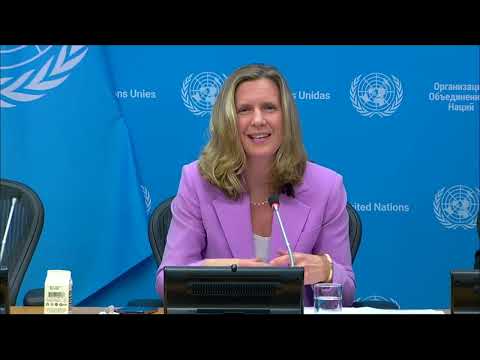
Sarah Hendricks, director of the Policy, Programme and Intergovernmental Division at UN Women, said the report and this year’s Commission on the Status of Women (CSW) mark “a pivotal year, marking 30 years since the adoption of the Beijing Declaration and Platform for Action.” She said governments, civil society and activists will use the CSW to review implementation and press for increased investment in gender equality.
The report, compiled by UN Women from member-state submissions and other data, finds mixed results. Papa Sekh, chief of the Research and Data Section at UN Women, said “the proportion of women in parliament has doubled,” while noting that “still three quarters of parliamentarians are men.” Sekh also highlighted stalled progress on maternal mortality since 2015 and persistent gaps in education: the briefing said roughly 60,000,000 girls remain out of school and about one in five girls globally are married as children.
UN Women highlighted recent shocks that have slowed or reversed progress, including the COVID-19 pandemic, rising conflict and constrained public budgets. The briefing said the number of women living within roughly 50 kilometres of conflict has more than doubled since 2010 and that conflict-related sexual violence rose sharply in 2022. UN Women also presented a projection discussed at the briefing that by 2050 millions more women and girls could be pushed into food insecurity (the speakers’ figure was given as roughly 256 million).
Hendricks described a growing, “well-funded and coordinated” backlash against women’s rights that 24% of member states reported is obstructing implementation of the Beijing platform. “Where they cannot roll back legal or policy gains altogether, they seek to either block or slow down their implementation,” she said, adding that movements for women’s rights remain strong and are prepared to press forward.
As a response, UN Women outlined a six-point, forward-looking Beijing+30 action agenda it calls “catalytic”: a digital revolution framed for women and girls, freedom from poverty, ending violence against women, full and equal decision-making power, peace and security, and climate justice. Hendricks said the agency hopes 2025 will be remembered as the year governments “refused to back down” on these priorities.
The political declaration for the CSW — a government-level statement on the status of gender equality and actions needed — is expected to be put to governments at the CSW opening segment and is anticipated to be adopted by consensus during that session, Hendricks said. She added that negotiations had been under way for about two weeks prior to the meeting and were continuing.
Reporters asked about regional variation, technology and sports policy. Sekh and Hendricks said the briefing’s global averages mask regional disparities; Sekh noted statistics such as the doubling of women’s parliamentary representation (from about 11% to about 27%) but cautioned that “progress has been too slow, too fragile, too uneven.” On technology, UN Women emphasized both the opportunity of closing the digital gender gap and the risk of technology-facilitated violence against women, calling for updated laws and law enforcement capacity. On sports, UN Women said it supports the International Olympic Committee’s guidance for transgender athlete participation and reiterated that gender equality entails non-discrimination in line with the U.N. Charter.
The briefing concluded with UN Women reiterating the urgency of sustained investment and political will to protect and accelerate gains for women and girls globally. Hendricks closed by urging member states and partners to take concrete steps guided by the Beijing+30 action agenda and by noting CSW events around International Women’s Day.