Get Full Government Meeting Transcripts, Videos, & Alerts Forever!
Get email alerts on the Tax Increment Financing topic
No spam. Unsubscribe anytime.
House approves limited tax-increment tool for major sporting venues; local governments keep control
Summary
The Utah House passed a bill allowing local governments to create limited tax-increment financing zones to fund infrastructure around eligible major sporting event venues, while excluding state sales tax and preserving local approval authority. The measure passed 45-27 and will be returned to the Senate.
The Utah House on March 5 approved a bill that allows counties and municipalities to establish limited tax-increment financing zones to fund transportation and other public improvements near qualifying major sporting event venues. The bill passed the House 45-27 and will be sent back to the Senate for further consideration.
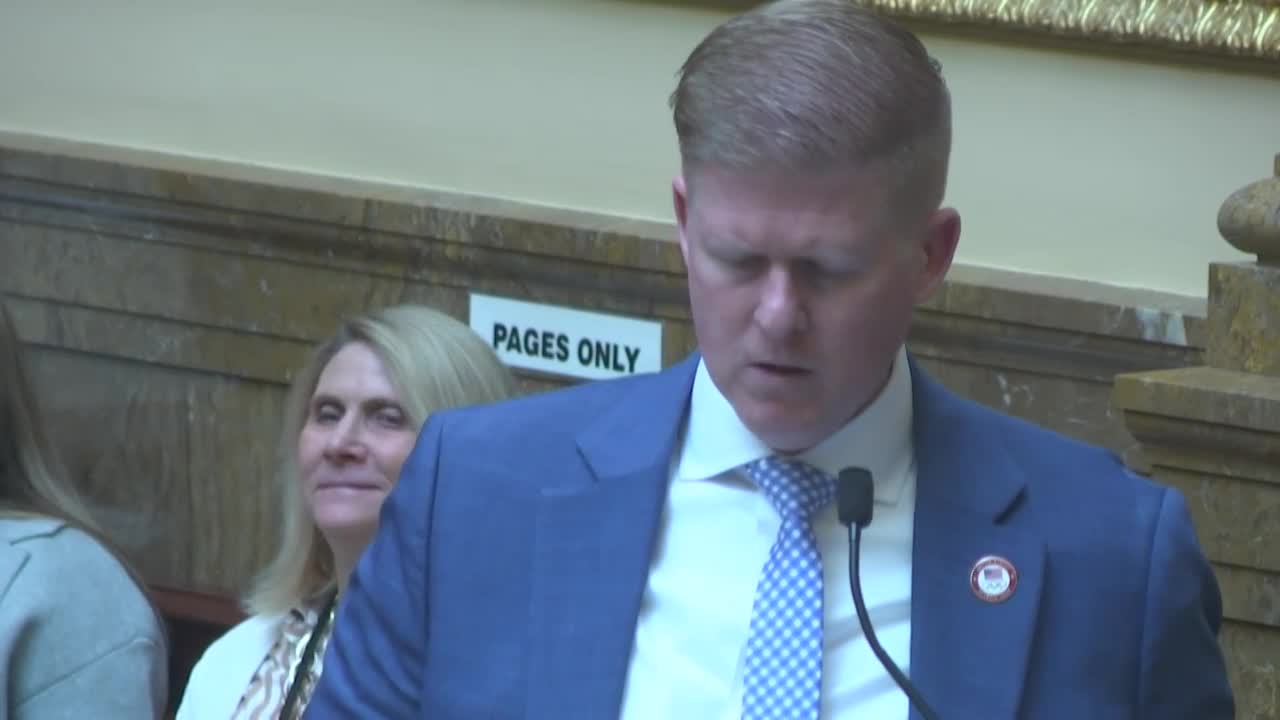
Representative Hawkins, the floor sponsor, said the measure is limited in scope and emphasizes local control. “Cities and counties are in complete control of whether these zones are created,” Hawkins said. He described the program as an optional, temporary funding tool to help pay for infrastructure investments around venues expected to generate major public and private capital spending.
Under the bill as explained on the House floor, local governments may capture up to 75% of property tax increment within an approved zone; local tax increment may also be captured. The bill explicitly excludes state sales tax from capture. It also creates a short-term review board appointed by GoYo to evaluate local applications and then disbands the board after the decision. Hawkins said the measure does not grant land-use or permitting authority to the state.
Supporters said the bill responds to anticipated infrastructure pressures tied to large international sporting events and allows localities to fund targeted improvements without state preemption. “These improvements are needed … moving into 2034,” Hawkins said, citing congestion on State Road 224 and other needs around Park City and Kimball Junction.
Opponents warned of the long-term fiscal trade-offs of tax-increment financing. Representative Koehler said tax-increment financing redirects revenue that otherwise would flow to other taxing entities. “When that happens, part of that 75% is being taken away from areas where it went,” Koehler said, urging caution on prolonged use of increment capture.
Representative Hawkins also noted one discrete provision that applies only to Summit County: the bill permits Summit County alone to impose a limited resort-community tax in unincorporated areas to fund transportation and transit improvements on SR 224.
The House adopted a fifth substitute version of the bill that narrowed eligibility for financing to venues tied to Olympic-level events, added a 14-day notice requirement to affected cities and counties before final approval, and clarified municipal tax-use boundaries. The bill passed and will go to the Senate for further action.