Get Full Government Meeting Transcripts, Videos, & Alerts Forever!
Get email alerts on the Farmland Preservation topic
No spam. Unsubscribe anytime.
Lee County adopts conservation-easement policy, creates farmland preservation fund
Summary
The Lee County Board of Commissioners approved a county conservation-easement policy and an agricultural development/farmland preservation ordinance and agreed to place rollback tax revenue into a fund to aid landowners pursuing easements.
The Lee County Board of Commissioners voted March 3 to approve a conservation-easement policy and to adopt the Lee County Agricultural Development and Farmland Preservation Ordinance, establishing a process and potential funding to help landowners place farmland into permanent easement.
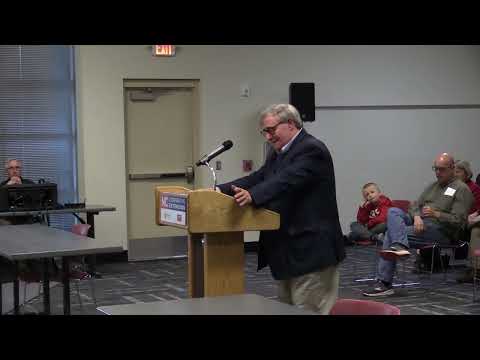
Supporters said the policy and ordinance will help preserve agricultural land, open space and local character as development pressure grows. "These proposals will help preserve productive farmland, significant natural habitat and open space," said Julian Philpott, a former North Carolina Farm Bureau official, during the meeting's public-comment period. Extension staff and several local agriculture leaders also urged adoption.
The policy sets a procedure for landowners to request county assistance and creates an agricultural development and farmland preservation program fund that would be seeded by rollback taxes collected when land leaves present-use valuation. County staff and presenters described the fund as flexible: the board would decide annually whether to allocate some, all or none of the eligible rollback tax revenue to the program. Dr. Bill Stone, Lee County Extension Director, said a typical 100-acre easement project might require county investment equal to a small share of the project — "about $330 an acre" in a hypothetical example he presented — because most of the purchase price is covered by grants and landowner donation of value.
Public commenters included farmers, members of the Lee County Farm Bureau and representatives of the Sanford Area Growth Alliance, who emphasized both farmland protection and economic-development benefits. Jimmy Randolph, CEO of the Sanford Area Growth Alliance, said the county's ability to leverage state and federal grants would improve if it demonstrated local financial support.
Commissioners discussed scope and mechanics, including how rollback taxes are assessed. Staff clarified that rollback taxes are assessed on land removed from present-use agricultural classification and that the seller pays the rollback for the previous three years plus the current year, plus interest, as required by the present-use program. Commissioners also asked whether demand for county support is predictable; staff said interest would only be known once the program is operating and is likely to grow over time.
After discussion the board voted to approve the conservation-easement policy and later approved the ordinance to establish voluntary and enhanced voluntary agricultural districts as part of the county's farmland-preservation toolkit. The board retained annual discretion to fund the program and to evaluate each application on a case-by-case basis. No dollar-amount appropriation for the fund was mandated in the motions recorded at the meeting.
The county also discussed program next steps, including initial vetting of projects by the Lee County Agricultural Advisory Board and the potential to use county funding to increase the competitiveness of outside grant applications. Supporters said the program would pay for soft costs landowners often must cover — appraisals, surveys, attorney fees and similar expenses — which can otherwise deter easement transactions.
Commissioners and staff said the new policy is one tool among many — alongside land-use planning and present-use valuation — to preserve farmland as Lee County grows.