Get Full Government Meeting Transcripts, Videos, & Alerts Forever!
Get email alerts on the Rules Of Procedure topic
No spam. Unsubscribe anytime.
Howard County Board of Appeals advances overhaul of rules; Office of Law outlines legal‑sufficiency role
Summary
The Howard County Board of Appeals on Wednesday continued a year‑long effort to modernize its rules of practice and procedure and discussed Office of Law legal‑sufficiency comments, a plan to identify conflicts with the county code, and a question about whether board members should be subject to the county—s employee manual.
The Howard County Board of Appeals on Wednesday continued a year‑long, board‑led effort to comprehensively update its rules of practice and procedure, hearing Office of Law guidance on how to show which proposed provisions are legally sufficient and which will require changes to the county code.
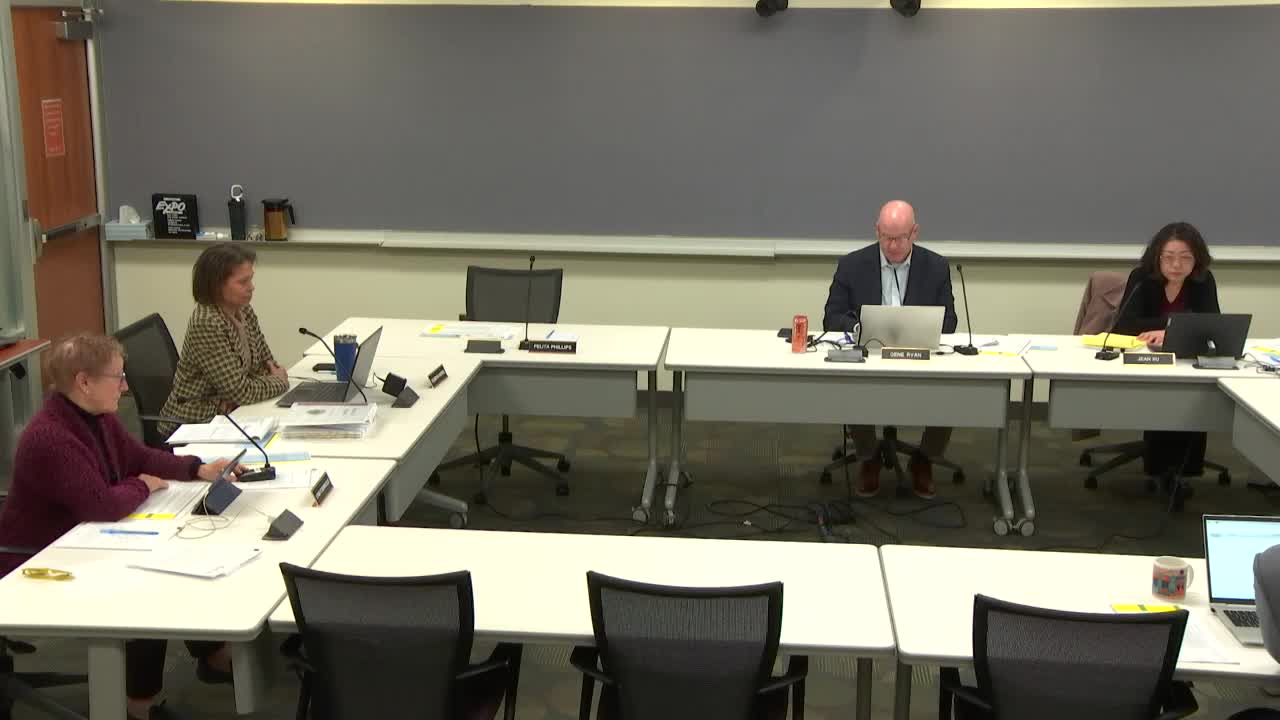
The work session, convened with most members in person and with one member joining later, reviewed the Office of Law—s written comments on versions of the draft rules and sketched a path for board members to cross‑check the proposed rules against existing law. Chair Ryan said the review effort began a year ago and added: "Since then, we've held 14 public work sessions, 2 public engagement sessions, totaling over 300 hours of work to reach this point." The board set a goal of having a final package to County Council by May 15 so the council can consider the changes after its budget work is finished.
Why it matters: The Board of Appeals has not updated its rules comprehensively in more than 30 years, and the current modernization effort is intended to clarify procedures for petitioners, hearing process, and the board's relationship to other county decisionmakers. Several board members and county attorneys warned that some proposed rule text currently conflicts with existing provisions of the Howard County Charter and county code and therefore either must be revised or accompanied by specific code amendments when the package goes to council.
Office of Law role and definition of legal sufficiency
The county—s Office of Law told the board it will perform a legal‑sufficiency review when asked and that such reviews can take many forms depending on complexity. "The charter requires our office to sign off on form and legal sufficiency," Office of Law counsel Gary Cook told the board. Cook summarized the test the office applies: "It really asks 2 questions. 1, does the person acting have authority to take the action? And 2, is the action taken, whether it's physical or in writing, clear enough so that people understand the action taken, and the basis for it. That's all legal sufficiency is."
Cook and other attorneys explained the practical implications: the Office of Law can flag provisions that conflict with the charter or code (which would require legislative changes by County Council) and can also identify provisions that are simply unclear and need rewording before the board adopts final rules. The office said it can provide line‑by‑line memos, redlines, or shorter email guidance depending on the issue's complexity and the board's needs.
Process for resolving conflicts and next steps
Board members agreed on a stepwise process. Staff produced a crosswalk (a spreadsheet) that maps Office of Law comments onto the most recent draft so the board can see where each comment applies across versions. The chair described a plan for each board member to take responsibility for reviewing specified sections of the Howard County Charter and county code, entering any identified incompatibilities into a live shared spreadsheet, and then returning to a public work session to discuss and decide how to proceed.
Board staff member Nick Reinhart explained the spreadsheet concept and said the document will be used only to collect findings (not for deliberation outside public meetings). The chair said the live spreadsheet is intended to speed up the review process and to make it easier for the board to present a concise package to County Council that flags (a) provisions that are legally sufficient as drafted, (b) provisions that are unclear and need rewording, and (c) provisions that conflict with higher‑ranking law and therefore would require code or charter amendments.
Employee manual and payroll/W‑2 question
During the discussion members raised a long, specific question about the proposed rule language that would make the board subject to the county—s employee manual. Several board members said they had received W‑2 tax forms and, relying on Human Resources input, had been told payroll uses the county payroll system. Office of Law counsel said the terms "employee" and related labels can have different meanings in different legal contexts (tax reporting, personnel system, and statute) and that the board could be an "employee" for some purposes but not for others.
Cook advised the board that applying the entire employee manual to members could create practical problems because the manual is written for county employees who are subject to the personnel officer and personnel procedures the board is not. He recommended the board identify specific provisions it intended to apply (or not) and, where necessary, bring Human Resources and Finance into the conversation so the Office of Law could reconsider a sufficiency opinion in light of that additional evidence.
Hearing examiner and other cross‑code inconsistencies
Board members also discussed longer‑standing inconsistencies between the Board of Appeals— proposed rules and other parts of county law, including rules that govern the hearing examiner or that use different definitions for the "hearing authority" in different sections of the code. Board members said that in some cases the same term is defined differently across land‑use regulations, the hearing examiner—s rules, and the Board—s rules, producing confusion in practice.
Several board members proposed documenting those incompatibilities and recommending to County Council that related code sections be aligned to reduce future confusion; Office of Law counsel noted that Council would be the ultimate policy maker and could accept, modify or reject those recommendations.
Timeline, public access, and confidentiality
The board reiterated its May 15 target for finishing the package that will go to County Council. Members asked that the working documents be dated clearly; staff agreed to add draft dates to the working copies so reviewers refer to the same version. Members also discussed which Office of Law materials are privileged: counsel said the Office of Law—s internal sufficiency memo is privileged legal advice and not typically posted online, but the board may summarize the legal advice in public sessions without revealing privileged contents. Staff confirmed the most recent public draft (the January 17 draft referenced at the meeting) is available online and that the spreadsheet/crosswalk will be used internally to collect board findings before the next public work session.
Votes and formal actions
At the start of the meeting the board approved the minutes of the January 30, 2025 meeting. Later the board voted to close the work session for a private consultation with counsel under the Maryland Open Meetings Act to discuss pending litigation (case C‑13‑cv‑25‑000106, Lubnicom v. Howard County Board of Appeals). Both motions passed on roll call with all members present voting in favor.
What remains: The board will assign code sections to members for the compatibility review, refine the spreadsheet process, and schedule follow‑up public work sessions to decide on individual revisions. Office of Law will continue to provide sufficiency feedback on revised language and flag items that require code or charter amendments before the board can achieve full legal sufficiency. The board emphasized it wants a concise, documented package for County Council showing where legal changes are required and why.