Get Full Government Meeting Transcripts, Videos, & Alerts Forever!
Get email alerts on the Disability Savings Calable topic
No spam. Unsubscribe anytime.
CalABLE seeks staff and budgeting clarity as federal eligibility expansion approaches
Summary
CalABLE briefed Senate Budget Subcommittee No. 4 on a BCP request for an additional AGPA to reach newly eligible adults after federal ABLE eligibility expansion; members probed population estimates, prior cost estimates, and whether ongoing general fund support is appropriate while the program works toward self-sufficiency.
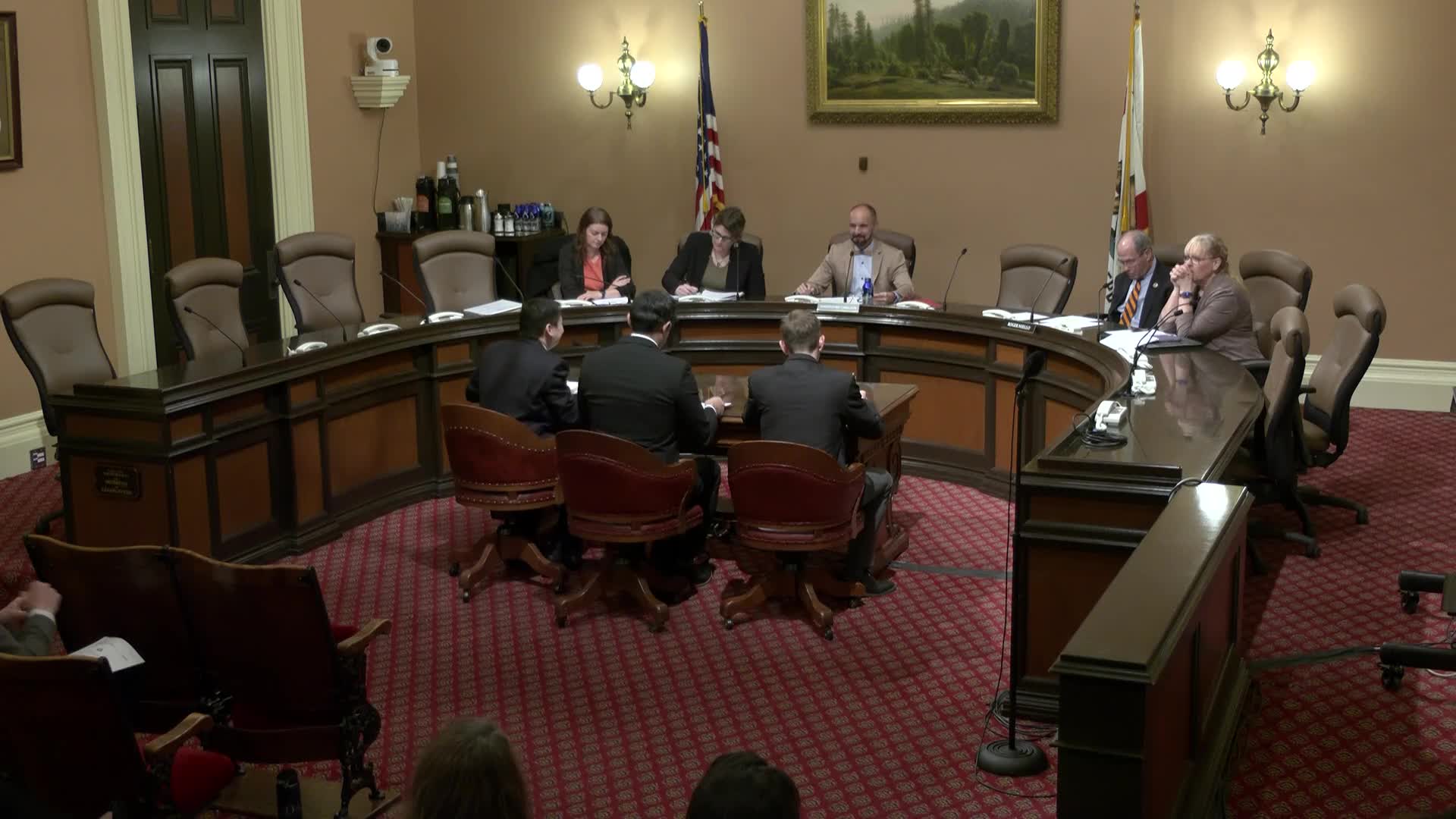
Thomas Martin, executive director of CalABLE, told the Senate Budget and Fiscal Review Committee's Subcommittee No. 4 on May 20 that a federal change expanding ABLE account eligibility will substantially increase the pool of Californians who can open CalABLE accounts and that the department is seeking an additional analyst (an AGPA position) to conduct outreach to newly eligible groups.
Martin said the federal change allows people whose disabilities begin before age 46, rather than age 26, to open an ABLE account; he told the subcommittee this will create an approximately 50% increase in the number of eligible Californians, or "somewhere around 700,000 or so" additional people.
Why it matters: CalABLE accounts let people with qualifying disabilities save money without losing eligibility for Supplemental Security Income (SSI). Martin said, "CalABLE is exempt from that $2,000 limit. So you can save up to $100,000 in a CalABLE account and still get SSI benefits coming in." Subcommittee members framed the BCP as a near-term outreach and service-delivery question and a longer-term budget-policy question about whether ongoing operations should be supported from the general fund.
Program, request and rationale Martin described the department's request as focused on one ongoing personnel slot (an AGPA) to lead outreach to adults who acquired disabilities later in life (for example, people with multiple sclerosis, survivors of serious accidents, and disabled veterans) and the organizations that serve them. Martin said the existing CalABLE program has mainly served people with lifelong or childhood-onset disabilities and must expand its partnerships and communications to reach later-onset populations.
Population estimates and prior budget numbers Committee members pressed for the basis of the 50% projection; Martin attributed the estimate to projections from the National Disability Institute. When asked whether prior legislative materials reported a roughly $200,000 cost to implement the federal expansion, Martin said he was "not sure" what materials were provided to the committees at that time and would have to review the record.
Funding structure and pace to self-sufficiency Subcommittee members also questioned CalABLE's funding model. Martin said CalABLE received startup loans and operates with a mix of loan repayments and general fund appropriations for day-to-day operations. He said the department's positions have been funded from the general fund and that the program leadership expects that, as accounts grow and the program generates more revenue, CalABLE will be considered for a shift away from permanent general fund support toward a self-sustaining model. He described that shift as an intent, not a statutory requirement.
The committee asked about timing and guardrails for such a transition. Martin said an evaluation of the program's financial position would take place before any loan repayment deadlines and when the department can present data on revenues and sustainability; he did not supply a definitive date for when the program would be converted to self-supporting status.
Committee response and next steps Department of Finance and the Legislative Analyst's Office offered no substantive objections on the record, and a committee member said she supports the program but has difficulty approving augmentations given current budget constraints. The subcommittee chair asked that item 5 (the CalABLE BCP) be held open for further review, noting broader questions about the department's plan to move toward self-sufficiency and the implications of a permanent general fund commitment.
Discussion vs. decision The hearing record shows this was a presentation and questioning period; no formal vote on CalABLE's BCP occurred on the transcript. The subcommittee left item 5 open pending additional information and follow-up.
Ending note CalABLE's request centers on connecting newly eligible adults to accounts and services after a federal eligibility expansion. The subcommittee's further review will focus on demand projections, prior legislative cost estimates, and whether and how the program should transition from general fund support to a self-funded model as participation grows.