Get Full Government Meeting Transcripts, Videos, & Alerts Forever!
Get email alerts on the Oversight Governance topic
No spam. Unsubscribe anytime.
Committee lays over House File 1 after extended debate over moving an OIG to the legislative branch
Summary
House File 1, which would create or rehouse an inspector general function in the legislative branch, was laid over after extended committee debate over separation of powers, collective bargaining, data-practice protections and enforcement authority.
The State Government Finance and Policy Committee on March 6 laid over House File 1 after prolonged discussion and testimony about whether an inspector general (OIG) function should be housed in the legislative branch and about the bill's scope, data practices, and enforcement mechanisms.
Representative Anderson, the bill's author, said the proposal has been revised through negotiations with Senate counterparts and staff, and that many provisions have been clarified since earlier drafts. She described the bill as bipartisan and said deputies who would staff the office are expected to remain unclassified while other staff would remain in the classified service.
"This is a bipartisan bill, this needs to be bipartisan and where the goal is to have a, you 134 votes up on the board by the time we're done," Representative Anderson said, adding that the House and Senate staffs had aligned on much of the language but that a few issues remained.
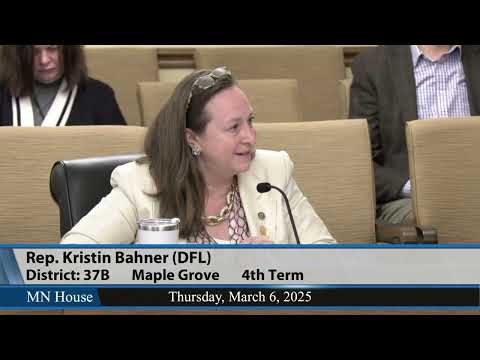
Several members and witnesses raised constitutional and practical concerns. Representative Howard asked whether other states place an OIG in the legislative branch; Anderson said she knew of none and said the legislative model is intended to provide independence from an executive branch that might influence investigations. Representative Howard referenced the federal model, where OIGs exist within the executive branch but maintain statutory independence and have reported large financial recoveries; Anderson and other backers argued Minnesota's model should emulate the legislative-auditor independence.
Labor representatives opposed moving positions to the legislative branch because, under Minnesota Statute 179A, employees in the legislative branch are not covered by the same collective-bargaining provisions. Devin Bruce of MAPE said moving functions to the legislative branch would effectively strip employees of collective-bargaining rights and reiterated concerns about data-practice exposure and the need for stronger prosecutorial capacity in the attorney general's office to act on fraud findings.
Representative Leep Cleburne and others raised data-practices and victim-protection concerns, noting that certain data (for example involving domestic violence victims) could be exposed if data-protection exceptions are not carefully written. Cleburne also noted that housing an OIG in the legislative branch could limit the office's ability to compel action and recommended growing the attorney general's capacity for criminal investigation where necessary.
Committee members agreed the bill would not move out of the committee that day and asked the author to continue negotiations; Representative Anderson said she was meeting with stakeholders later that day to resolve remaining issues.
Why it matters: The bill would alter the structure of oversight and accountability for state programs, with potential implications for employee collective-bargaining rights, data privacy, enforcement capacity, and interbranch separation of powers.