Get Full Government Meeting Transcripts, Videos, & Alerts Forever!
Get email alerts on the Taxes Public Safety topic
No spam. Unsubscribe anytime.
Kingsburg council opens discussion on extending 1% Measure E public safety sales tax
Summary
City staff introduced options to renew Measure E, the 1% public safety sales tax enacted in 2018, and councilmembers signaled support for pursuing a June 2, 2026, election while debating a longer sunset period. Staff will obtain legal and outreach bids and return with timeline details.
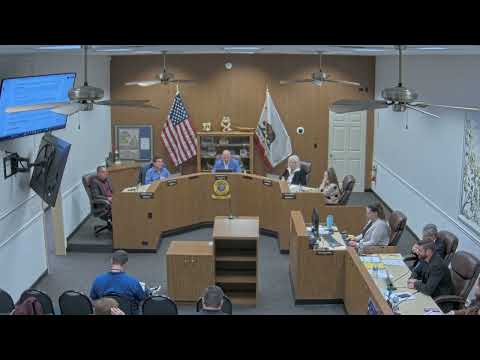
City Manager Alex Henderson told the Kingsburg City Council on March 5 that staff is beginning work to explore renewing Measure E, the 1% public safety sales tax voters approved in 2018 that is scheduled to expire Sept. 30, 2028.
Henderson said the measure “passed after receiving 72% support” and that receipts have exceeded initial estimates. “For fiscal year 2025, revenues are projected to be approximately $2,600,000,” he said, and “since the measure went into effect, the city has received over $14,000,000 to date.” The tax, enacted by Ordinance 2018-2, is a transaction-use tax the city receives when purchases are registered in Kingsburg, Henderson added.
The measure funds police and fire personnel and equipment. Henderson said staff had provided the Finance Committee background information and that the committee recommended pursuing renewal and preferred a June 2, 2026, election date. He told the council staff is seeking quotes from legal and marketing/education consultants to draft ballot language, prepare impartial analyses and advise on procedural deadlines.
Councilmembers broadly supported beginning the renewal effort and discussed the choice of election date and the measure’s sunset period. Several councilmembers said an earlier election date gives additional time to address any issues that arise in the process and places staff on a clearer timeline. One councilmember said the June 2026 primary “gives us more opportunities in case there’s some issues” and noted that legal limits on city advocacy near an election will affect staff and elected officials.
Councilmembers also debated whether to seek another 10-year sunset, a 30-year sunset or no sunset at all. “Because we have personnel wrapped into it, we would be…we couldn’t afford to continue in the way that we’re now, like, fully staffed” if the measure were to lapse, one member said in explaining support for a longer term. Others cautioned that a longer sunset could make passage harder and said they wanted more direct community outreach before selecting the final duration.
Resident Chris Peterson addressed the council during public comment, asking rhetorically, “Do you want your children and grandchildren to have a safe police and fire environment in this town?” and urged council members to market the long-term benefits to younger voters.
Henderson said staff will return with a proposed timeline and budget to align with the fiscal year 2026 budget process, and that legal counsel will be engaged to draft the measure and set deadlines. The council gave staff direction to pursue consultant bids and further community input consistent with the Finance Committee’s recommendation; no formal vote to place a measure on the ballot was taken at the March 5 meeting.
Councilmembers suggested community workshops and outreach to demonstrate how Measure E revenues have been spent and to collect public feedback on term length before finalizing ballot language.