Get Full Government Meeting Transcripts, Videos, & Alerts Forever!
Get email alerts on the Brownfield Remediation topic
No spam. Unsubscribe anytime.
Former Mystic Seaport director and advocates urge expanded brownfield remediation and studies linking hemp phytoremediation to HB 1403
Summary
A former Mystic Seaport waterfront director and other witnesses urged the Commerce Committee to support HB 1403 on brownfield remediation and recommended studying industrial hemp phytoremediation, pointing to substantial unmet demand for remediation funding in Connecticut.
Witnesses told the Commerce Committee that Connecticut has a large inventory of brownfield sites and that state remediation funding and research should be expanded to return properties to productive use.
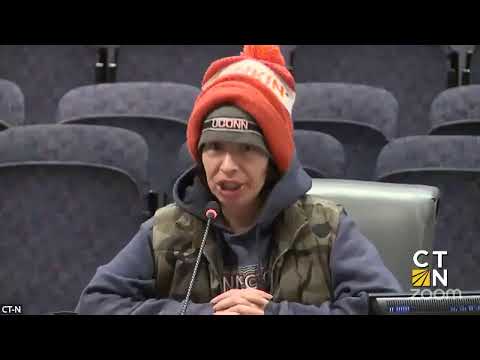
Duncan Markovich, a former Mystic Seaport waterfront director, testified in support of House Bill 14‑03 (HB 1403), "an act concerning brownfield remediation," and recommended that the Department of Economic and Community Development (DECD) and the Department of Energy and Environmental Protection (DEEP) coordinate research into phytoremediation techniques, including the remediation potential of industrial hemp. Markovich said recent DEEP reporting indicated "almost 1,000 brownfield sites in Connecticut" and urged the committee to leverage university research and existing industry reports.
A committee member responded that the legislature had previously allocated tens of millions for brownfield remediation in recent biennial budgets, noting that a prior allocation rose from $50,000,000 to $70,000,000 over the last biennium and that demand had exceeded available funds. The member said about $6,000,000 remained in the pipeline and that earlier rounds saw "more than 100% demand for those funds."
Markovich recommended that state agencies consult the Department of Consumer Protection’s 2014 industrial hemp report and partner with the University of Connecticut and local hemp operators to design studies on phytoremediation efficacy and safety. Committee members said they were open to advancing remediation funding and would lean on environmental agencies for technical methodology.
No formal vote was taken. Committee members said they would continue coordinating with DEEP and DECD on funding and technical aspects should HB 1403 proceed through the legislative process.