Get Full Government Meeting Transcripts, Videos, & Alerts Forever!
Get email alerts on the Kinship Foster Care topic
No spam. Unsubscribe anytime.
Committee backs kin‑specific foster licensing changes to speed placement for relatives
Summary
Senate File 1786, a kinship and relative foster‑care licensing bill, was recommended to pass as amended and referred to the Committee on Judiciary on March 6, 2025. Supporters urged a kin‑specific approval process to reflect that more than 60% of foster placements are with relatives, to reduce procedural barriers and to align Minnesota with new
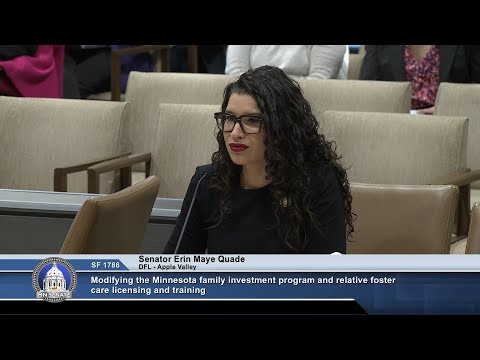
The Senate Health and Human Services Committee on March 6, 2025 recommended passage of Senate File 1786, a bill to create kin‑specific foster licensing standards and supports for relatives and kin caregivers, and referred it to the Committee on Judiciary.
Sponsor Senator McQuade said the bill resulted from a kinship licensing working group formed to implement new federal flexibilities that allow states to adopt licensing standards tailored to relative caregivers. She said the foster system has shifted to rely on relatives for placements and that statute should “catch up” by streamlining requirements such as training and background checks, improving information about supports available to kin caregivers and increasing access to childcare and other services.
Anna Beltran of Generations United, a national nonprofit, testified that federal regulators issued final guidance about 18 months ago and that several states and tribes have already implemented the flexibility. She said the kin‑specific standards align with federal law and are not “lesser” standards but are designed to match the timing and realities of kin placements (often the child is already living with the relative when the approval process starts). She also noted technical differences where Minnesota could better align with federal guidance, including how certain criminal‑history time periods are measured and which crimes are treated as permanent barriers under federal policy.
In‑person testimony from Ampersand Families and the Quality Parenting Initiative emphasized practical barriers relatives face—paperwork, access to technology, language access, housing and child‑care needs—and said a kin‑specific licensing process would reduce delays that can otherwise cause relatives to be bypassed in favor of nonrelative placements.
Committee members asked detailed questions about the bill’s definitions (including how broadly “individual who is related” could be interpreted), time frames for expedited approval (committee members cited examples ranging from 90 days to many months for traditional licensure) and which criminal convictions would permanently bar candidacy. Sponsor and testifiers said the language is intended to follow federal requirements and to focus permanent bars on crimes that relate to child safety while permitting case‑by‑case assessment in other instances.
The committee approved the amended bill by voice vote and referred it to the Committee on Judiciary for further review.