Get Full Government Meeting Transcripts, Videos, & Alerts Forever!
Get email alerts on the Banking Regulation topic
No spam. Unsubscribe anytime.
Sen. Tim Scott introduces FIRM Act to bar 'reputational risk' in bank supervision and urges filling Fed supervisory post
Summary
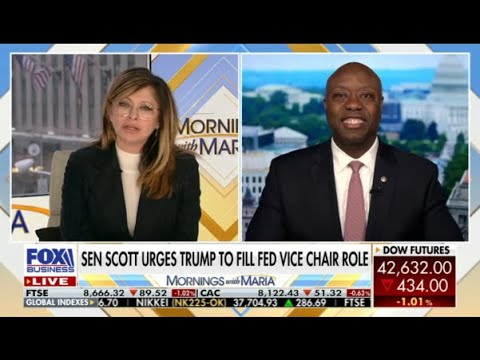
Sen. Tim Scott, R-S.C., chairman of the Senate Banking Committee, said in a television interview that he introduced the Financial Institution Risk Management (FIRM) Act to "eliminate the ability for regulators to use so called reputational risk as a component of supervision."
Sen. Tim Scott, R-S.C., chairman of the Senate Banking Committee, said in a television interview that he introduced the Financial Institution Risk Management (FIRM) Act to "eliminate the ability for regulators to use so called reputational risk as a component of supervision." He said the change is intended to stop what he described as politically motivated "debanking" of conservatives and sectors such as cryptocurrency.
"They are literally choosing conservatives to carve out of our economic system," Scott said. He described the use of reputational risk by regulators as "hogwash" and "merely a weaponization of their rules," and said it was "devastating" to people he said had been denied banking services, citing an anecdote that Melania Trump told him banks would not bank her after she left the White House.
Scott framed the FIRM Act as a legislative remedy aimed at preventing regulators from pressuring banks not to provide services to specific individuals or industries. He said eliminating reputational risk as a supervisory consideration would "allow our banks to make decisions on credit worthiness, not on fear of America's regulators." He also said that regulators' treatment of cryptocurrency has created a "chilling effect" that pushes innovation overseas.
Separately, Scott urged the White House and the Treasury Department to move quickly to fill the Federal Reserve vice chair for supervision vacancy. He said the vacancy and Federal Reserve policy on capital requirements — which Scott attributed to recent Basel III–style changes — have left "more capital on the sidelines," a condition he said slows economic growth by reducing available funds for mortgages and business starts.
Scott criticized Federal Reserve Chair Jerome Powell's continued dual roles and said he had heard Powell was lobbying against filling the vice chair for supervision position. He linked that lobbying, as described in the interview, to stronger capital requirements implemented while Michael Barr served as vice chair for supervision; Barr left that role recently, a development Scott referenced during the exchange.
Scott urged the White House to "fill the vice chair role of supervision at the Fed," saying a filled post would allow the administration to "right size the regulatory environment." He did not provide a timeline for introduction, committee markup, or floor action on the FIRM Act, and he did not specify bill text or a public bill number during the interview.
The interview also touched briefly on related political themes, including criticism of what Scott called pattern-based regulatory enforcement under the Biden administration and broader Republican agenda items; Scott said Republicans would use reconciliation to address border and military funding priorities but did not provide legislative details tied to the FIRM Act.
No formal votes or committee actions on the FIRM Act were reported in the interview. Scott described the bill as introduced and urged executive-branch action on the Federal Reserve supervisory vacancy.
Looking ahead, Scott said the goal of the legislation and the appointment he favors is to restore what he described as fair access to the U.S. banking system and to reduce regulatory obstacles he said are limiting credit flows. He did not specify when the FIRM Act would be formally scheduled for committee consideration, nor did he provide text or a bill number during the interview.