Get Full Government Meeting Transcripts, Videos, & Alerts Forever!
Get email alerts on the Water Conservation topic
No spam. Unsubscribe anytime.
Queen Creek staff say HOA outreach, turf conversions and leak fixes produced measurable water savings in 2024
Summary
Water conservation staff reported to the Queen Creek Town Council that outreach to homeowners associations, targeted leak detection, and pilot incentive programs helped the town exceed a 100 acre‑foot savings goal in 2024 and that further savings are expected if proposed WIFA grant funding is approved.
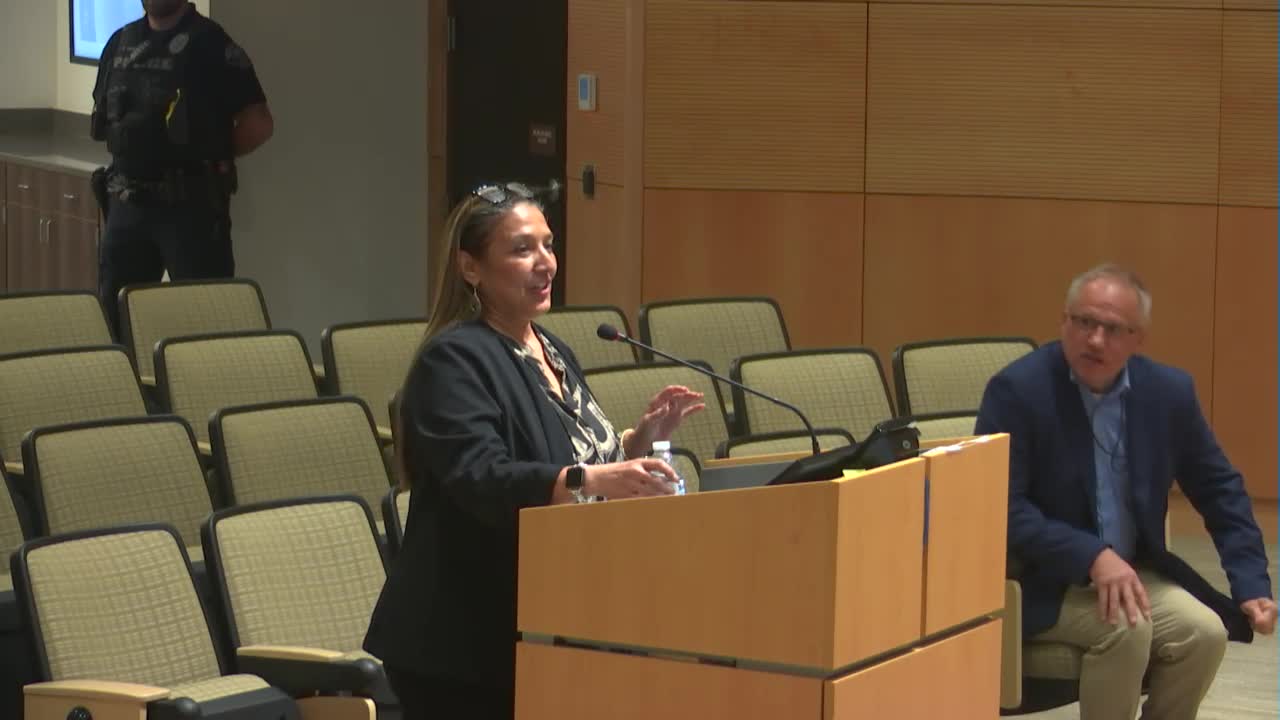
Dina Burns, Queen Creek’s water conservation manager, told the Town Council that town outreach to homeowners associations and commercial landscape managers produced measurable water savings in 2024 and positioned the town to expand conservation incentives if a tentative WIFA grant is awarded.
Burns said the conservation team exceeded a prior target of 100 acre‑feet of savings by about 45 acre‑feet for 2024, and added that the largest opportunities for additional reductions remain in large turf landscapes managed by HOAs.
"We are focused on practical measures for sustainable savings," Burns said, citing in‑person and virtual meetings, site evaluations and a multi‑pronged approach that pairs education with technical fixes.
Town staff described several specific efforts and results. HOAs that met with conservation staff reduced overall water consumption by about 2 percent on average in 2024, while HOAs not engaged with staff increased use by a little more than 8 percent, the presentation said — a net improvement of about 10.5 percent for HOAs that worked with the town. Staff highlighted progress at named communities: Hastings Farms (on target with its water budget, exploring turf conversions), La Sintero (overwatering; considering smart controllers and master valves), Ash Creek Estates (repaired a persistently stuck fountain float valve) and Ironwood Crossing (isolated and repaired multiple leaks after coordinated AMI-based shutdowns).
The department also reported program highlights: a Smartscape landscape training delivered with the University of Arizona extension that reached 16 town staff and 20 outside landscape professionals; eight short DIY leak‑detection videos posted on the town website; and a pilot with Salt River Project to evaluate a small number of HOAs and provide up to $20,000 in funding per HOA if both SRP and the town approve improvements.
Burns described proposed incentive targets the town would pursue via a Water Infrastructure Finance Authority (WIFA) conservation grant, and said the application will be brought to council for approval if the town receives a tentative award. The grant proposal would request $500,000 for nonresidential turf conversions, $100,000 for residential turf conversions and $68,000 for water‑efficient technologies; the program would require a roughly 25 percent match made up of participant contributions and town in‑kind services.
Staff also emphasized practical fixes for common irrigation system problems: looped systems that make leaks hard to isolate, incorrect sprinkler heads, stuck valves and malfunctioning fountain components. Sarah Gorton, the team’s irrigation specialist, narrated one of the town’s instructional videos: "Looking for a leak? Let's check your irrigation system," which walks residents through basic on‑site checks and meter steps. Robert Eshamendi, who manages the town’s Waterfluence budgeting program, led HOA outreach and site evaluations tied to the town’s AMI leak detection.
Dina Burns and her team said the town expects to roll out a customer portal in mid‑summer that will push seasonal scheduling reminders and rain‑delay notices. Staff also said they are developing an HOA webpage and an HOA training video to explain Waterfluence and other conservation opportunities. As part of public education the town plans a fourth‑grade water festival in partnership with the Queen Creek Unified School District and anticipates using high‑school volunteers to staff the event.
Council members pressed staff for additional detail about metrics and next steps. Councilmember Brown asked how many on‑site visits were distinct properties versus repeat visits; Burns said staff completed 23 meetings and about 83 site evaluations in 2024 and that follow‑up is often required because leaks can take months to fix without active notification. Councilmember McClure asked for an acre‑feet summary; Burns said staff are finalizing the calculations and will provide a ballpark figure to council.
The presentation concluded with staff reiterating that large turf areas are the single largest source of potential savings: town analysis showed HOAs with more than 30 percent turf used roughly 400,000 gallons more per month — about 15 acre‑feet per HOA per year — than otherwise similar landscapes with less turf. Burns said the department is examining potential code or ordinance changes to encourage lower‑water designs while preserving functional common areas.
Council members thanked staff for the outreach and materials. Burns confirmed she will return with final metrics and the details of any WIFA award before the town accepts funding.