Lifetime Citizen Portal Access — AI Briefings, Alerts & Unlimited Follows
DC Fire & EMS Highlights Jan. 29 Potomac Response, Seeks to Expand Paramedic Training and Return Fireboat John Glenn
Loading...
Summary
At performance oversight the Fire & EMS chief and union leaders described department response to the Jan. 29 mid‑air collision, urged faster return to service of the fireboat John Glenn and discussed plans for an in‑city paramedic training program and continuing AMR partnership for basic life support.
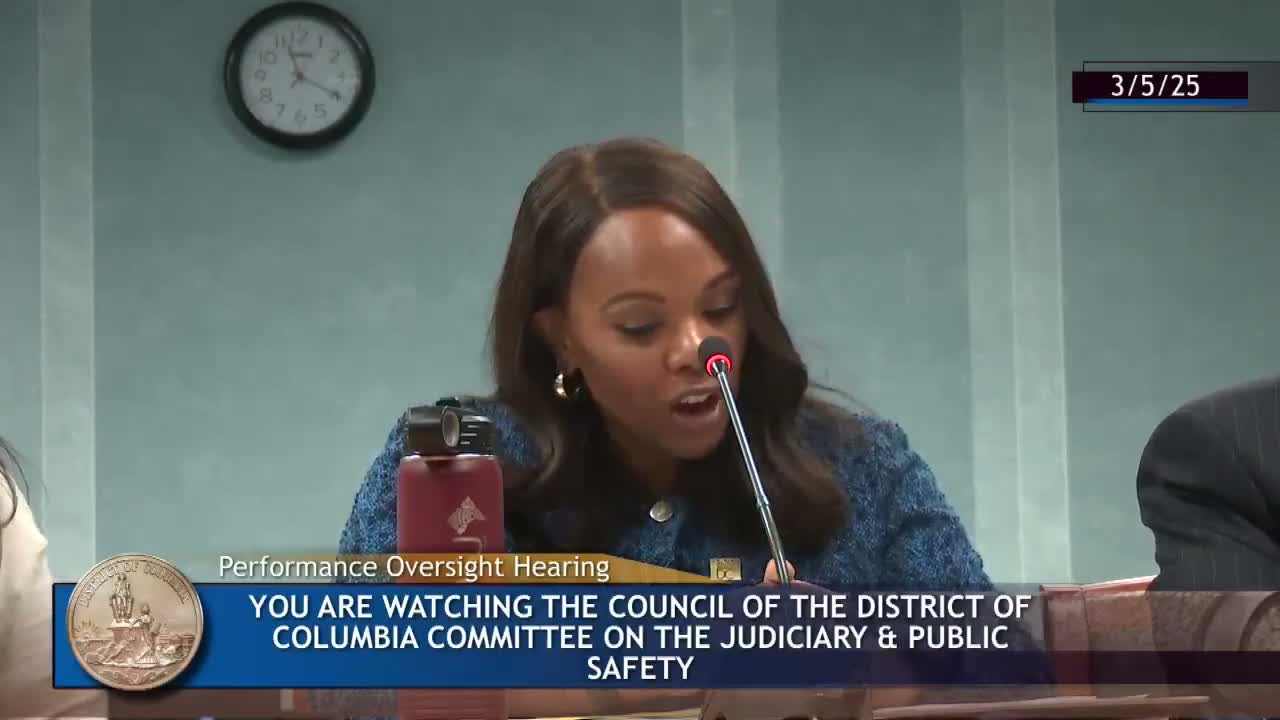
Chief John Donnelly and union representatives told the Council’s Committee on Judiciary and Public Safety on March 5 that DC Fire & EMS led and coordinated a large multi‑agency response to the January 29 mid‑air collision over the Potomac River and praised regional partners and department staff for the rescue and recovery work.
The department and witnesses described the operational lessons learned: pre‑existing multi‑agency planning, regular joint training, rapid activation of peer‑support services for first responders, and use of regional mutual‑aid for water rescue. David Hoagland, president of IAFF Local 36, thanked the department and asked that the city prioritize returning the larger fireboat John Glenn to full service. Both Chief Donnelly and Hoagland said the Glenn has been in dry dock in Baltimore for repairs and noted the boat’s value as an icebreaker, dive platform and large‑scale water‑rescue platform.
Chief Donnelly said the Glenn’s repairs have been complicated by age and parts sourcing; he told the committee the vessel is expected to return to the district in the coming weeks. Members asked about cost and contracting; department fiscal staff said repair costs were managed through available operating funds while procurement and contracting issues were resolved, and noted the city has budgeted capital funding in FY26–FY27 to replace the vessel.
On EMS, witnesses described two concurrent efforts: direct dispatch of third‑party basic life support (BLS) units (AMR) for low‑acuity calls, and creation of an in‑city paramedic pipeline. Chief Donnelly said AMR direct dispatch has reduced transport unit response times and hospital drop times for low‑acuity calls, freeing DC ambulances for higher acuity work. Union testimony from Hoagland and others stressed concerns about training parity and clarity about the types of calls AMR should handle; they urged clearer dispatch rules and community messaging.
Chief Donnelly described progress on recruiting and training: multiple recruit classes began during FY25, the department has launched a low‑titer whole‑blood program and continues to lead high survival rates for out‑of‑hospital cardiac arrest. On paramedic training, the department has partnered with the University of the District of Columbia and Howard University Hospital to seed a local paramedic training pathway and to provide seat capacity and clinical rotations; the administration hopes to begin program cohorts in spring 2026. Donnelly said the city has already supported seed funding and expects the program to grow.
Ending: Councilmembers asked for follow‑up on the John Glenn repair timeline, AMR dispatch rules and the UDC paramedic program schedule and capacity. Chief Donnelly and the deputy mayor’s office pledged written updates to the committee.