Lifetime Citizen Portal Access — AI Briefings, Alerts & Unlimited Follows
Deputy Mayor, Council and Providers Debate ‘People of Promise’ Lists and Role of ONEs, Cure in Violence Intervention
Loading...
Summary
At the March 5 oversight hearing the deputy mayor and community providers discussed how violent‑incident reviews, violence‑interruption teams and lists of high‑risk individuals are being used in Washington — Appiah argued operational flexibility and weekly in‑person shooting reviews matter more than a single static 'People of Promise' list.
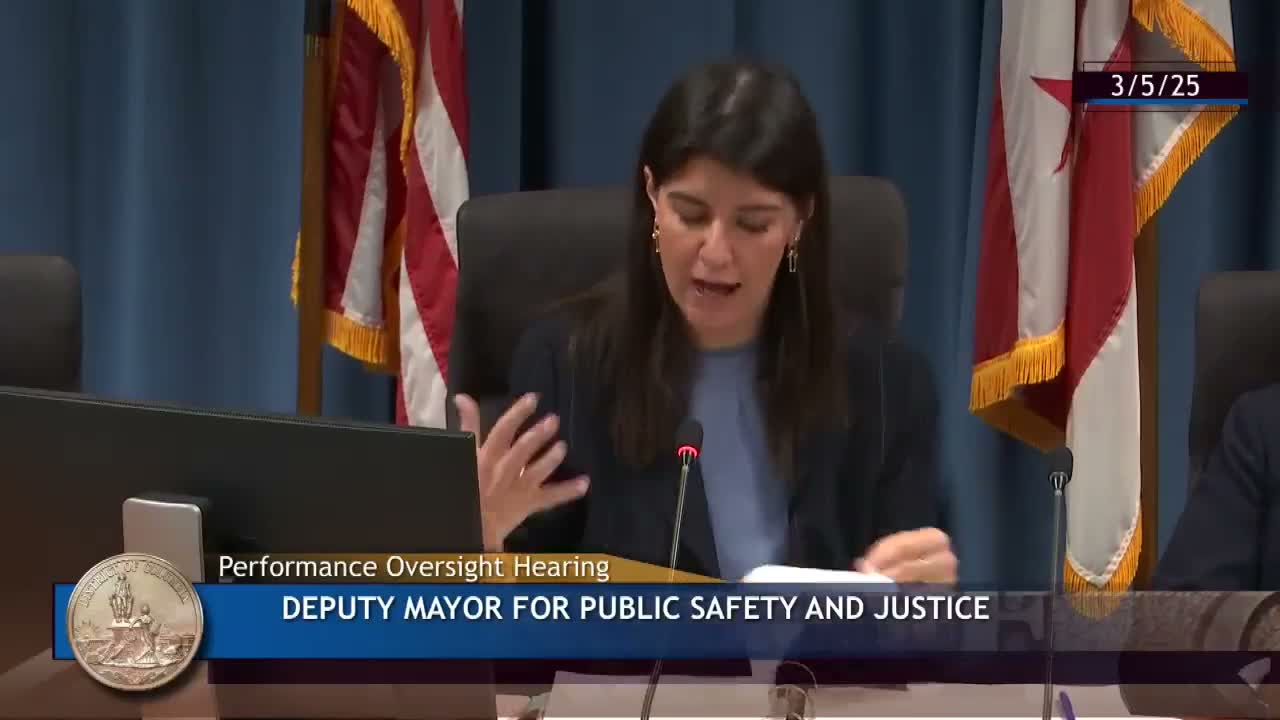
Deputy Mayor Lindsay Appiah told the Committee on Judiciary and Public Safety on March 5 that the city’s recent reductions in violent crime reflect a coordinated, whole‑of‑government effort combining law enforcement, violence interruption, prevention programs and policy changes. Appiah described weekly coordination and shooting review meetings that bring together Metropolitan Police, Court Services and Offender Supervision Agency (CSOSA), Pretrial Services and other partners to share timely information on shootings and to target interventions to prevent retaliatory violence.
Several witnesses urged more formalized task‑force approaches and better data sharing for high‑risk domestic violence and repeat‑offender cases. DFAC‑affiliated groups including DC Safe asked for “task‑force”‑style responses similar to the city’s carjacking and community‑violence initiatives, noting that some domestic violence offenders had multiple victims and arguing for coordinated accountability and supervision across federal and local systems.
A central point of debate was the role of “People of Promise” lists and their operational value. Appiah said the administration has moved away from relying on a single static list compiled by external researchers because the methodology and timing can leave the lists out of date; instead she emphasized a hybrid approach that relies on GunStat, local Violence Intervention (VI) teams, and rapid in‑person shooting reviews that produce immediate follow‑up. “The point is: who right now is most at risk of gun violence?” Appiah told the committee, arguing that rigid lists can misallocate limited outreach resources. She described a Monday coordination meeting and a Wednesday in‑person shooting review where agencies discuss each incident, identify at‑risk individuals and agree steps to prevent retaliation.
Council members and providers pressed for standardized performance metrics for VI programs. Appiah described efforts to formalize performance measures at the Office of Neighborhood Engagemen t/ONEs (ONEs) and to bring ONEs’ grants management and oversight up to par after leadership changes. She said ONEs is being positioned to manage more VI grant funds and to coordinate across wards with greater transparency; the administration has introduced stricter grant scoring, pre‑application conferences and contract oversight to improve accountability. Appiah said her office is monitoring implementation and will intervene if any grantees fail to meet reporting and performance standards.
The hearing also covered the city’s shooting review candidacy: Appiah said she has convened weekly in‑person shooting reviews since November 2023 and that the format — with law enforcement and supervision agencies sharing sensitive, law‑enforcement‑only information in person — has increased trust and information flow. She said prosecutors are generally not included in the in‑person reviews because the sessions are focused on prevention and preventing disclosure of sensitive investigative information.
Ending: Council members asked the deputy mayor to continue to formalize metrics and to present quarterly updates on shooting review participation, outcomes, and VI program performance. Providers asked to be included in continuing administrative discussions; Appiah said officials would keep pursuing a hybrid approach that combines weekly in‑person reviews, VI outreach, and targeted grant oversight.