Get Full Government Meeting Transcripts, Videos, & Alerts Forever!
Get email alerts on the Developmental Disabilities topic
No spam. Unsubscribe anytime.
Maryland lawmakers consider enshrining DDA waiver advisory council in state law
Summary
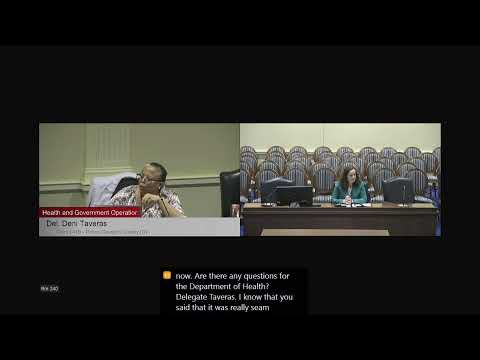
Delegate Michelle Guyton asked the Health and Government Operations Committee on behalf of House Bill 1244 to put the Developmental Disabilities Administration waiver advisory council into state law, expand its membership and require clearer communication between the council, the DDA and the General Assembly.
Delegate Michelle Guyton asked the Health and Government Operations Committee on behalf of House Bill 1244 to put the Developmental Disabilities Administration (DDA) waiver advisory council into state law, expand its membership and require clearer communication between the council, DDA and the General Assembly.
Supporters at the hearing — including representatives from the Maryland Developmental Disabilities Council, The Arc Maryland, the Maryland Association of Community Services (MAX), Self Directed Advocacy Network of Maryland and the Maryland Council of Support Brokers — said the advisory council already meets but that codifying it in statute would strengthen stakeholder roles, keep a majority of members with lived experience, and improve collaboration on waiver policies affecting roughly tens of thousands of Marylanders who receive DDA services.
Delegate Guyton told the committee the council already meets to satisfy federal Medicaid waiver requirements but that recent DDA policy and communication shifts had created “chaos and confusion” for participants and families. Rachel London of the Maryland Developmental Disabilities Council told members the waivers cover services delivered in two models — community provider and self-directed — and estimated more than 18,000 Marylanders receive DDA waiver services, with roughly 15,000 through community providers and almost 4,000 who self-direct.
Witnesses described two categories of changes the bill would make: (1) add specific stakeholder seats so the council better reflects providers and people with lived experience, and (2) add obligations for the council to communicate back to constituents and the General Assembly. Andy Culp of The Arc Maryland and Laura Hall of MAX supported sponsor amendments that move advocacy organizations into appropriate membership categories so the statute accurately reflects their roles.
Several family members and advocates described recent DDA actions and a new manual published without direct notice to participants, which they said hindered appeals and created operational problems for self-directed services. Participants called for stronger assurances that the advisory council’s membership and processes would give families a real voice in waiver changes. The sponsor noted she has a technical sponsor amendment and said the bill will be assigned to subcommittee.
The bill drew no formal vote during the hearing; sponsors requested a favorable report and said additional technical and membership amendments were under discussion.
Ending — The committee will consider sponsor and stakeholder amendments in subcommittee. No formal committee vote on House Bill 1244 was recorded at the hearing.