Get Full Government Meeting Transcripts, Videos, & Alerts Forever!
Get email alerts on the Special Education Diploma Pathway topic
No spam. Unsubscribe anytime.
Board approves alternative pathway to diploma for students with significant cognitive disabilities
Summary
The board approved coursework and a local implementation plan under AB 181 allowing eligible students who take the California Alternate Assessment to earn a state-recognized high school diploma using modified, standards-aligned coursework.
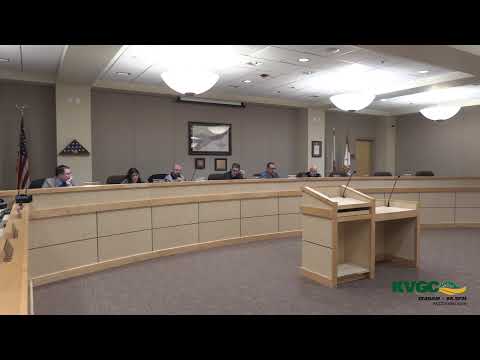
The Amador County Board of Trustees voted unanimously March 12 to approve an alternative pathway to a high school diploma for students with significant cognitive disabilities, adopting course descriptions and a local plan to implement requirements established by AB 181.
The pathway gives eligible students — those who are eligible for the California Alternate Assessment — a route to earn a standard high school diploma by completing California’s minimum coursework requirements using modified, standards-aligned curriculum. Joshua Brock, Amador County director of special education, said the local plan uses the Unique Learning System curriculum to provide tiered, accessible instruction linked to the state’s core content connectors.
The board adopted the plan after presentations from district and county staff. Joshua Brock, Director of Special Education, said coursework was rewritten from Unique Learning System lessons into course descriptions that map to the state minimums, including Algebra I, English, social science, science, physical education and the options for foreign language/visual and performing arts or CTE. "This opens up such a world of opportunities for our students with extensive support needs," Brock said.
Michael Lynn, an education specialist who works with the Unique Learning System, described how lessons are tiered and can be delivered using symbol supports, matching or drag‑and‑drop activities, up to paragraph-level reading and written outputs where appropriate. Nikki Gravatt, Director of Secondary Education, said the plan preserves districts’ obligation to provide free appropriate public education (FAPE) through age 22 even after a diploma is issued.
Board members asked how students would demonstrate learning and whether nonverbal students could access the coursework. Lynn and Brock replied that the system supports multiple modes of response — pointing to icons, project‑based demonstrations or adapted written work — and that individualized education programs (IEPs) would document accommodations and assessments.
Board President Molly (last name not specified in transcript), Peter (last name not specified), Ken (last name not specified), Shane (last name not specified) and James (last name not specified) voted in favor; the motion carried with all trustees present voting yes.
Supporters on staff said no student in the district’s extensive support needs programs has previously received a standard high school diploma; students historically received certificates of completion. Speakers noted the diploma would appear the same as other diplomas and could remove an employment barrier many students face.
The approval directs staff to move forward with the local coursework and administrative steps to issue diplomas under the alternative pathway. Staff said they will implement the coursework in classrooms and continue working with IEP teams to determine student eligibility and review how to reflect completed coursework on transcripts.
The board’s action does not change statewide law; it approves the local implementation required by AB 181 and the district-level course descriptions and process for issuing diplomas to qualifying students.