Get Full Government Meeting Transcripts, Videos, & Alerts Forever!
Get email alerts on the Environmental Health topic
No spam. Unsubscribe anytime.
Neighborhood group hears update on decades-old toxic plume at former Pneumo Abex site
Summary
Residents and neighborhood chairs were briefed on soil, groundwater and soil‑vapor testing around the former Pneumo Abex facility at 3151 W. Fifth St.; Los Angeles Water Board has required semiannual monitoring and additional vapor assessments, but indoor testing has not yet begun.
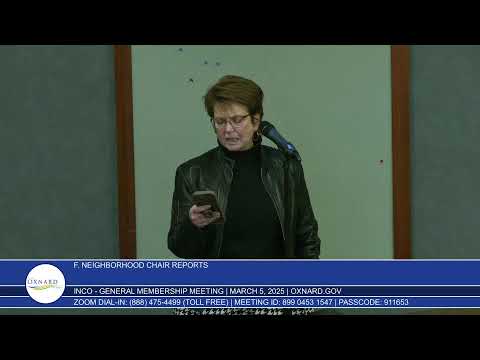
Doug Talber, chair of the Via Marina neighborhood council, told the INCO General Membership on March 5 that contamination tied to the former Pneumo Abex facility at 3151 West Fifth Street has left a groundwater plume and intermittent soil‑vapor readings in the adjacent Seaview Estates neighborhood.
The presentation summarized decades of investigations and remediation overseen by the Los Angeles Regional Water Quality Control Board. Talber said monitoring has identified a groundwater plume roughly 3,300 feet in length and that the board issued a cleanup and abatement order in February 1995. He described repeated rounds of cleanup that removed about 11,000 cubic yards of impacted soil, pumped and treated “millions of gallons” of groundwater and used injections of a hydrogen‑release compound to accelerate breakdown of chlorinated volatile organic compounds (VOCs) including tetrachloroethylene (PCE) and trichloroethylene (TCE).
Why it matters: Neighborhood chairs said the plume and soil‑vapor detections raise concerns about indoor air and long‑term exposure near homes and a nearby elementary school. Talber and others urged faster progress toward indoor testing to determine whether vapor intrusion has led to human exposure.
Talber described the monitoring program in place: semiannual groundwater sampling at 65 monitor wells and repeated soil‑vapor sampling from nested probes on the former facility, at the Juan Laguna Siora Elementary School and in the Seaview Estates neighborhood. He said most recent soil‑vapor probes recorded TCE concentrations below residential screening levels, but that several probes—including a repeatedly problematic location labeled “Gas Probe 34” in board documents—have shown concentrations above residential screening levels during some sampling events.
Talber noted that environmental screening levels (ESLs) used for comparison in the reports are low (he cited an ESL of 16 parts per billion for TCE in vapor) and stressed that readings can vary with weather and barometric pressure. He said some probes were unreadable when groundwater levels rose after heavy rains and that the Los Angeles Water Board requires consistent elevated readings before it orders indoor testing. “We’re just going into the cycle what I call the paralysis of analysis,” Talber said, arguing that events such as barometric pressure drops can cause spikes that intermittent, periodic sampling may miss.
The board has required the responsible party (identified in regulatory records as Pneumo Abex) to continue semiannual soil‑vapor monitoring and to complete additional vapor intrusion assessments at specific probe locations. Talber said Pneumo Abex submitted a work plan in January for additional vapor intrusion assessment and a human health risk assessment; that plan, he said, would precede any indoor testing.
Neighborhood participants urged using more continuous, shorter‑term indoor monitors to capture pressure‑related peaks. Talber described newer continuous monitoring technologies, which he said are commercially available and can capture multiple days of data to better identify pressure‑related vapor intrusion events. He also told the membership he had shared reports and maps available on the state’s GeoTracker database with hydrogeologists and Los Angeles Water Board staff.
Several members of the membership asked about the plume’s direction and the risk to distant aquifers. An online participant identified as Roger asked whether contaminants were reaching deeper aquifers or migration pathways tied to future recycled‑water injection projects; Talber said the mapped plume flows generally southward, that some lobes of the plume change direction for reasons still under investigation, and that the board is planning additional probe installations south of a mapped lobe to refine the plume boundary. Talber said wastewater testing in nearby sewer lines returned non‑detect results but that vapor testing of manholes could provide additional screening.
Isaac Califf, a neighborhood representative who said the site lies in his neighborhood, called the issue “complicated and serious” and urged the group to use the larger INCO membership to attract state‑level elected officials to press for more testing and clearer reporting.
What was not decided: The membership did not take any formal regulatory action. Talber and neighborhood chairs asked the INCO body to help request state attention and additional testing, but no motion or vote was recorded.
Ending: Talber and other chairs said they would continue to press the Los Angeles Water Board and pursue additional testing options and elected‑official outreach to accelerate indoor testing if warranted.