Get Full Government Meeting Transcripts, Videos, & Alerts Forever!
Get email alerts on the School Budgeting topic
No spam. Unsubscribe anytime.
Combs board approves employee insurance rates amid warnings of multimillion-dollar budget gap
Summary
The J O Combs Unified School District governing board approved higher employee medical insurance rates after insurers signaled a 14% increase; administrators warned the district faces between $1.1 million and $2.2 million in potential budget cuts depending on enrollment and benefit choices.
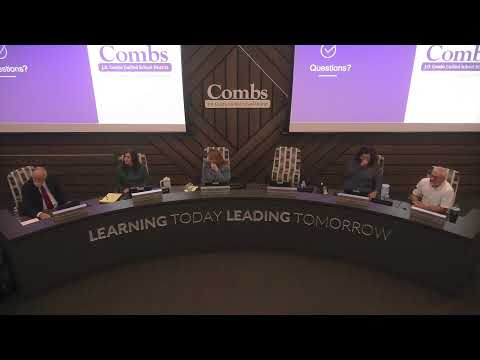
The J O Combs Unified School District governing board on March 12 approved employee medical insurance plan rates for the 2025–26 school year as the district and board examined budget scenarios tied to rising benefit costs and declining enrollment.
Superintendent Dr. Fountain told the board the district—aces a 14% rate increase from Kairos, the insurance pool the district uses, and that the package approval is needed to open employee enrollment. "We received our rate increase this past week. We had anticipated an increase of 7%. Unfortunately ... it came in at 14%." He said the district's share of that rise would be about $270,000 if the district absorbs it.
The board-approved motion (4–0) authorizes the district to accept the rate package and proceed with open enrollment. The approval does not by itself decide who will cover the increased premium costs; Dr. Fountain said that question will be addressed as part of the coming budget work.
Why it matters: District leaders said the insurance increase compounds other pressures — recurring enrollment declines that determine state funding, and a recently required minimum-wage-driven pay step for classified staff. Dr. Fountain presented modeling showing multiple budget paths depending on how enrollment trends and benefit decisions play out. Under the leadership team's recommended scenario (an 80% realization of projected enrollment decline), the district would face roughly $2 million in reductions if it also funds a 1.9% across-the-board salary adjustment and absorbs the full insurance premium increase.
What the board heard: Dr. Fountain explained that the district participates in a pooled insurer (Kairos) and that the 14% is the pool's average rate. He said the district will be rated individually next year after three years of data. "Next year we'll be rated individually because we'll have three-year trend data and we'll be rated based on what happens within our district," he said.
Board members asked for scenarios and a plan B. The superintendent and business staff said they will return with detailed budget options at a special meeting later in March and again in late April, including alternatives for sharing premium increases with employees and for different enrollment outcomes.
Context and numbers presented by staff: - Kairos rate increase presented to the board: 14% (pool average). - Estimated district cost to absorb that increase: about $270,000. - Leadership recommended a 1.9% salary adjustment (reflecting an earlier classified increase tied to minimum wage); that raise plus absorbing insurance would increase required reductions. - Projected budget shortfall range (depending on enrollment scenario and benefit choices): roughly $1,100,000 to $2,200,000. - District count cited during discussion: about 12,600 school-age children live in the district zip codes; district currently "captures" approximately 3,800 students (~31% capture rate).
Board action and next steps: The board approved the insurance and benefit plan rates so the district can proceed with open enrollment. Staff will return with scenario budgets and recommendations, including whether the district absorbs some or all of the premium increase and how any salary adjustments will be funded. The superintendent said final budget choices will be presented ahead of the state budget certainty dates and before contract addenda are issued.
Evidence: Board motions, superintendent presentation and follow-up budget discussion occurred in open session and were recorded in the meeting transcript.