
Lodi Board approves tentative 2025–26 budget, greenlights $2.35M in capital projects
Get AI-powered insights, summaries, and transcripts
Sign Up Free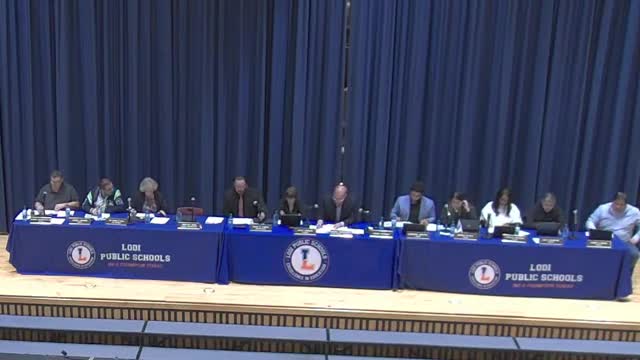
Summary
At a March 5 special meeting, the Lodi Board of Education approved the tentative 2025–26 budget (FB1–FB3), including $2,352,000 in capital projects and expanded preschool funding, while board members raised concerns about charter tuition, facility maintenance and a $4.3 million gap below the state adequacy calculation.
The Lodi Board of Education on March 5 approved the district’s tentative 2025–26 budget and related motions (FB1–FB3), voting 7–2 to adopt the plan that includes $2,352,000 for capital projects, expanded state-funded preschool seats and a 2% increase in the general fund tax levy.
The tentative all-funds budget totals $94,410,446 and the general fund tax levy in the proposal is $39,841,424, a 2% increase the administration said represents a $781,204 rise over the current year. Interim Business Administrator Mr. Rinderknecht described the plan as a “high level overview” that relies on an increased state aid allocation and uses $2,600,000 of budgeted fund balance and a $2,352,000 withdrawal from the capital reserve to fund identified projects.
Why it matters: Board and public discussion focused on the trade-offs between immediate capital work and long-term competitiveness with charter schools. District officials said investments in safety, technology and science labs are intended to slow student departures to charter schools and to improve educational offerings, but the interim business administrator warned the proposed budget is about $4,300,000 below the state’s adequacy calculation for the district.
Board presentation and key items
Mr. D'Amico, a district staff member who introduced FB1, told the board the budget aims “to provide a comprehensive educational program that meets the specific needs of our students and our entire school community.” Interim Business Administrator Mr. Rinderknecht gave line‑item details, saying the budget’s largest components are salaries and employee benefits and that next year’s benefits forecast includes a 15% increase.
Capital projects listed under FB1 total $2,352,000 and the administration identified specific items: $247,500 for installation of ballistic laminate on select basement and first-level windows; $124,355 for student bathroom security upgrades with lockdown access control; $315,000 for various school construction assignments; and approximately $1.6 million for brick repointing, new windows and targeted parking-lot tapering work at Lincoln School. Mr. Rinderknecht said the Lincoln paving work is intended to introduce swales so stormwater will be routed away from the building and basement.
Safety and facilities dominated public and board questions. One board member asked whether ballistic laminate was a “state requirement” and was told by the administration that the district chose the film to “provide smash resistance for up to 30 minutes” on vulnerable windows, not as a response to gunshot threats. Another board member pressed for more detail on bathroom locks and sign‑board upgrades; the administration said bathroom badge readers would lock nonsecurity badges during a lockdown and that new digital signs would modernize communications.
Preschool expansion and state aid
The administration said the district received increased preschool education aid and plans to add one more in‑district Pre‑K‑4 classroom and to partner with private providers to offer Pre‑K‑3 seats. Mr. Rinderknecht described the preschool expansion as “fully funded by the state” for this program year and said the district expects the state funding stream to continue.
Charter tuition, enrollment and facilities
Board members repeatedly returned to charter school tuition, which they said costs the district millions annually. One member cited an approximate $3.9 million–$4 million annual outflow in charter tuition and asked whether parents could be surveyed about reasons for choosing charters. The administration agreed to consider surveying parents to learn whether facility condition, perceived safety or program offerings affect choices.
Several board members said poor facility maintenance in prior years has pushed families toward charters and argued that capital investment now could reduce future tuition outlays. Others urged caution, saying construction costs and bidding rules in New Jersey can push project prices higher than expected.
Special education, extraordinary aid and out‑of‑district placements
Mr. Rinderknecht described several budget items tied to special education: extraordinary services budgeted for 1:1 aides (about $1.1 million), nursing services (about $650,000) and assistive technology. The administration reported savings where students returned from out‑of‑district placements and noted an increase in projected extraordinary‑aid revenue; the administration estimated $1,200,000 for extraordinary aid in the proposed year.
Board vote and immediate directions
The board conducted a roll call on FB1–FB3. Votes recorded in the meeting transcript were: Miss Acalia (Yes), Miss Anderson (Yes), Mr. Bautista (Yes), Mr. Cannizzaro (Yes), Mr. LaFranca (Yes), Mr. Mastrofilippo (No), Mr. Ramos (No), Dr. Sima (Yes) and Miss Cardone (Yes). The motions carried.
Board discussion included informal agreement to consider a parent survey about charter school choices and to provide more detailed year‑over‑year budget comparisons on request. The interim business administrator offered to produce side‑by‑side comparative reports and more granular line‑item history for subsequent meetings.
Context and next steps
The administration emphasized that some capital work in the proposal would be funded from the district’s capital reserve, not directly from the general fund tax levy. The budget remains tentative until the district files required documents and proceeds through any remaining hearings and the final adoption process. The board also opened, then closed, public comment periods for agenda and non‑agenda items at the meeting.