Get Full Government Meeting Transcripts, Videos, & Alerts Forever!
Get email alerts on the Homelessness Shelter Response topic
No spam. Unsubscribe anytime.
Housing Solutions summary: shelters and outreach housed more than 1,300 people during January extreme cold, 1,457 in February
Summary
Housing Solutions, coordinating A Way Home for Tulsa, told council committees that emergency shelter activations during two severe cold events in January and February sheltered 1,384 and 1,457 people respectively, mobilized dozens of outreach teams and volunteers, and provided thousands of meals and veterinary services for pets.
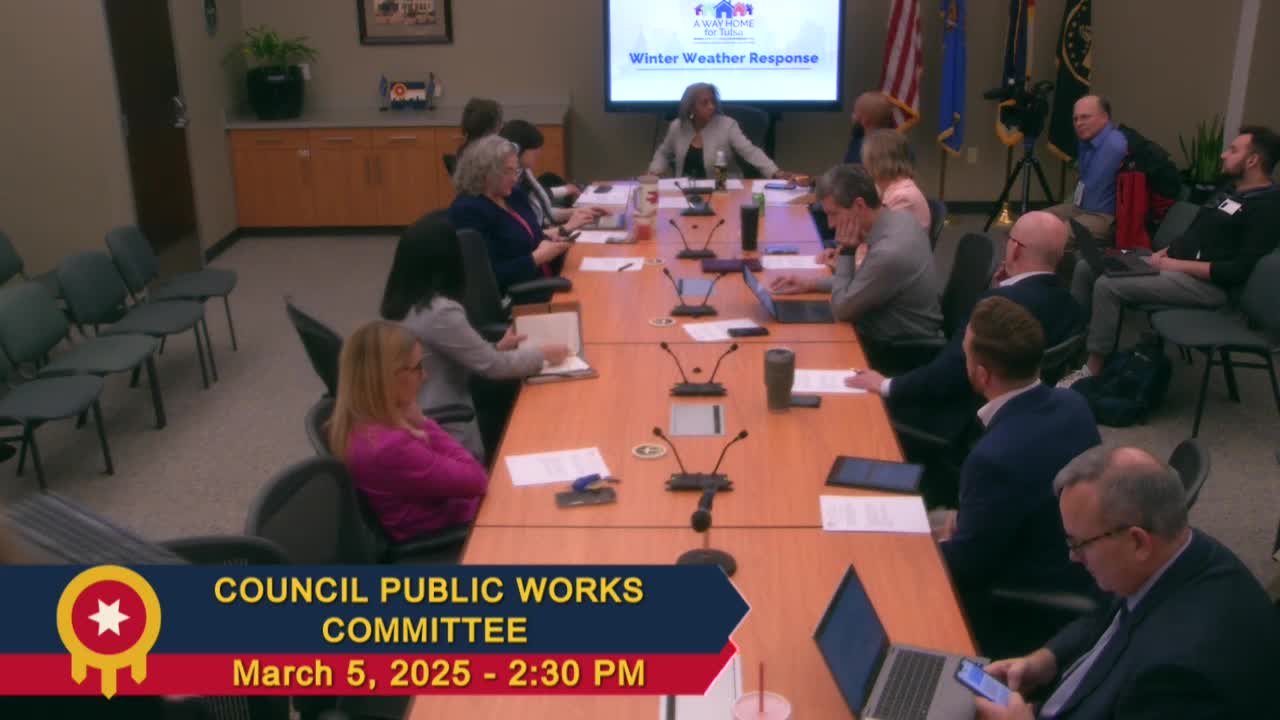
Housing Solutions and A Way Home for Tulsa staff reported to city committees March 5 on expanded winter shelter operations after two rounds of severe cold in January and February.
The agency said additional emergency shelter capacity was opened at the Dream Center West campus and at 1Hope/Tulsa Rose Bowl, and other providers including Tulsa Day Center, Salvation Army and John 3:16 offered overflow space. Outreach teams and the Tulsa Fire Department transported people to shelters when road or weather conditions prevented other outreach vehicles from reaching unsheltered residents.
Key figures reported:
- January activation (Jan. 5–11): 1,384 distinct individuals sheltered during the event; the city’s regular emergency shelter capacity was roughly 605 beds before overflow sites opened. Providers reported 107 children, about 100 senior citizens, 42 veterans and 50 pets sheltered during that activation.
- February activation (historic cold and snow): 1,457 distinct individuals sheltered across sites. The Dream Center West campus alone sheltered more than 40 pets and hosted on‑site veterinary care. Outreach staff reported higher demand and a shorter turnaround of available beds because of the severity of conditions.
- Volunteer and operations support: providers reported more than 200 volunteers across partners during the January event and 76 volunteers/staff from 36 agencies during the February event. Housing Solutions said more than 6,700 meals were provided by partner organizations during the February activation (figure reported by Iron Gate). Mobile medical teams from clinics such as Morton Health Clinic and Family & Children's Services provided on‑site care and triage; some people required hospital referral or sheltering in alternate destinations staffed by behavioral health partners.
Why it matters: presenters and council members said the scale and frequency of extreme weather events are rising and that shelter capacity, staff availability and transportation are recurring operational constraints. Housing Solutions staff said the city’s response this winter likely prevented cold‑related fatalities during the two events and urged continued investment in low‑barrier shelter capacity and rapid transport arrangements with first responders.
Staff said lessons learned included pre‑staging restrooms and hand‑washing stations, ensuring on‑site veterinary resources for pets (many unsheltered people will not leave animals behind), and formalizing an internal city phone line to connect public works, police, fire and outreach teams for real‑time transport and logistics.
Housing Solutions thanked the city and many partners for staff time, vehicles and capital support, and recommended planning for a repeatable surge model that could be stood up quickly for future extreme weather, including heat events during the summer.
Ending: Committee members praised the multisector effort, asked for after‑action reporting, and urged that the shelter surge model be embedded in the city’s emergency planning so the network can activate quickly and consistently during future extreme weather.