Get Full Government Meeting Transcripts, Videos, & Alerts Forever!
Get email alerts on the Homelessness Shelter Response topic
No spam. Unsubscribe anytime.
Housing Solutions and city officials outline winter shelter surge response after two severe cold events
Summary
Housing Solutions, the city and community partners described two emergency shelter activations during severe cold in January and February that provided space for more than 1,300 and 1,450 people respectively, expanded pet accommodations, medical and veterinary care, outreach and transportation coordination.
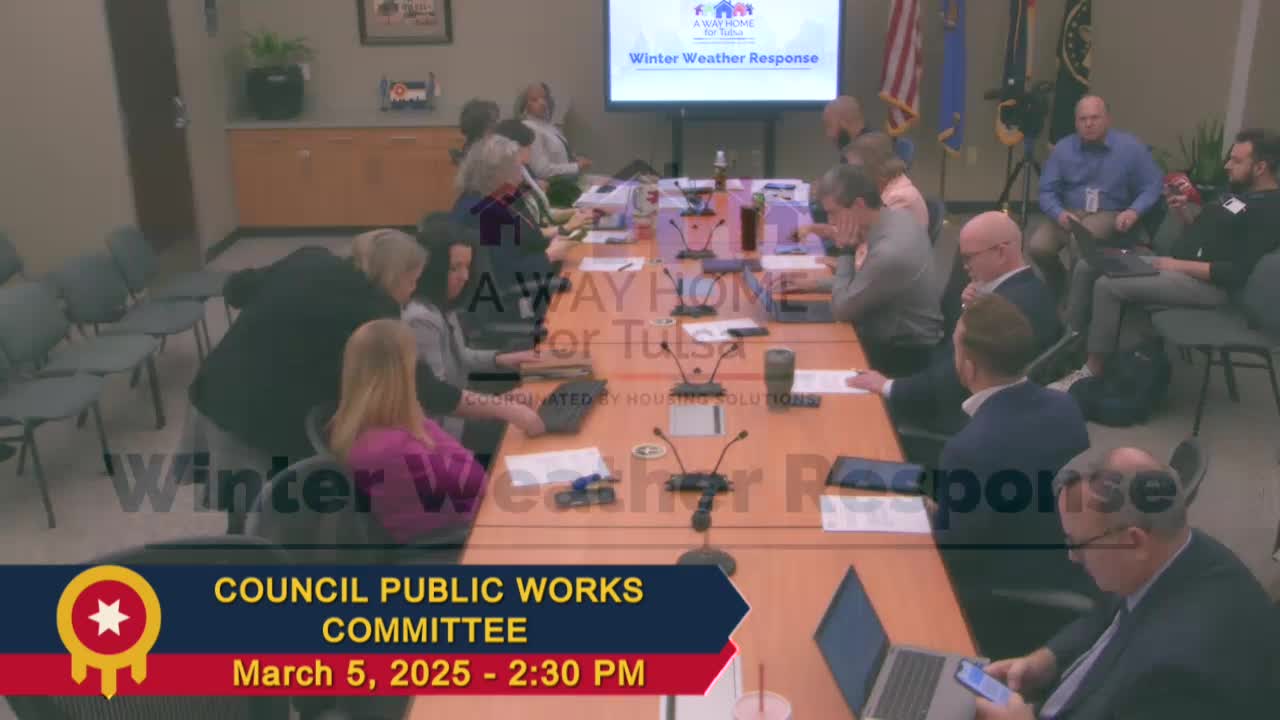
City officials and Housing Solutions representatives reported on winter shelter operations activated during two severe cold-weather events in the 2024–25 season, summarizing shelter capacity, people served, volunteer and agency contributions, and operational challenges.
Mark Smith of Housing Solutions, speaking for the Away Home for Tulsa coalition, said the city and more than 60 partner organizations opened additional overflow shelters during severe weather. "We activated additional emergency shelter from January 5 to January 11. As you can see, we offered shelter to 1,384 individuals during this event," Smith said, describing two overflow locations: Tulsa Dream Center’s West Campus and 1 Hope Tulsa (Rose Bowl). He said general emergency-shelter capacity (not including domestic-violence shelters) is 605 but overflow sites more than doubled available space during the January event.
Smith gave a breakdown of people served and services: during January overflow operations staff sheltered more than 1,384 individuals, including 107 children, about 100 senior citizens, 42 veterans and 50 pets; outreach teams recorded 141 outreach requests and provided transportation and supplies. In February, when temperatures dropped further, Housing Solutions reported 1,457 individuals sheltered across the same locations, a slight increase in seniors and a rise in pets sheltered (more than 40 pets at Dream Center West alone). Smith said health providers, including Morton Health Clinic, Family & Children’s Services and the Mental Health Association of Oklahoma, treated severe frostbite, assisted with medication and made referrals to inpatient services when needed. Veterinary partners such as Tulsa Bridal Welfare and Skyline Animal Hospital provided on-site vaccinations and basic care.
Emily Hall of the mayor’s office described the city’s role: the city contracted with Housing Solutions to coordinate the emergency response and helped secure sanitation, lighting, trash removal and other city assets. Hall said Tulsa Fire Department and Tulsa Police Department provided transportation when outreach teams could not operate because of road conditions, and Tulsa Metrolink provided free transportation to move people and close out sites quickly.
Volunteers and operations: Housing Solutions reported more than 200 volunteers and Continuum of Care staff helped in January; more than 76 volunteers and staff from 36 agencies staffed the two main overflow locations in February; Iron Gate and other meal providers supplied thousands of meals (Housing Solutions reported more than 6,700 meals provided in February by Iron Gate alone). Smith and other speakers emphasized the strain of repeatedly operationalizing large overflow shelters, noting staff diverted from other duties and that operating the second activation weeks after the first was particularly taxing on nonprofit capacity.
Operational limits and gaps: Speakers said a major obstacle to expanding shelter capacity is fire-marshal and building safety requirements; many faith organizations lack showers or adequate egress or sprinkler systems, and staffing remains a limiting factor. City staff described an application process on the city's website for organizations that want to become winter-shelter sites; several organizations have expressed interest but some get delayed in meeting approval requirements. Councilors recommended the city develop a punch list to help churches and community facilities meet standards. Housing Solutions said some hotel vouchers were used on a privately funded basis in January when family-appropriate shelter beds were full, but providers tried to avoid hotel placements when possible because they spread people across locations and complicate service delivery.
Medical and casework follow-up: Housing Solutions said Morton Health Clinic and other partners screened for insurance eligibility during the events, made referrals and arranged inpatient placements when needed; the coalition reported an increase in Medicaid enrollment among clients reached by outreach teams. Smith said outreach staff and partner clinicians sometimes had to coordinate emergency detainment or law-enforcement-assisted transport for individuals who met legal thresholds for being a harm to themselves or others.
Fatality reporting: Smith said he had not received confirmation of cold-weather fatalities related to the events, but a councilor later said he had seen a record indicating one homeless man died on Feb. 6 during the severe cold. The presenters and councilors discussed verifying fatalities and the ongoing trauma among people who experienced severe frostbite.
Next steps: Councilors and staff discussed ways to expand capacity in a pre-planned way — collecting pet crates and supplies in advance, developing a clear list to help potential host sites meet fire-marshal and staffing requirements, and exploring longer-term options for designated emergency-winter shelters. Housing Solutions and city staff said they will continue outreach, planning and partnership-building for future severe-weather responses.
No formal council action was taken; the item was an update for discussion only.