Get Full Government Meeting Transcripts, Videos, & Alerts Forever!
Get email alerts on the Code Enforcement topic
No spam. Unsubscribe anytime.
Commissioners direct staff to help elderly homeowner after dispute over retroactive permits and fines
Summary
A speaker said his 94-year-old client is facing large fines and expensive engineering requirements related to a fence and shed installed decades earlier. City officials described mitigation programs for seniors and said filing a permit pauses fines; staff offered a follow-up to identify assistance.
A resident who said he is helping a 94-year-old, bedridden homeowner described steep fines and permit costs tied to a fence and a shed installed decades ago. City leaders said the city has mitigation programs for seniors, that fines pause once a permit is filed, and they offered a staff follow-up to connect the homeowner with sustainable development staff and mitigation options.
Why it matters: Code enforcement and retrospective permitting can impose significant financial burdens on low-income or elderly residents. The city noted a mitigation process and a community redevelopment program that can offer financial assistance or interpretation of the code for qualifying residents.
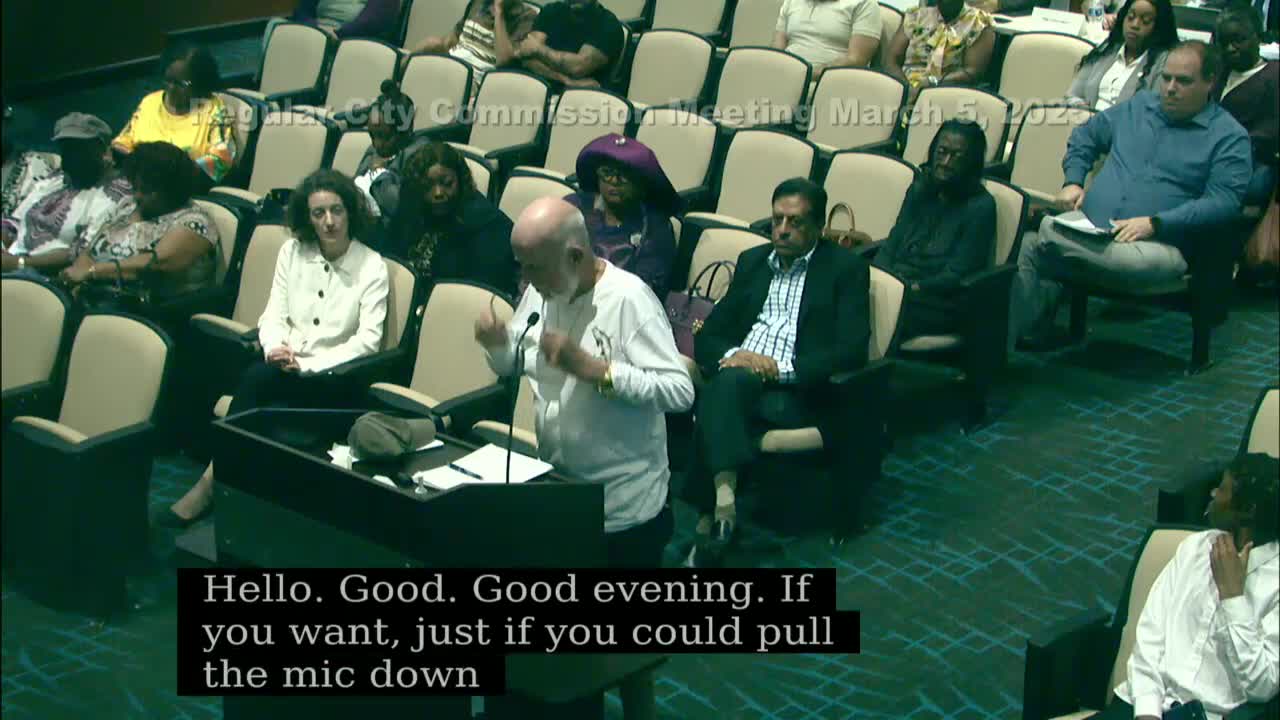
A speaker identified as Timothy said the property at 634 Southwest Tenth Street has structures put in around 1990, before then-current setback rules. He told the commission the family has spent roughly $2,300 so far on permit work and that existing fines approached “close to $700,000.” Timothy asked whether staff could help the homeowner recover funds or reduce penalties.
Mayor Joy F. Cooper and city staff described the administrative process. Cooper said there is a mitigation pathway for fines and that “the fines, once you file a permit, stop.” Acting City Manager Sandoval and staff asked director Leroy (Sustainable Development) to meet with the homeowner to discuss available programs; the mayor noted the city uses a special magistrate process for unresolved code cases.
Ending: Officials did not change code rules at the meeting but offered direct staff assistance, including referrals to sustainable development staff and the community redevelopment program to review mitigation and permit options.