Get Full Government Meeting Transcripts, Videos, & Alerts Forever!
Get email alerts on the Child Care topic
No spam. Unsubscribe anytime.
City staff brief committee on child‑care regulations as in‑home providers decline; staff consolidate resources and reengage KDHE
Summary
City planning staff reported a fall in in‑home day‑care providers since 2010, outlined how state rules (including Lexi’s Law) shape local regulation, and said staff consolidated web resources and reengaged KDHE for provider outreach.
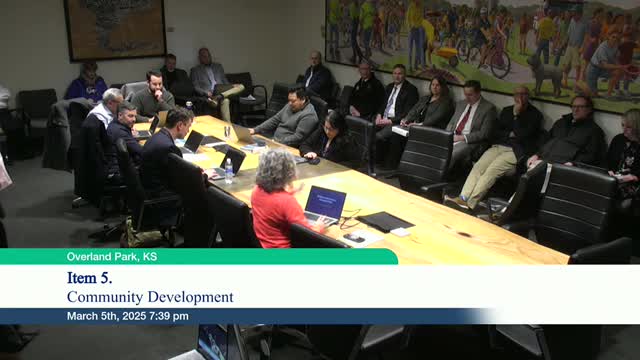
City planning staff briefed an Overland Park advisory committee on how the city regulates child‑care services, reported a decline in in‑home providers since 2010, and described short‑term steps to better support providers and share licensing information.
Leslie Carr of the city’s planning department presented an overview: the city treats commercial day‑care (generally 13 or more children) and in‑home day‑care (fewer than 12) differently. Commercial facilities are allowed as accessory uses for churches and schools and by right in office and commercial zoning; in‑home providers are allowed under home‑occupation rules. Since 2010 the city has not required a separate municipal day‑care license or a special‑use permit for in‑home care.
Carr said the state law commonly called “Lexi’s Law” and COVID are among factors correlated with a fall in in‑home providers: the city counted 214 in‑home providers in 2010 and 90 in 2024. City staff said building, fire and licensing requirements vary by facility type and rely heavily on state licensing and inspections; the City’s fire department inspects in‑home providers while the state fire marshal leads inspections for commercial facilities.
Staff also said they had implemented two recommendations from a Chamber of Commerce discussion: consolidating licensing and resource links on the city website and reengaging the Kansas Department of Health and Environment (KDHE) so the city fire department can present at KDHE’s monthly informational meetings for providers.
Committee members discussed potential policy tools, including whether to allow additional employees for in‑home operators (the city’s home‑occupation rules currently limit employees) and whether incentives — such as property tax rebates — could encourage in‑home providers. Several members noted that many licensing and safety rules (including ratios by age and overnight care rules) are set by the state and that any local initiative should coordinate with KDHE and the state fire marshal.
Why it matters: Child care availability affects workforce participation, housing affordability for provider‑operators and families’ ability to work. The city’s regulatory posture and potential incentives were discussed as local levers that could encourage more in‑home care.
What happens next: Staff will continue outreach with KDHE and the Chamber and consider follow‑up analyses and potential pilot incentives; committee members suggested inviting additional subject‑matter experts to future meetings.