Get Full Government Meeting Transcripts, Videos, & Alerts Forever!
Get email alerts on the Housing Finance topic
No spam. Unsubscribe anytime.
Grand Prairie housing finance deal will send 35% of ground-lease payments to city; dollar amount not specified
Summary
The Grand Prairie Housing Finance Corporation (HFC) will provide the city with 35% of its annual ground-lease payments for a multifamily property on Hill Street, city staff told the City Council during a public hearing and discussion.
The Grand Prairie Housing Finance Corporation (HFC) will provide the city with 35% of its annual ground-lease payments for a multifamily property on Hill Street, city staff told the City Council during a public hearing and discussion.
The HFC owns the property in fee simple while a development company, Post Hill Street LLC, owns the improvements. Julie Dozier, deputy city attorney, said the 35% payment is “in exchange for the services that the city is providing to that multifamily unit,” but she said she did not have a specific dollar figure for that share and would need to follow up.
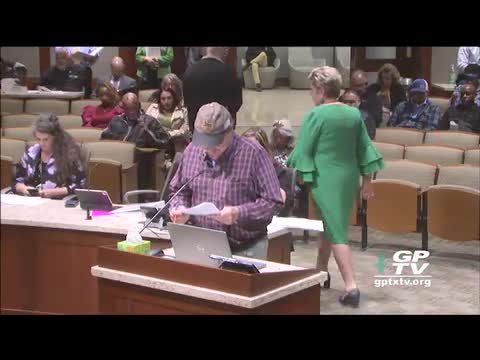
The matter drew sustained public questioning from resident Harold Willis, who asked whether the apartments pay property taxes to the city and whether the arrangement effectively removes properties from the tax rolls. City staff responded that units under the workforce-housing framework are “taken completely off of the tax rolls” and that the payments to the city vary year to year based on tax valuations. Dozier said the state’s workforce-housing structure allows certain HFC-owned properties to be exempt from local property taxes for a defined period.
Willis and other speakers pressed the council for a cumulative accounting — down to the penny — of how many properties in Grand Prairie have been acquired by HFCs and removed from the tax rolls, noting some HFCs are headquartered outside the city. Council and staff acknowledged the question and said they would attempt to provide additional detail in coming months but did not commit to a specific deadline.
Staff also said the workforce-housing option generally requires that a percentage of units be set aside for low-income households for a fixed term (staff identified a 10-year, nonrenewable period for the program), and that the Texas Department of Housing and Community Affairs (TDHCA) inspects and audits compliance with occupancy and income limits at the state level.
The item was considered as part of the consent agenda and advanced with the other consent items approved by council.
Why it matters: Council members and taxpayers sought clarity on how much revenue the city will receive from the HFC arrangement, how many properties have left the tax rolls, and what checks are in place to ensure units reserved for lower-income households are occupied as intended. Dozier said she would follow up with the requested dollar figures.