Get Full Government Meeting Transcripts, Videos, & Alerts Forever!
Get email alerts on the Education Superintendent Address topic
No spam. Unsubscribe anytime.
State Superintendent Thurmond urges shelter, housing and program investments amid wildfire impacts
Summary
State Superintendent Tony Thurmond told the Assembly Budget Subcommittee on Education Finance the state must prioritize aid for students displaced by recent fires, expand dual language programs, and pursue educator housing to address workforce shortages.
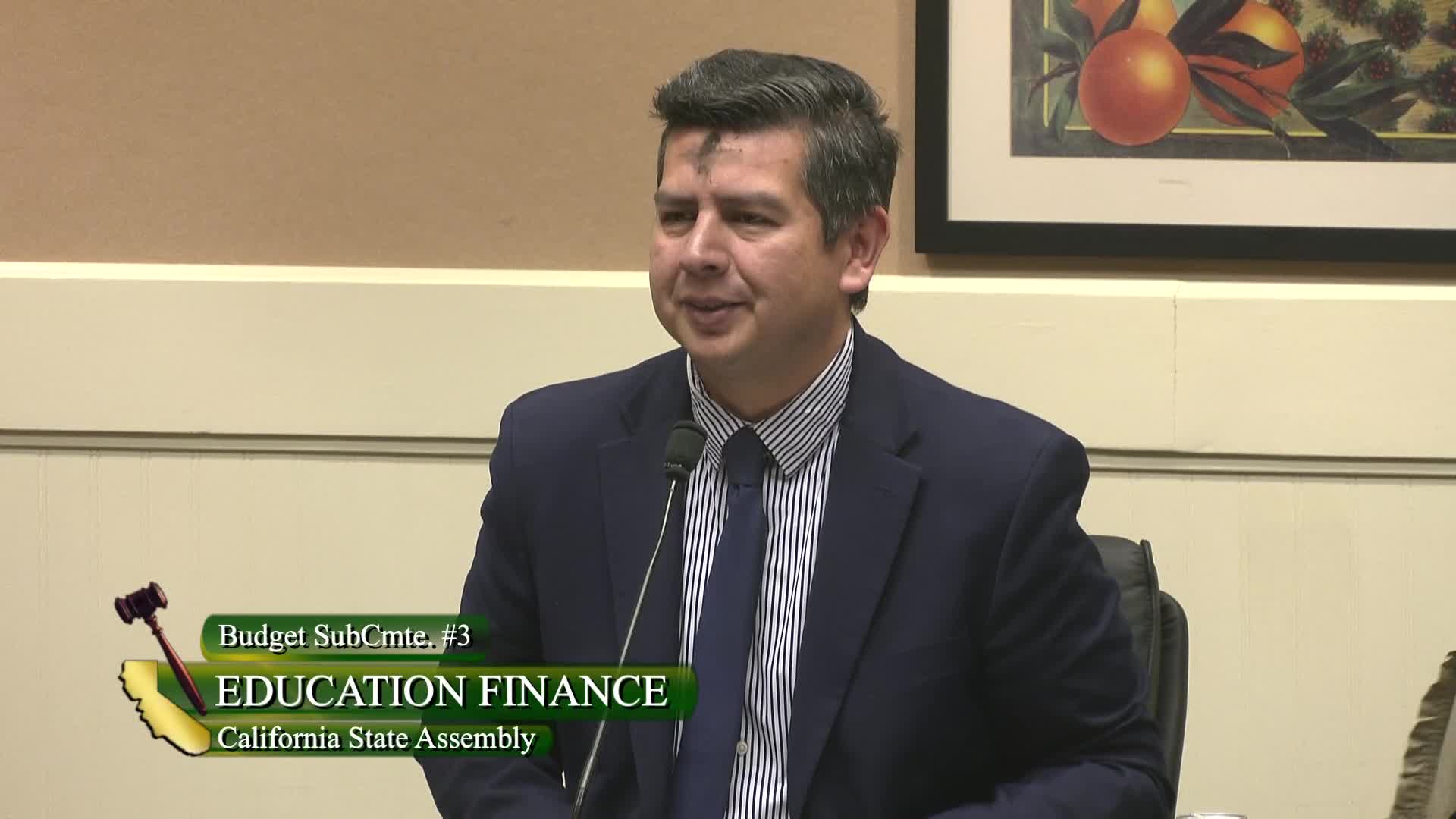
State Superintendent Tony Thurmond told the Assembly Budget Subcommittee on Education Finance on Oct. 27, 2025, that California schools continue to face disruption from wildfires and other disasters and urged targeted resources for students and educators.
Thurmond said the Department of Education has coordinated with the Office of Emergency Services and FEMA and raised private funds to help fire-affected school communities. "Just today, we're happy to announce the latest fundraising efforts with one of our nonprofit partners, supplybank.org. They've helped us raise another hundred thousand dollars for those who've been impacted by fires," Thurmond said, noting the funds will be administered through the Los Angeles County Office of Education for students who qualify as homeless under McKinney‑Vento.
He highlighted several policy priorities: fully implementing universal transitional kindergarten (TK); expanding dual language immersion programs as a strategy to boost enrollment; and addressing educator housing shortages through legislation and predevelopment funding. Thurmond described a bill the department is sponsoring, SB 502, to provide predevelopment dollars to school districts to build housing on district-owned parcels. "If every district used the parcel, built 10 to 15 units, it would get to 2,000,000 units by the year 2030," he said, framing the proposal as a way to help educators live near their workplaces and reduce long commutes.
Thurmond also raised concern about federal threats to education funding and immigration enforcement on campuses. He said the department is urging districts to treat threats to the U.S. Department of Education as contingent on congressional action and to continue educating families that schools should remain safe places for students. He noted support for a bill to limit campus immigration enforcement absent a judicial warrant.
On college affordability, Thurmond described a "pay-it-forward" idea to expand higher education access: students would attend with no upfront tuition and repay a portion after earning income, creating a revolving pool for campuses.
Why it matters: Thurmond framed these measures as responses to immediate humanitarian needs and longer-term workforce and enrollment pressures. Funding for disaster relief, supports for homeless students, and concrete actions to retain and recruit educators — particularly housing — are intended to stabilize classroom staffing and student access to instruction.
Looking ahead, Thurmond invited the committee and districts to collaborate on implementation details for TK, dual language immersion expansion and educator housing, and said the department would provide follow-up materials and webinars for districts considering program changes.