Get Full Government Meeting Transcripts, Videos, & Alerts Forever!
Get email alerts on the Worker Safety Dairy topic
No spam. Unsubscribe anytime.
UC Merced study finds gaps in dairy workplace safety; researchers recommend paid leave, testing and stronger enforcement
Summary
Researchers from the UC Merced Community and Labor Center said interviews with dairy workers showed widespread workplace noncompliance with safety standards and recommended paid sick leave for testing and treatment, expanded testing access, mandatory employer reporting of illnesses and stronger enforcement.
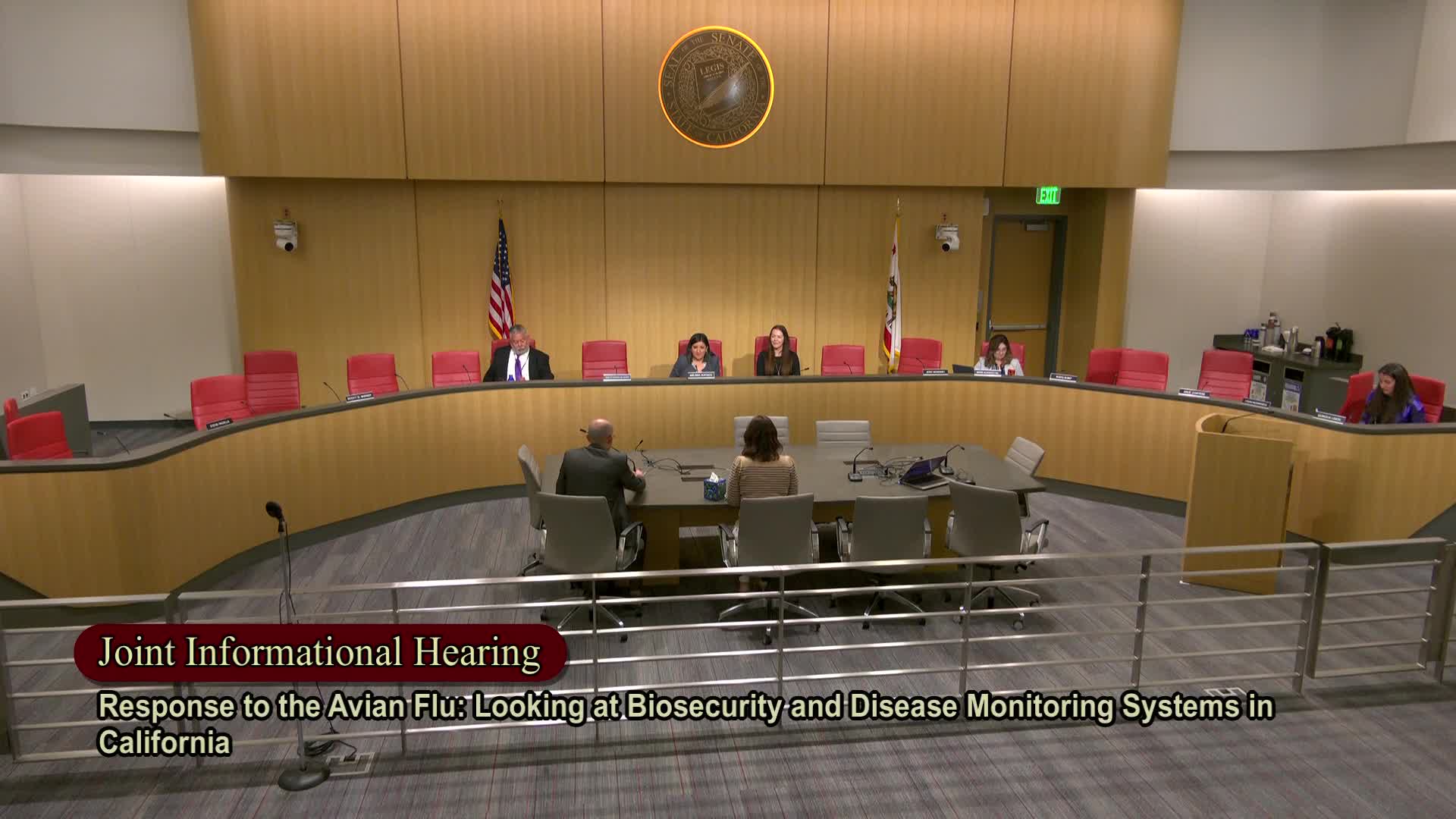
A UC Merced Community and Labor Center study presented at the Senate hearing identified workplace practices on some California dairies that the researchers said heighten risk for transmission of H5N1 from animals to workers and the wider community.
"Unless we can adequately explain why 753 dairies were positive but nationwide only 840 people had been tested, then we're not really grappling with the right questions," said Edward Flores, faculty director of the UC Merced Community and Labor Center, summarizing the group's findings.
The study (interviews conducted Oct. 2024–Jan. 2025 in Fresno, Tulare, Kings and Merced counties) identified three core themes: (1) worker reports of sanitary and safety noncompliance (inadequate breaks, lack of PPE or storage for soiled gear, lack of hand soap and potable water); (2) production pressures that deprioritize worker health (insufficient training, rushed shifts, discouragement for PPE use); and (3) economic insecurity that discourages reporting of illness (fear of job loss, burdensome sick‑leave documentation requirements).
Recent worker accounts included reports that employees sometimes ate among cattle and did not always have sanitary storage for contaminated work clothes. Some workers said supervisors discouraged PPE use and routinely deprioritized workers’ basic needs. Those conditions, Flores said, can reduce the effectiveness of other biosecurity measures.
Policy recommendations in the UC Merced brief (titled Producing Risk) included: requiring supplemental paid sick leave for testing, vaccination and monitoring; making H5 testing available to workers and their families; requiring employers to share illness information with workers, labor representatives and regulators; increasing enforcement resources for workplace health standards; using worker education to supplement public education campaigns; and prioritizing employers that meet or exceed safety standards in state procurement and subsidy awards.
Why it matters: researchers said protecting workers is integral to public‑health containment. The brief also reported that some employers did implement worker‑centred practices (training, paid sick time, PPE provision), demonstrating that change is possible, Flores added.