Get Full Government Meeting Transcripts, Videos, & Alerts Forever!
Get email alerts on the Budget Technology topic
No spam. Unsubscribe anytime.
Technology Commission unanimously forwards FY26 budget recommendations for GTOPS, device fund, public internet, training and AI upskilling
Summary
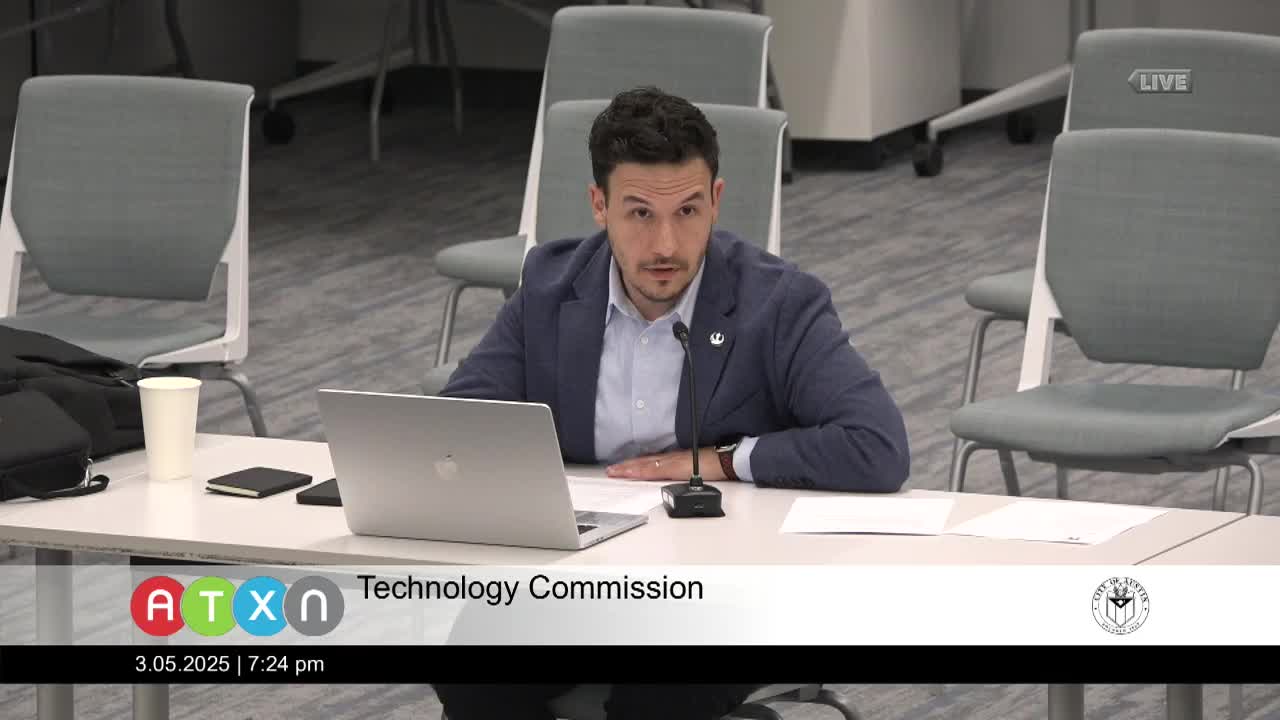
The City of Austin Technology Commission voted unanimously at its March 5 meeting to forward five FY26 budget recommendations to City Council, aimed at sustaining the city’s Grant for Technology Opportunities Program (GTOPS) and expanding device access, public internet points, community training and city employee AI upskilling.
The City of Austin Technology Commission voted unanimously at its March 5 meeting to forward five FY26 budget recommendations to City Council, aimed at sustaining the city’s Grant for Technology Opportunities Program (GTOPS) and expanding device access, public internet points, community training and city employee AI upskilling.
The commission passed each recommendation by voice vote with no recorded opposition and no abstentions. Commissioners present who participated in the votes included Chair Steven Apodaca, Commissioner Benjamin Cumbie, Commissioner Heritage (District 4), Vice Chair Carina Altarrete, Commissioner Anga (District 9) and Commissioner Rice.
Why it matters: The package combines near‑term budget priorities (maintaining GTOPS and funding AI upskilling for employees) with programmatic steps intended to address findings from a newly published Digital Equity Needs Assessment, including creating more affordable device options, more public access locations and expanded digital‑skills training for residents who face the greatest barriers to connectivity.
What the commission recommended and how it voted
- Continue GTOPS funding at $400,000 in the FY26 budget. The commission’s resolution asks City Council to maintain the program’s current funding level so the grant pathways (Core, Mini, Capacity) can continue serving local nonprofits and programs. Outcome: approved (unanimous; tally: 6 yes, 0 no, 0 abstain).
- Establish a city‑backed device distribution and repair fund (minimum recommendation $25,000) to support low‑cost device distribution, repair clinics and partnerships that reduce e‑waste; the commission asked staff to explore public‑private partnership options to multiply available dollars. Outcome: approved (unanimous; tally: 6 yes, 0 no, 0 abstain).
- Expand public Internet access. The commission recommended that City Council allocate funding to expand and enhance public Internet access citywide (public access points with extended hours, public computer labs with private telehealth spaces and charging stations, and resilient emergency response locations). The commission added language directing that new access points be aligned with community need as shown in the city’s digital‑divide mapping. Outcome: approved (unanimous; tally: 6 yes, 0 no, 0 abstain).
- Increase community digital skills funding and include device distribution as part of that investment. Commissioners discussed current contracts and device inventories and proposed additional funding to broaden reach; the commission adopted a recommendation to add resources (commission discussion recommended an illustrative combined allocation of $450,000 per year for expanded training and device distribution, described in the meeting as an increase of $150,000 above existing training dollars). Outcome: approved (unanimous; tally: 6 yes, 0 no, 0 abstain).
- Sustain and expand AI upskilling for City of Austin employees ($75,000 referenced). The commission recommended continued funding to support AI and data‑literacy training for staff to ensure proper use, explainability and safe deployment of AI tools. Outcome: approved (unanimous; tally: 6 yes, 0 no, 0 abstain).
Commission and staff context
Commissioners said they relied on the Digital Equity Needs Assessment presented earlier in the meeting when drafting the device, access and training recommendations. City staff and the economic development office participated in the discussion and told commissioners they will take the recommendations into the formal budget process, coordinate with the budget office and provide more granular cost estimates during the city’s budget calendar.
Next steps
The commission’s resolutions are advisory; City Council and the city manager’s budget office will consider them as part of the FY26 budgeting process. Staff said they will return with cost estimates and a budget calendar so commissioners can track how and when the proposals are considered by Council.
Ending note
Commissioners said they intend to continue advocacy with council members and to monitor the budget calendar closely so the commission’s recommendations are considered during final FY26 appropriations.