Get Full Government Meeting Transcripts, Videos, & Alerts Forever!
Get email alerts on the Library Funding topic
No spam. Unsubscribe anytime.
Highland reviews library fund sustainability; consultant flags need for new revenue or cuts
Summary
City staff and trustees reviewed a preliminary financial model showing the library fundcould erode under current trends. Scenarios presented range from doing nothing to doubling the levy to cover expansion and long-term operations; council asked staff for follow-up analysis and options.
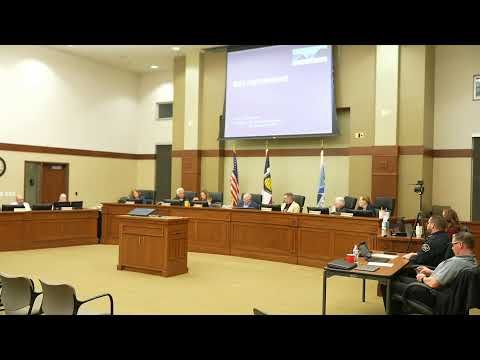
At a March 4 work session, Highland City Council members heard a financial sustainability study of the city library fund presented by an external consultant and Donna, the library director. The presentation reviewed baseline assumptions, operating shortfalls and several scenarios for funding ongoing operations, book replacement and a possible library expansion.
The consultant said the office modeled a conservative 2% annual growth in property-tax revenue for the library fund and a 2% annual increase in base operating costs. He outlined unfunded operating needs including moving a part-time collections manager to full time (roughly $40,000 annually), adding one part-time position (about $15,000), and a roughly $20,000 increase to align the director salary with comparable communities when the current director retires. For capital, the model included $61,000 in five-year phased replacement for worn books (about $12,000 per year) and about $80,000 for older, outdated titles spread over five years.
The consultant also presented a potential library expansion estimated at $2.5 million, with an assumption that $1 million could be raised through donations; the city would need to finance roughly $1.5 million. In the model the consultant used a 20-year amortization at an assumed 4 percent coupon, producing estimated annual debt service of roughly $110,000. To fund the package of added operating costs and capital, the study showed a range of tax-levy options: a scenario that blends new operating costs would require roughly a 32% increase in the library levy (presented as roughly $1.50 per month on a $1,000,000 home in the consultant's example), while adding capital and debt service roughly doubled that levy estimate to approximately $4.35 per month on a $1,000,000 home.
The director, Donna, provided context on collection age and use trends: staffing and program attendance have increased demand even as new patrons have grown only modestly, and a large share of the existing collection dates to older donations and earlier purchases. Donna told the council that about 19% of the current collection was carried over from storage and a further share came from donated materials compiled in earlier years.
Council members asked detailed questions about growth assumptions, the timing of revenue from subdivision buildout (for example Ridgeview), and how residential vs. commercial growth translates into property-tax dollars for the library levy. City finance staff said the library fund has historically received about $10,000 of net new property-tax revenue annually in recent years; consultants noted Highland's longer-term new-growth assumptions in the model were conservative compared with recent average new-roll additions. Councilors also discussed alternatives the city could use to close gaps, including phasing a levy increase, using a general-fund subsidy, or folding library budgeting into general-fund review instead of a dedicated levy.
Council members expressed general support for the library but concern about timing and public appetite for tax increases given other potential rate and fee pressures this year. Several councilors asked staff to present phased options (smaller increases phased over years), a clearer schedule tying levy timing to fiscal-year assessments, and the budget impacts of different amortization terms for debt service.
The consultant and library director said the study is preliminary and was intended to prompt further council direction. Staff said they would refine scenarios based on council feedback, provide clearer timing and homeowner-impact comparisons, and return with alternatives that could include phased increases, general-fund transfers, or a capital fundraising strategy for any expansion.