Get Full Government Meeting Transcripts, Videos, & Alerts Forever!
Get email alerts on the Worker Misclassification topic
No spam. Unsubscribe anytime.
Attorney General presses for broader authority to fight wage theft, offers amendments
Summary
Attorney General Anthony Brown told the Senate Finance Committee that Senate Bill 938 would expand the state’s ability to investigate and litigate wage theft and worker misclassification beyond construction, but that his office will offer amendments that narrow investigatory authority and preserve the labor commissioner’s autonomy.
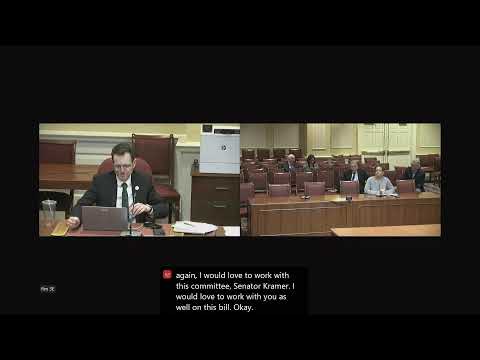
Attorney General Anthony Brown told the Senate Finance Committee on March 5 that Senate Bill 938, a priority of his office, would expand enforcement of misclassification and wage-theft laws beyond the construction and landscaping sectors and create a Worker Protection Unit in the Office of the Attorney General (OAG).
Brown said misclassification and wage theft “strip workers of fair pay, benefits, and workplace protections,” undercut law-abiding employers and cost the state in lost payroll taxes, unemployment insurance contributions and workers’ compensation funds. He urged a favorable report while previewing a set of amendments intended to address stakeholder concerns.
Why it matters: Maryland’s current Workplace Fraud Act limits some enforcement to construction and landscaping; the AG and labor advocates say misclassification is common in home health care, janitorial, hospitality and other sectors. Brown cited high-profile recoveries by other jurisdictions — including a $3.75 million DC settlement returning money to about 1,200 workers — as evidence more powerful civil enforcement tools can recover wages at scale.
Bill provisions and proposed amendments: As introduced SB 938 would (a) expand coverage to all industries, (b) create a Worker Protection Unit in the OAG to investigate and litigate wage and misclassification cases, (c) expand penalties including licensing and debarment consequences, and (d) make higher-tier contractors potentially liable for subcontractors’ misclassification. Brown and OAG staff said they will offer amendments that: (1) preserve the labor commissioner’s autonomy; (2) limit the AG’s authority so enforcement becomes complaint-driven or referral-based rather than giving OAG independent investigatory initiation in all cases; (3) refine the definition of “employee” and standards used to determine misclassification; and (4) remove or narrow some civil penalties to respond to stakeholder concerns.
Supporters and enforcement context: Labor unions, the Maryland AFL-CIO, the Building Trades Council, SEIU, LIUNA, Maryland Legal Aid and the Public Justice Center testified in favor. They argued stronger civil enforcement and general‑contractor accountability are needed to protect vulnerable workers, deter repeat offenders, and level the field for law-abiding contractors.
The Maryland Department of Labor (MDL) said it supports many of the bill’s goals — expanding general-contractor liability and stronger consequences for repeat violators — but raised technical concerns about parallel enforcement lanes and inconsistent remedies if both MDL and OAG had overlapping authorities. Commissioner Debbie Burke reported expanded enforcement activity at the department after additional “pins” (positions) funded by the General Assembly: in CY2024 the division identified 199 misclassified workers at 29 employers and recovered roughly $1 million in restitution in prevailing‑wage cases; two months into the new year staff had already identified additional misclassifications.
Opposition and concerns: Business groups including the Maryland Chamber, Associated Builders & Contractors (ABC), Associated Builders and Contractors’ members, and trade associations representing technology and “gig” platforms opposed broad expansion or expressed concern about changes to the ABC/employee tests and record‑inspection authority. Short-term concerns included (a) removal of a safe-harbor that some small subcontractors rely on; (b) extending joint-and-several liability to general contractors without procedural safeguards; and (c) broader investigative powers and data requests that could create compliance costs or expose proprietary information. TNCs and gig platforms urged the committee not to change long‑standing tests that determine employee status for tax and benefits purposes.
Committee next steps: Brown and OAG staff said they are actively negotiating amendments with stakeholders and would file them with the committee; senators pressed for the text and for more time to review changes. Several members sought clarity about impact on the gig economy (Uber/Lyft), and the AG repeatedly said the bill does not change the legal baseline for employment tests but would allow wage‑hour enforcement to reach industries the Wage Protection Act now omits.
Ending: Senators and witnesses agreed on the goals — reducing wage theft and protecting workers — but the committee reserved judgment pending the formal amendments and technical fixes OAG and MDL promised to supply for review.