Get Full Government Meeting Transcripts, Videos, & Alerts Forever!
Get email alerts on the Veto Override Bond Elections topic
No spam. Unsubscribe anytime.
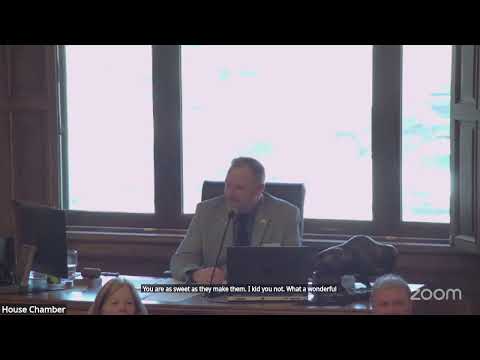
House fails to override governor’s veto of bond-election bill after extended floor debate
Summary
The Wyoming House on March 5, 2025, voted 35–27 to fail to override Governor Mark Gordon's veto of House Enrolled Act 55 (original House Bill 79), a measure that would have set turnout thresholds for validating bond elections. The vote fell short of the two-thirds majority required for an override.
The Wyoming House of Representatives on March 5, 2025, failed to override Governor Mark Gordon’s veto of House Enrolled Act 55 (original House Bill 79), a bill that would have imposed turnout thresholds for bond elections. The override motion failed 35–27; the two-thirds majority required for an override was not met.
Why it matters: The bill addressed when local bond elections would be validated based on turnout. Supporters argued the measure would force better public notice and engagement for bond issues; opponents and the governor said the provision risks disenfranchising voters and could be unconstitutional by effectively nullifying votes when turnout is low. The outcome preserves the governor’s veto and leaves the current local-election rules unchanged.
What happened on the floor - Motion and threshold: The majority floor leader moved to override the governor’s veto of House Enrolled Act 55 (HB79). The motion was debatable and required a two-thirds majority of elected members to succeed. The chief clerk called a roll for the override vote. - Final vote: 35 aye, 27 no. The presiding officer announced, "By your vote, you have failed to override the governor's veto of House Enrolled Act number 55 being original House Bill number 79." Two-thirds of the chamber (42 of 62) were required to override.
Debate highlights (direct remarks from the transcript): - Representative Larson said he would "support the governor's position" despite his earlier floor vote for the bill, arguing concerns about invalidating votes and citizens' responsibility to vote. - Representative Williams said he supported the governor’s veto, noting rural counties may face new taxing challenges and that the bill could make financing local needs harder in the wake of other enacted measures. - Representative Nicholas urged colleagues to read the governor’s veto letter and said the provision “in all probability [is] unconstitutional” and would lead to litigation. - Representative Saivar, the bill’s floor sponsor, argued for the override: "This is a bond election. The problem is the information is not getting out there... last bond election we had in this county was 4.84% — 374 people voted of 7,760 eligible. Nobody knew about it. This is gonna force the fire district or whatever special district out there to get the information out there so people can get out and vote." (transcript comments attributed to the bill sponsor on the floor.) - Representative Wharf argued in favor of overriding the veto, saying he would "prefer to assume that those that don't participate are casting a no vote" and therefore the statute should require broader turnout before validating bond elections.
Why members opposed the override Members who voted to sustain the veto raised several concerns: potential disenfranchisement when a small but active group could see their votes invalidated, legal vulnerability of the statute to constitutional challenge, and the loss of promised state-level backfill funding for hardship counties or special districts (members said earlier budget decisions removed some backfill that had been expected when the bill was first considered).
Outcome and next steps The veto stands. Members on the floor suggested alternative approaches such as improving notification and outreach for bond elections and carefully reconsidering statutory design if the Legislature wishes to revisit turnout thresholds in future sessions.
Sources: Roll-call results and floor debate as recorded in the March 5, 2025, House transcript.