Get Full Government Meeting Transcripts, Videos, & Alerts Forever!
Get email alerts on the Curriculum And Instruction topic
No spam. Unsubscribe anytime.
Board approves Bluebonnet Learning as an option for math and ELA after public comment on religious content
Summary
Following public comments raising concerns about religious content, Goose Creek CISD trustees approved Bluebonnet Learning as an option for math and English language arts; staff said the district would review and replace any explicitly religious material identified by committee review.
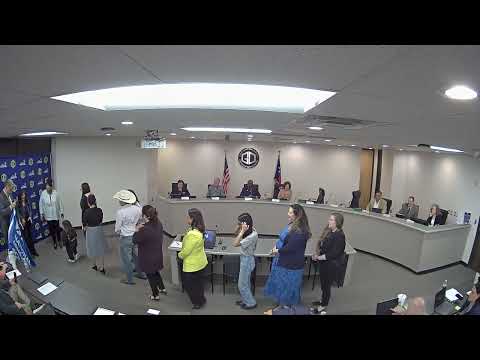
Trustees approved Bluebonnet Learning as an option for math and English language arts during the March 3 Goose Creek CISD board meeting after a period of public comment and board discussion about potential religious content in the materials.
Public comment included three speakers who addressed the board during citizens’ participation. Marga (Marge) Matthews urged adoption of a curriculum she referred to as the "bluebonnet curriculum," emphasizing literacy and character development and arguing the program is secular and focused on reading. Miss Holland also spoke in favor of the Bluebonnet Learning materials, saying the package would provide teachers with ready-made lesson plans and stronger phonics instruction. Nicholas Rice associated himself with earlier speakers and pointed trustees to the Texas Education Code, saying in part that Texas law requires public schools to teach content from both the Old and New Testaments (first referenced at 00:20:22).
Trustees discussed the specific concerns raised by speakers. Board member Miss Jackson Martinez told the board she had reviewed the Bluebonnet materials and found no broad religious proselytizing in the sections she examined but noted isolated references that merited committee review. Staff acknowledged one concrete example of concern: a hymn—"Amazing Grace"—appeared in a Bluebonnet unit. Staff said the hymn could be replaced in the district implementation if trustees and curriculum review committees determined a substitute was appropriate.
District staff told trustees the anticipated costs for materials would be covered by the district's Instructional Materials Allotment (IMA) and that printing costs were expected to be in the modest per-student range (staff estimated an additional $20 per regular general-education student for printed materials in initial calculations). Staff also said they were still confirming details for the English language arts portion and planned to proceed cautiously.
During board discussion, trustees emphasized the district's existing process for curriculum review and indicated they would use committees and transparency to address specific parental concerns. "If a parent saw some kind of passage or something they had concern with and they have an active participation, they can say, 'hey I want my child to see something different for this or I have a concern,'" staff said, noting the materials are publicly accessible.
The motion to approve Bluebonnet Learning as an option for math and English language arts passed with six trustees voting in favor and one abstention. The motion was made by Trustee Miss Guy and seconded by Trustee Mr. Renteria. Staff said procedures would be followed to remove or substitute any narrowly identified material deemed inappropriate for district classrooms.
Why it matters: the approved action makes Bluebonnet Learning an available curriculum option in the district and prompts local review procedures for materials flagged by parents or trustees. Trustees relied on curriculum staff assurances that the IMA would cover costs and that committees would address specific content concerns.
Provisions cited in the meeting included a trustee reference to Texas Education Code §28.002 during public comment, which addresses the state's academic content requirements, and staff referenced TEA guidance on instructional materials procurement.