Get Full Government Meeting Transcripts, Videos, & Alerts Forever!
Get email alerts on the Psychedelic Assisted Treatment topic
No spam. Unsubscribe anytime.
Committee advances bill to regulate psychedelic-assisted treatment and ketamine clinics
Summary
The committee advanced House Bill 717 (LC339812), proposed by the Georgia Composite Medical Board, which would establish parameters for prescribing, administering and monitoring psychedelic-assisted treatments, including ketamine; testimony said ketamine clinics in Georgia are largely unregulated and raised safety concerns.
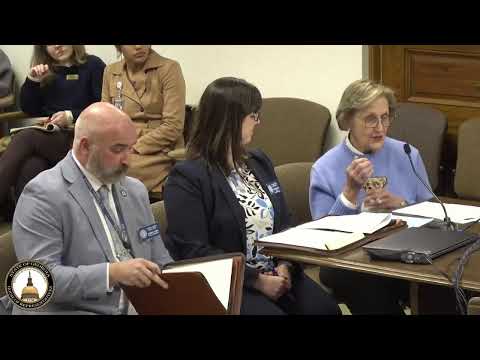
The Public Health and Community Committee heard House Bill 717 (LC339812), a bill the committee described as requested by the Georgia Composite Medical Board to establish safety parameters for psychedelic-assisted treatment and therapies, and approved it by a procedural vote.
Kimberly M., identified as deputy executive director and legal officer for the Georgia Composite Medical Board, told the committee the board sought the language to "promote safe and effective prescribing, administration, and post treatment monitoring of psychedelic assisted treatments and therapies." She said ketamine clinics in Georgia are operating without a statewide regulatory framework and that ketamine is being used off-label for psychiatric treatment.
Committee members and witnesses discussed the medical and regulatory risks of unregulated clinics. Representative Val, an anesthesia provider, told the committee ketamine is a powerful dissociative anesthetic often used in medical settings and that it requires careful post-procedure monitoring. "When we give ketamine ... we actually tell our recovery room nurses this patient got ketamine because they need to be watched for longer," Val said.
The bill defines psychedelic-assisted treatment and therapy broadly to include "psychedelic, dissociative or other related substances that have the potential to produce hallucinations or rapidly induce suggestibility in the user or profound changes in perceptions of reality or the self." The draft includes explicit carve-outs so that nothing in the section would be construed to prohibit use of psychedelic-assisted therapies in a hospital setting or in an FDA-approved clinical trial.
Witnesses described safety concerns and enforcement gaps: deputy board staff said the board does not currently have an inspection unit for clinics and is seeking additional resources in its budget request to create one. They also noted ketamine is FDA-approved as a general anesthetic but is being used off-label for psychiatric indications and is a controlled substance (Schedule III). The Drug Enforcement Administration and FDA were cited during testimony as sources describing the drug's risks.
Committee members raised options to increase oversight, including reclassifying clinic settings or requiring a higher level of facility regulation (for example, regulation similar to outpatient surgery centers) so that dispensing sites would be inspected and monitored. Staff noted that some facility classification and inspection authority resides with the Department of Community Health.
Representative Hill moved "due pass" and the committee advanced the bill by vote; the transcript records members responding "aye" and the chair saying "all in favor? Aye. All opposed?" The record does not include a roll-call tally in the transcript.
Supporters said the measure is necessary to bring consistency and safety to clinics administering powerful psychoactive substances, and to ensure proper training and post-treatment monitoring. The board's counsel and the board's deputy director urged the committee to consider the scope of substances covered and to coordinate with DEA, FDA and other state agencies when implementing inspection and oversight mechanisms.