Get Full Government Meeting Transcripts, Videos, & Alerts Forever!
Get email alerts on the Pesticide Notification topic
No spam. Unsubscribe anytime.
DPR to launch ‘Spray Days California’ pesticide-notification website March 24
Summary
The Department of Pesticide Regulation previewed Spray Days California, an online map and notification service that will post electronic notices of intent (NOIs) for restricted-material pesticide applications at a township-section (1-mile) resolution and allow residents to sign up for email or text alerts in multiple languages.
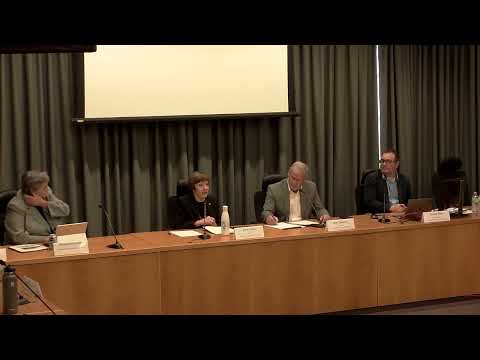
The Department of Pesticide Regulation plans to launch its Spray Days California notification system on March 24, department officials told the California Department of Food and Agriculture (CDFA) State Board. The web platform maps planned restricted-material pesticide applications at a one-mile township-section resolution and lets users sign up for e-mail or text alerts for their address and adjacent sections, officials said.
The system will display product names, active ingredients, application methods, treated acres and EPA registration numbers reported in notices of intent, Director Karen Morrison said. "The final regulation became effective February 24," Morrison said. "The regulation requires the electronic submission of notices of intent, so that DPR can access those NOIs and be able to share out the information through the Spray Days platform."
Deputy Director of Communications and Outreach Leah Bailey walked board members through a beta version during the meeting. Bailey said the system will require a public postal address (Bing Maps is the geocoding provider), show planned applications for the one-mile square containing that address and the adjacent squares, and keep an application visible in the map for a four-day window after the scheduled start time. "You will get information in advance of the pesticide application for the 1 by 1 square mile where your address is located and the adjacent sections," Bailey said.
Bailey said the system will accept sign-ups in multiple languages at launch, with manual Spanish translations in addition to an integrated translation option. Notifications will be available by e-mail and text message. Texts will provide the date, time and a link to the map; e-mails will include the same details and additional context and resources. The site will include an FAQ, community health tips and guidance on how to report pesticide incidents.
Representatives of county agricultural commissioners and pest control advisors described their roles and concerns. Lindsay Carter, executive director of the California Agricultural Commissioners and Sealers Association, said county offices ran pilot programs and helped shape the statewide system. She warned rural broadband gaps, geocoding limits for rural postal addresses and public misunderstanding about what the system includes could create extra calls to county offices. "What this system does is it's a public notification for California restricted materials," Carter said. "Not all applications happening in a county are going to be noticed in the spray day system."
Ruth Ann Anderson, president and CEO of the California Association of Pest Control Advisors, urged clearer guidance for applicators and growers on timing, exemptions and the relationship between a notice of intent (NOI) and an actual application. She noted technical solutions exist for growers to automate NOI submission through third-party farm-management software, but warned that will add costs for some growers.
DPR staff told the board it will record a demo video for the public, provide fact sheets for growers and applicators, finalize an enforcement letter to clarify implementation expectations, and run a launch event in Kern County on March 24. Post-launch outreach will include paid Spanish- and English-language marketing, radio spots and tabling at community events.
Board members asked whether the platform would be extended to nonagricultural structural fumigations or urban pesticide uses; DPR staff said the pilot and the underlying permit system cover restricted-material pesticide uses in production agriculture, and that expanding coverage would require separate rulemaking and policy work. Officials also confirmed the map shows planned (not guaranteed) applications: each NOI will populate the site, and if an application is canceled or rescheduled a subsequent NOI will repopulate the map.
Public commenters at the meeting urged DPR to include more information about integrated pest management and nonchemical alternatives on the site and to ensure the tool is not used to promote pesticide use.
DPR will return to the board as part of its regulatory reporting obligations and to collect feedback during the site’s first year of operation. The regulation requires annual reporting to the CDFA board and a three-year review after launch.