Committee advances bill imposing new penalties for service-animal fraud and expanding protections for handlers
Loading...
Summary
Representative Thomas presented a substitute to House Bill 668 (LC462001S), which the committee approved by voice vote to update and expand protections for service-animal handlers and to create fraud and penalty provisions.
Representative Thomas reintroduced House Bill 668 (LC462001S), a substitute bill that would update Georgia law on service animals, including creating penalties for misrepresenting an animal as a service dog and expanding protections for handlers.
"The statutes currently on the books in Georgia with respect to service animals and service dogs and training are extremely problematic," the sponsor told the committee, and the substitute aims to align state law with Department of Justice implementing rules for service animals.
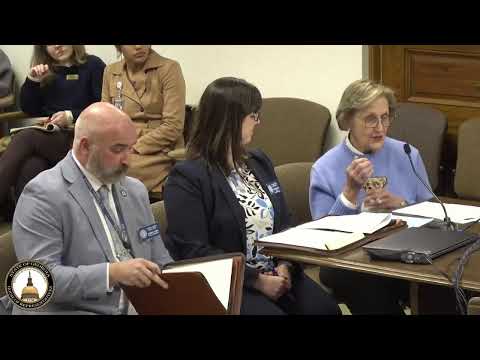
Casey Whitlet, who identified herself as a service-dog handler and owner-trainer, described why the bill matters to handlers and recounted an incident in 2019 when another dog attacked her service dog, leaving the handler's dog blind and retired from service. She told the committee that current Georgia law did not provide a path to seek charges against the other dog's handler after that attack.
The substitute contains multiple provisions as summarized by the sponsor: it updates terminology and penalties for harassment of service animals; clarifies rights to use public transit without additional fees; expands the definition of service dogs to cover a broader range of disabilities; allows owner-training of service dogs under specified guidelines and opens limited public access for dogs-in-training; strengthens housing protections by prohibiting additional fees; and creates criminal penalties for misrepresenting an animal as a service dog and for harming a service animal.
Committee members asked for specifics about penalties and about how the public or an individual would identify a service animal. The sponsor and witnesses replied that the substitute includes different penalties depending on the conduct: a misdemeanor for misrepresenting eligibility and a felony exposure for causing physical harm that renders a service animal unusable. "It's a felony on line 59 if you kill the dog or physical harm that renders the dog unusable for this purpose ... that's a felony ... no more than 5 years and a fine of $10,000," a witness stated while reviewing the draft language.
Witnesses and members discussed practical identification: federal law does not require identifying vests and only allows two permitted inquiries in many public settings—whether the animal is a service dog and what task it performs. The sponsor said many handlers use verbal warnings, stickers or patches and emphasized federal preemption limits state authority to require or maintain a central registry: "The federal law states that a service dog does not have to wear any identifying markers," a handler testified.
Committee members also discussed costs and access. Witnesses said well-trained service dogs can cost from several thousand dollars up to figures cited in testimony (handlers noted training and procurement costs that can approach $60,000 for fully trained animals, while other figures cited a lower range of $3,000–$6,000). The sponsor and witnesses said the substitute narrows qualification standards to exclude emotional-support animals from qualifying as service animals under the bill.
The committee approved the substitute to House Bill 668 by voice vote; the transcript records members answering "aye" and the chair saying "the ayes have it." The record does not contain a roll-call tally. Several members praised the bill as aligning Georgia with other states that have enacted service-animal fraud laws; witnesses said about 31 states have fraud statutes and that Georgia lacked such protections in the Southeast.
The bill as presented includes both protections for legitimate handlers and penalties for bad actors; supporters said it balances protections with federal limits on registries and identification requirements.