Get Full Government Meeting Transcripts, Videos, & Alerts Forever!
Get email alerts on the Education topic
No spam. Unsubscribe anytime.
Committee narrows student-conduct bill; HOPE suspension reduced to next semester and limited to criminal convictions
Summary
A substitute to House Bill 602 was amended to raise the bar for when a student loses state scholarship eligibility: the bill now applies only after a criminal conviction for materially and substantially disruptive conduct and limits the loss of assistance to the subsequent semester or quarter.
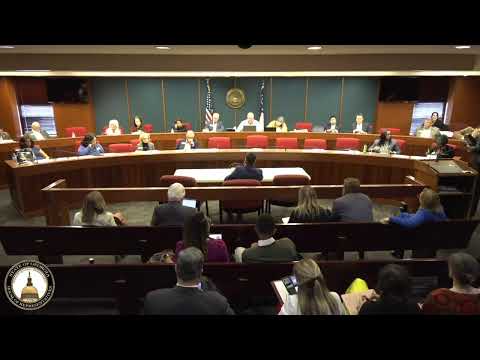
A House committee advanced a rewritten House Bill 602 that would make students convicted of certain criminal offenses on campus temporarily ineligible for state scholarship assistance, but the committee narrowed the bill and reduced the proposed penalty.
Under the substitute (LC610214S) presented to the committee, loss of scholarship eligibility would apply only when a student is convicted of a criminal offense that also is a "materially and substantially disruptive" act as defined in the bill. The substitute removed language that would have allowed campus conduct-review determinations or time/place/manner campus rules to trigger the sanction and shortened the penalty: instead of losing HOPE eligibility for up to two years, a convicted student would lose eligibility only for the subsequent semester, quarter or similar academic term.
The bill’s presenter said the changes were made in response to committee concerns. Representative Clark and other members urged additional tightening to ensure the measure targets violent criminal behavior rather than peaceful protests. Clark recommended focusing the statute on “threats of violence or threatening violence” and preserving sit-ins as a peaceful form of protest.
Representative Jenkins, who asked to speak late in the session, said he remained concerned about vesting additional disciplinary power with school administrations and urged caution given First Amendment considerations. Jenkins noted existing criminal statutes and campus administrative processes that already address disruptive or unlawful conduct.
Supporters told the committee that the substitute raises the bar for sanctioning students and that the sponsor remains open to further refinements. After debate the committee adopted the substitute and gave it a due-pass recommendation; the motion passed on a recorded count of 11 in favor and 8 opposed.
What the substitute changes
- Removes campus code-of-conduct or administrative review boards as standalone triggers for scholarship loss. - Requires a criminal conviction for a materially and substantially disruptive conduct before scholarship eligibility is suspended. - Replaces a prior two-year loss of eligibility with suspension for the subsequent academic term (semester, quarter or similar).
Committee members asked about appeals. The substitute preserves eligibility during pending appeals only in limited ways; members requested clearer language so long-running appeals would not unduly bar access to education while cases proceed.
Votes and next steps
- HB 602 (substitute LC610214S) — moved forward with a due-pass recommendation on a roll-call vote, 11–8. The author said staff will continue to work with members on final language.