Get Full Government Meeting Transcripts, Videos, & Alerts Forever!
Get email alerts on the Women Economic Security topic
No spam. Unsubscribe anytime.
New Central Ohio report finds childcare, housing and job quality hinder women's ability to build wealth
Summary
Panelists at the Columbus Metropolitan Club discussed a new report, "Making Women Wealthy and Free," based on a survey of more than 3,000 women and focus groups. Speakers cited high childcare costs, unaffordable housing, and low-quality jobs as key obstacles and urged policy and funding changes.
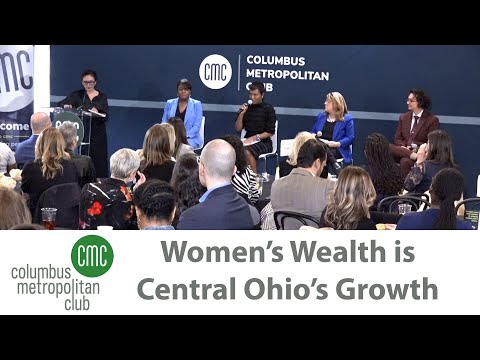
A panel at the Columbus Metropolitan Club on Wednesday discussed a new report, “Making Women Wealthy and Free,” that finds childcare costs, housing affordability and job quality are central barriers to women’s ability to build wealth in Central Ohio.
Courtney Filato, vice president and program officer of global philanthropy at JPMorgan Chase, opened the forum by reading from the report's executive summary: “Moving beyond survival and stability and toward a life of financial abundance is not just about money or income.” Filato moderated the panel and said the research covers factors that help women build wealth, the conditions that prevent it and results of having wealth.
The Center for Community Solutions conducted the research, and Alex Dorman, a research fellow there, told the audience the project combined a regionwide survey and focus groups. “We heard from over 3,000 women in a survey,” Dorman said, and added the team deliberately prioritized qualitative methods and supported focus-group participants with childcare and meals so they would “feel valued” and be more candid: “When your participants feel like they are valued, they're way more likely to engage and open up and and share their stories with you.”
Panelists described how the research linked perceptions of financial security to job quality rather than simply employment. Dorman said women in the study worked at similar rates regardless of perceived financial abundance, but those who felt less secure were more likely to hold lower-quality jobs — with inflexible schedules, inadequate health care and feelings of replaceability — and were often working multiple jobs.
Keena Smith, chief executive officer of the Women's Center for Economic Opportunity, summarized focus-group testimony from primarily African American women who were juggling entrepreneurship, paid work and caregiving responsibilities. Smith said participants emphasized asset building and homeownership as pathways to security and argued for equitable access to mainstream financial tools, noting: “Give us the tools that everybody else has, and we will rock this thing.”
Shannon Isom, president and chief executive officer of the Community Shelter Board, stressed racial and safety dimensions tied to housing and homelessness in the region, calling for policy responses rather than more programs. “Stop doing programming and let's do some policy and legislation,” Isom said, and cited data showing a disproportionate share of family-shelter heads are Black women.
Lisa Gray, president of Ohio Excels, focused on child-care costs and state policy. She said the estimated annual cost of infant center-based care in Franklin County is $14,996 — nearly 42% of the median income for single mothers in the county — and described a proposal in the current biennial state budget to cap child-care costs for low-income families at 7% of income and to expand eligibility from 145% to 160% of the federal poverty level. “This budget would cap ... the childcare costs for low income families at 7%,” Gray said, adding that the change would effectively raise take-home pay for many workers.
Panelists also discussed funding and contracting for women-led organizations. Filato and other speakers urged local funders, banks and corporate procurement officers to be more intentional in directing capital and contracts to women-led and women-of-color-led organizations and small businesses. Filato noted longstanding disparities in philanthropic funding and called for longer-term, relationship-based support.
Audience members asked how increased household resources could translate into greater political participation and community influence. Panelists recommended both direct financial support for campaigns and persistent constituent engagement — showing up at hearings, contacting legislators and building coalitions — while urging that leaders hold public officials and candidates accountable.
The panelists encouraged attendees to read the full report, available from the Women's Fund of Central Ohio and the Center for Community Solutions; Filato said the report would be launched publicly later in the afternoon and the QR code linking to the report was posted at the event. The event concluded with an audience Q&A and a call to continue policy-focused action on child care, housing and job quality.
The discussion brought researchers, funders and nonprofit leaders together to translate regional data into concrete policy priorities and funding practices that the panelists said would help more Central Ohio women accumulate assets and financial security.