Get Full Government Meeting Transcripts, Videos, & Alerts Forever!
Get email alerts on the Recovery Community Organizations topic
No spam. Unsubscribe anytime.
Committee approves bill to define and certify Recovery Community Organizations in Georgia
Summary
The Public Health and Community Committee passed a bill that defines Recovery Community Organizations (RCOs), certified peer specialists and a statewide coordinating RCO, with certification and oversight by DBHDD; the designation will be subject to appropriations.
Representative Hagan presented House Bill 675657 (LC520794) to the Public Health and Community Committee and the panel voted to pass the measure by voice vote.
The bill creates statutory definitions for "certified peer specialists," establishes certification and training protocols administered or certified by the Department of Behavioral Health and Developmental Disabilities (DBHDD), defines "recovery community organizations" (RCOs) and authorizes DBHDD to designate a statewide RCO to coordinate a network of local RCOs, subject to appropriations.
The measure, the sponsor said, is intended to provide cohesion and professionalism among Georgia's many recovery community organizations. "This bill is intended to create some language in our code that will provide some cohesion and and professionalism amongst all of our various RCOs," Representative Hagan told the committee.
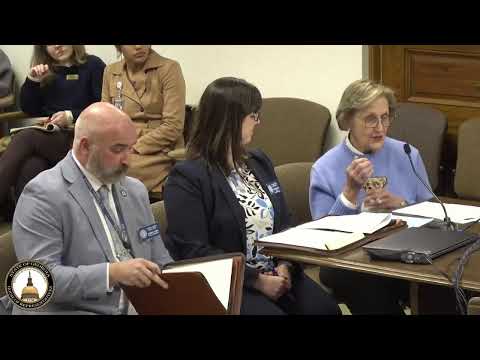
Jeffrey Love, identified in the hearing as a person in long-term recovery and a representative of the Georgia Council for Recovery, told the committee the bill does not create new certifications but protects the integrity of existing community programs. "This creates nothing new. All those certifications have been done for well over, 15 years," Love said, adding that the Georgia Council currently serves as the statewide RCO and that about 45 local RCOs operate around the state.
Lawmakers and witnesses described core features in the bill: a requirement that RCOs provide nonclinical peer support services only; a certification protocol for peer specialists and RCOs administered through DBHDD; annual recertification protocols; and a mechanism for DBHDD to designate a statewide coordinating RCO. Love said RCOs are nonprofit organizations and that the bill would not allow for-profit RCOs.
Committee members asked about certification details. Love said individuals must generally have two years in recovery to apply for certification, that there is a peer-to-peer process to handle setbacks and that DBHDD currently recertifies RCOs annually. "You have to be in recovery for 2 years, before you are accepted when you apply," Love said. He added that when a certified peer has a relapse there is a case-by-case process that can pause certification while the person works with the certifying group to restore integrity to their recovery journey.
Representative Oliver asked whether the bill creates new certifications; Hagan and Love replied the bill formalizes existing practice and does not seek Medicaid reimbursement or otherwise change clinical treatment rules. The sponsor stressed the bill's intent is to protect the public from bad actors who might falsely present as certified RCOs.
The committee passed the bill by voice vote. The clerk recorded "the ayes have it" after members answered in favor; no roll-call tally was taken or recorded in the transcript.
Implementation details such as any future penalties for misrepresentation were discussed but not added to the bill. Love and other witnesses said the language establishes definitions and a compliance mechanism, and that if enforcement gaps emerge the legislature can return later to add penalties.
The committee hearing included multiple committee members’ questions about local RCO operations, public listings of local RCOs and how DBHDD lists organizations; Love said DBHDD lists RCOs on its website and that the sponsor would work with the General Assembly Working Group on Addiction and Recovery to share that information with members.
The committee advanced the bill; its next steps and any fiscal impacts will depend on future appropriations to DBHDD if a statewide coordinating RCO is designated.