Get Full Government Meeting Transcripts, Videos, & Alerts Forever!
Get email alerts on the Gambling topic
No spam. Unsubscribe anytime.
Committee advances online sports-betting amendment; casino expansion rejected, tax hike adopted in enabling bill
Summary
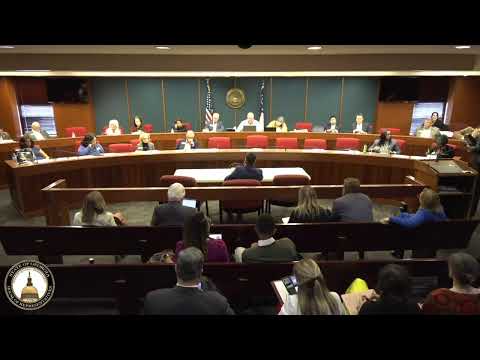
A House committee voted to put a constitutional question on the ballot to allow online sports betting and moved the enabling bill forward after adopting an amendment to raise the tax rate. An amendment to add online casino gambling failed.
A House committee voted to put a constitutional amendment on the 2026 ballot asking Georgia voters whether the state should allow online sports betting and moved related enabling legislation forward while rejecting a separate proposal to add online casino games.
The committee approved House Resolution 450, which would ask voters to permit online sports wagering only (no brick-and-mortar casinos or kiosks), with the measure directing most revenue to the state lottery fund and a remainder to responsible gambling programs.
The resolution’s author, Representative Weidower, told the committee the question would “direct the bulk of the money directly into the lottery fund, remainder going to responsible gambling.” Representative Kelly and others asked how initial allocations would be handled; Weidower said the allocation language would be finalized in the enabling legislation.
During debate, Representative Tripp offered amendment AM5585 to add online casino gambling (casino-style games playable on phones) to the ballot question so proceeds could fund universal pre-K. Tripp said the amendment’s “primary purpose would be to increase the amount of funds otherwise eligible that could go into universal pre k.” The amendment was seconded but failed on a voice vote.
The committee then took up the Georgia Sports Betting Act (House Bill 686), the enabling statute that would follow voter approval. Representative Weidower described the bill as granting a master license to the lottery, authorizing up to 16 operator licenses (some reserved for in-state teams), banning credit-card wagering, requiring two-factor authentication and prohibiting promotional activity, and setting a base privilege tax at 20 percent.
Whip Park offered an amendment (AM550087) to increase the privilege tax from 20 percent to 24 percent. Park said the change would “increase the amount of revenue going toward universal pre k under this bill by, approximately $40,000,000.” The committee adopted Park’s amendment without recorded roll-call totals and then gave the bill a due-pass recommendation to rules.
Committee members asked for revenue projections and noted the distinction between asking the public for permission (the constitutional amendment) and writing specific tax and regulatory language (the enabling bill). Representative Park said he would provide written projections; one committee member noted sports-betting-only projections of about $200 million and suggested adding casino-style games could push potential revenue “closer to about $500,000,000.”
What happened next
- AM5585 (add online casino gambling to the ballot question) — failed on a committee voice vote. - HR 450 (constitutional amendment to authorize online sports betting) — passed the committee with a due-pass recommendation to rules. - HB 686 (Georgia Sports Betting Act) — the committee adopted an amendment raising the privilege tax to 24% and recommended the bill with a due-pass.
Both the ballot question and the enabling bill would require further steps: the constitutional question must be placed on the statewide ballot and, if approved by voters, the enabling legislation would govern licensing, taxation and distribution of proceeds.