Get Full Government Meeting Transcripts, Videos, & Alerts Forever!
Get email alerts on the Police Discipline topic
No spam. Unsubscribe anytime.
Milwaukee hearing finds officer failed to get medical clearance before prisoner later died; chief ordered termination for several violations
Summary
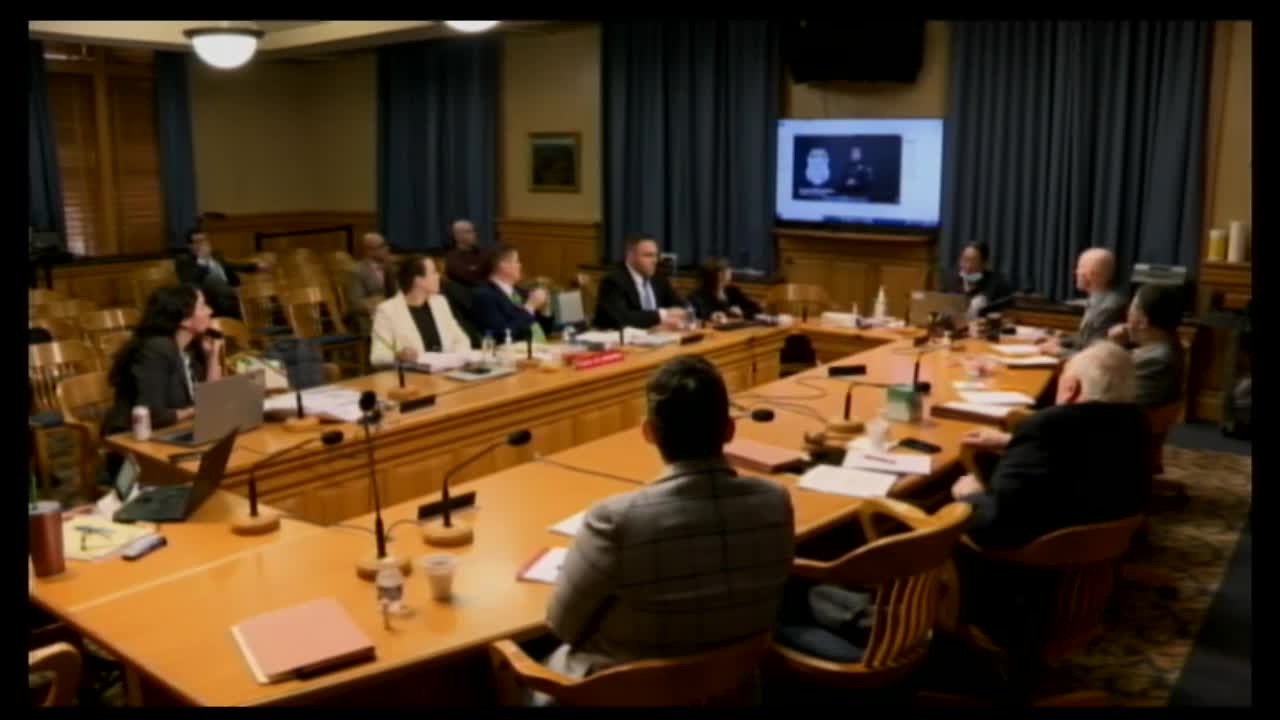
Officer Adam Maritato, a Milwaukee Police Department officer, faced a disciplinary hearing March 4 after internal affairs investigators concluded he failed to seek medical clearance and summon emergency medical services for a detainee who later died in custody.
Officer Adam Maritato, a Milwaukee Police Department officer, faced a disciplinary hearing March 4 after internal affairs investigators concluded he failed to seek medical clearance and summon emergency medical services for a detainee who later died in custody.
The hearing centered on body-worn, dash and holding‑cell surveillance video from the early morning of Feb. 23, 2022, and on Sergeant Raymond Hewitt’s internal‑affairs summary of the probe. The files show officers stopped a vehicle, arrested driver Keyshawn Thomas on a county warrant, found narcotics in and near the car and later found additional narcotics on Thomas during a secondary search at District 5. At booking, Thomas told officers he had ingested drugs; he later became unresponsive in the holding cell and was pronounced dead. Sergeant Hewitt testified the Milwaukee County medical examiner later listed the cause of death as "acute mixed drug intoxication" involving fentanyl, cocaine and methamphetamine.
Why it matters: the department’s standard operating procedures require officers to ensure that anyone believed to have ingested a controlled substance be medically cleared before booking and to activate EMS when a person is in medical distress. The internal‑affairs investigator told the commission that officers at multiple points could have sought medical care but did not do so, and that videos and witness interviews shaped the sustained charges.
Hewitt, who led the internal review, told the commission he initially opened an investigation focused on three arresting officers and later expanded it after reviewing multiple camera sources and the Milwaukee Area Investigative Team file. Reading from the SOP, Hewitt told the panel: "If a prisoner puts something in his or her mouth that the member believes may be a controlled substance, this shall constitute evidence of ingestion and the prisoner must be medically cleared prior to booking." He also described items recovered from Thomas and the lab results showing fentanyl and other drugs.
Video evidence played at the outset of the hearing included squad and body camera footage of the traffic stop, a dash‑cam and later hallway and booking‑room surveillance. The footage showed a contraband item on a squad seat after Thomas had been placed in the patrol car; officers then restrained Thomas and performed a second search, during which additional cash and narcotics were recovered from a left front pocket. The body cameras and dash camera also captured a brief exchange in which Thomas said aloud that he had "ate the little smoke I had," which investigators cited as evidence he had admitted ingesting a substance.
Maritato testified at the hearing and acknowledged he had watched his body‑worn camera during his internal interview. He told the commission he had missed some signs that, in retrospect, indicated Thomas’s condition was deteriorating. "After reviewing body cam, he did hear Mr. Thomas make that statement," Sergeant Hewitt said regarding Maritato’s PI‑21 interview summary. Maritato testified he believed he had performed a thorough search on the street and during a later secondary search, but when contraband later appeared he concluded he had missed something and conducted an additional search in the Sally Port.
Hewitt summarized the investigative findings and the chain of review. Those findings recommended sustained violations of the department’s prisoner‑booking and medical response SOPs and of the department’s code of conduct. Captain Looney later stamped the lieutenant’s cover and sustained multiple violations; the personnel order in the file shows the chief imposed discipline that included a three‑day suspension without pay for a failure to conduct a complete search incident to arrest, and discharge from the department for failures that included not immediately activating EMS and not obtaining or ensuring medical clearance or transport when the SOP required it.
Maritato told the commission he did not intend for Thomas to die, and on redirect he said, "I do believe he needed to go to the hospital and I thought that's what was going to happen." He said, with the benefit of the videos and documents, he would have summoned medical help earlier: "Just call for medical. Just get him to the hospital and go from there." Hewitt said the MATE (Milwaukee Area Investigative Team) inquiry and the medical examiner’s results were part of the evidence reviewed.
The commission paused testimony at the end of the day and kept Maritato on the witness list for further proceedings set at a later date. The hearing record includes multiple video exhibits, internal memoranda and the lieutenant and captain cover memos that led to discipline. The personnel order attached to the record lists the charges sustained and the discipline imposed by the chief, and the investigative summary references both the SOP language and the medical examiner’s cause of death.
Details and next steps: the commission scheduled continued testimony and indicated other witnesses may be called. The internal‑affairs file and the external criminal investigation (led at times by Waukesha PD and MAIT) were presented to the Milwaukee County District Attorney’s Office for charging decisions; Hewitt told the panel the DA rendered charging decisions on some officers, and MAIT’s final report was received and reviewed as part of the administrative file.
The hearing record and exhibits remain in the commission file; commission members and counsel indicated they will reconvene to complete testimony and address any remaining procedural matters before issuing a final administrative decision on the appeal and discipline.