Get Full Government Meeting Transcripts, Videos, & Alerts Forever!
Get email alerts on the Vulnerable Populations Voices topic
No spam. Unsubscribe anytime.
Commissioners, disability advocates and rural legal aid press for faster action on egress, registries, schools and language access
Summary
Advocates and state advisory officials told a joint oversight hearing that recent wildfires exposed persistent gaps in evacuation (egress), sheltering and language access that particularly endanger older adults, people with disabilities and rural limited-English populations.
Advocates and state advisory officials told a joint oversight hearing that recent wildfires exposed persistent gaps in evacuation (egress), sheltering and language access that particularly endanger older adults, people with disabilities and rural limited-English populations.
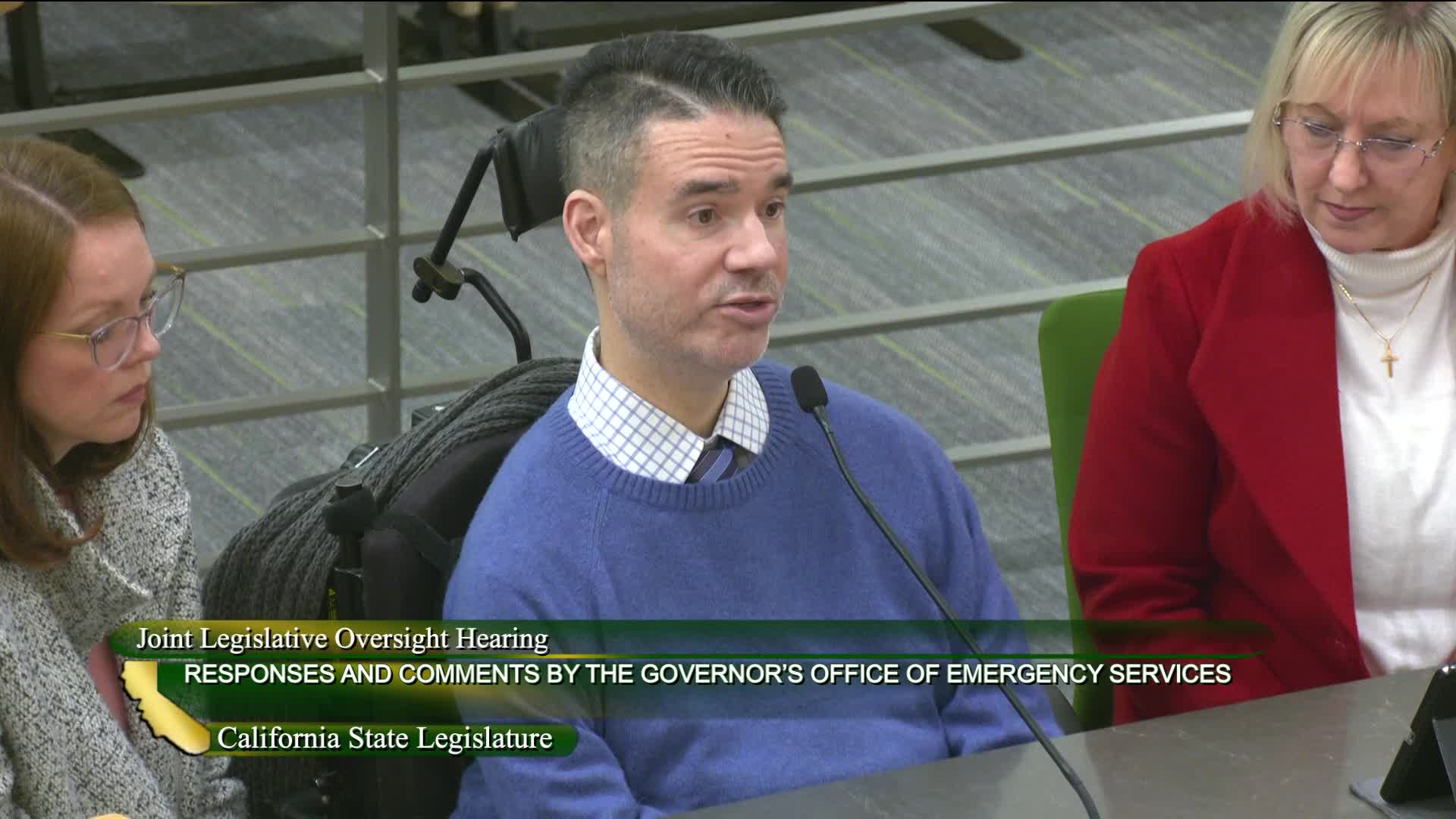
Dr. David Lindemann, chair of the California Commission on Aging, told the committee older adults are disproportionately affected by disasters because mobility limitations, dependence on powered medical equipment and isolation make evacuation and sheltering more perilous. "The initial minutes of a natural disaster can be critical to survivability," Lindemann said, noting more than 1.3 million older Californians live alone and describing shelter shortfalls for medical equipment and continuity of long-term care.
Jim Frazier, director of public policy for The Arc of California, described gaps for people with intellectual and developmental disabilities, noting special-education Individualized Education Programs and adult IPP plans often lack explicit evacuation provisions and that a registry concept has promise but needs reliability, funding and consistent local adoption. Frazier urged mandated planning in schools and better funding to convert guidance into practice.
Noe Paramo, project director at the California Rural Legal Assistance Foundation, focused on rural farmworker communities and language access. Citing a 2025 Stanislaus-Obispo study, he said 69% of some rural areas speak a language other than English (Spanish dominant, Mixtec and other indigenous languages common) and reported that technology barriers, low literacy and absence of linguistically competent support at emergency centers reduce access to shelter, relief and benefits. Paramo highlighted Cal OES's Listos California program as a useful statewide outreach model and urged its expansion and local partnerships with community-based organizations.
Panelists and lawmakers emphasized egress and pre-positioning: multiple members noted retirement communities and other areas with single-route exits present acute egress problems and asked for mandatory local registries, pretranslated prescripted alerts, stronger county-state redundancies and transportation surge agreements among neighboring jurisdictions.
Ending: Witnesses asked the legislature to fund implementation—training, registries, accessibility at shelters, school evacuation planning, multilingual outreach and local capacity building—and to ensure that statutory changes translate into operational tools for vulnerable residents during future disasters.