
Ocean Protection Council and Coastal Conservancy outline phased Prop 4 rollout for sea-level rise and coastal resilience
Get AI-powered insights, summaries, and transcripts
Subscribe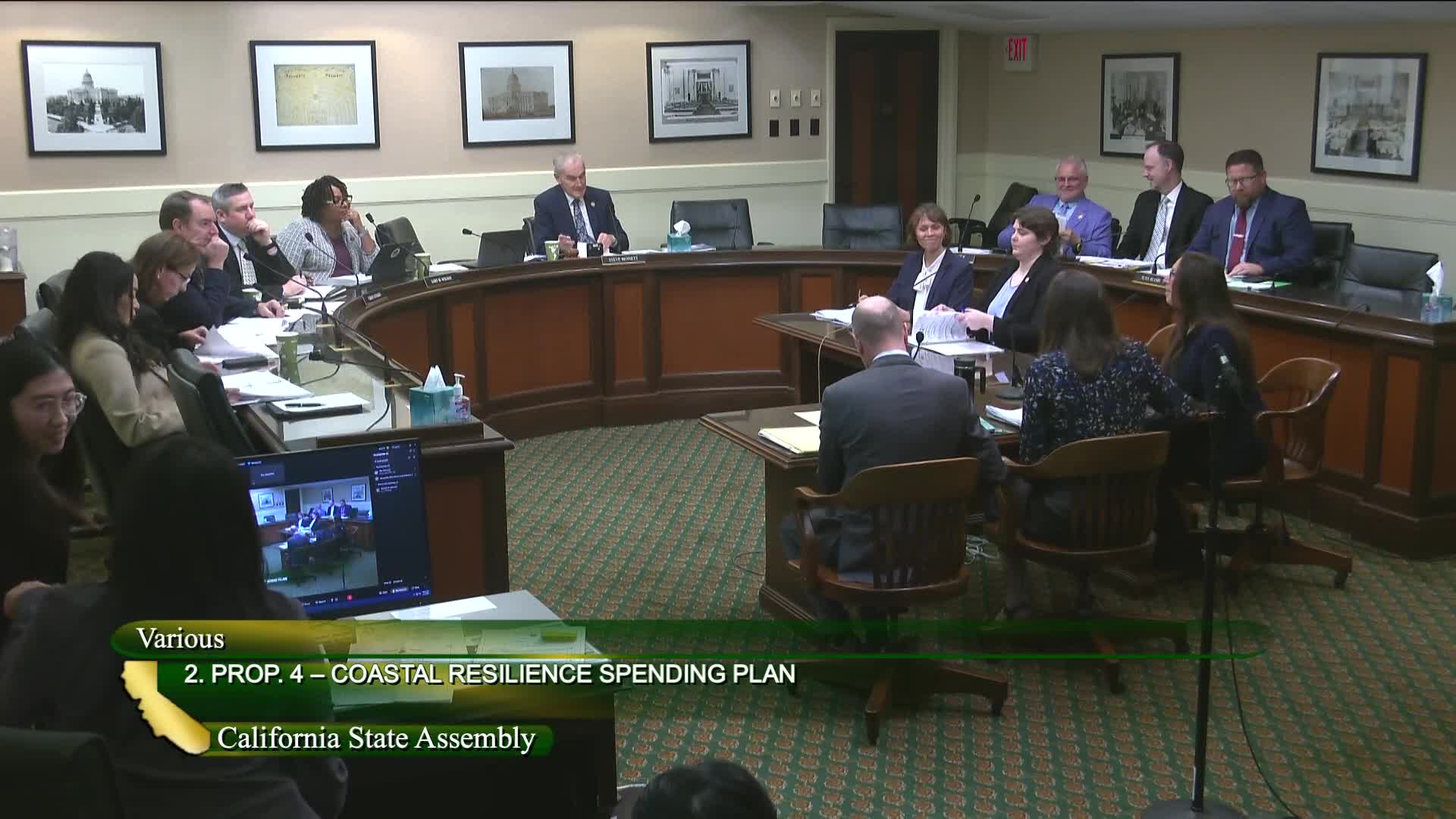
Summary
Witnesses from the Ocean Protection Council and the California Coastal Conservancy described multi-year spending plans for Prop 4 coastal allocations, emphasizing grant programs for local adaptation, kelp initiatives and San Francisco Bay projects while urging staged appropriations tied to staffing and project readiness.
The subcommittee heard administration witnesses from the Ocean Protection Council (OPC) and California Coastal Conservancy describe how Proposition 4 funding for coastal resilience would be phased.
Caitlin Kalua (deputy director, OPC) summarized OPC—s allocations under the bond: $135 million for marine and coastal ecosystem work and $75 million for a program to implement sea-level-rise mitigation and adaptation via the agency—s SB 1 sea-level-rise grant program. "The proposed budget from the prop 4 funds is 7.5 to the Ocean Protection Council, which reflects these needed investments over the next 2 years," Kalua said, and noted OPC would pair Prop 4 funds with greenhouse-gas reduction and Proposition 68 money already directed to coastal projects.
Amy Hutzel of the Coastal Conservancy described the Conservancy—s portion: combined coastal and flood management has $350 million in bond language; coastal resilience totals $415 million overall, with $85 million specifically for San Francisco Bay. The Conservancy said it planned a staged rollout, obligating about 10 percent of the total in FY 25/26 and accelerating funds later as projects become shovel-ready. Hutzel emphasized use of strategic plans and regional guidance to prioritize multi-benefit projects, wetlands and baylands restoration, public access, and projects incorporating nature-based features.
Lawmakers asked for clarity on timing and monitoring. LAO told the committee the administration—s slower initial rollout "reflect appropriate considerations about staffing capacity, project readiness, and the availability of existing funds." Several members urged quicker action where regional plans and ready projects exist (for example, San Francisco Bay wetlands restoration and the South San Francisco Bay Shoreline project).
Why it matters: coastal counties and the Bay Area face accelerating sea-level rise, flooding and habitat loss; Prop 4—s coastal dollars support planning and construction of adaptation and habitat-restoration projects that local governments and regional collaboratives will implement.
Next steps: OPC and the Conservancy will provide guidelines and grant notices, deploy a technical-assistance program with upcoming solicitations, and coordinate with Parks, Fish and Wildlife, and regional partners to leverage federal matching funds when available.