Get Full Government Meeting Transcripts, Videos, & Alerts Forever!
Get email alerts on the Healthcare Safety topic
No spam. Unsubscribe anytime.
Committee hears discussion-only bill to make hospitals drug-free zones; members raise concerns about emergency care and treatment access
Summary
The House Judiciary Committee heard House Bill 320 on Thursday, a discussion-only bill that would create drug-free zones on hospital campuses and increase penalties for trafficking and possession on hospital property.
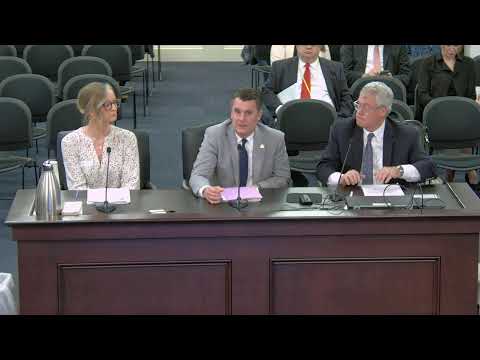
House Bill 320, a discussion-only proposal to create designated drug-free zones for hospitals and enhance penalties for possession and trafficking on hospital campuses, was the subject of an extended hearing Thursday before the House Judiciary Committee.
Representative Mike Clines, the bill sponsor, said the proposal would mirror school drug-free zone law and create a new enhanced criminal penalty for trafficking on hospital grounds while modestly increasing penalties for possession in that setting. Kelly Donnelly, a nurse at St. Elizabeth Healthcare, described multiple incidents in which staff discovered illicit drugs in patients’ belongings and on hospital property, and she said those episodes led her to bring the idea to the sponsor.
Witnesses and committee members focused most of their questions on how the bill would apply to patients who arrive incapacitated or to individuals legitimately possessing prescription medications for personal use. Several representatives urged narrower language and clearer exemptions so that patients seeking care, individuals with lawfully prescribed medications and patients turning over medications at intake would not face unintended prosecution.
Scott West of the Kentucky Association of Criminal Defense Lawyers suggested a targeted change: make enhanced penalties apply to persons who intentionally introduce or conceal unlawfully possessed drugs on a hospital campus, which he said would exclude incapacitated patients arriving for emergency care. Representatives also raised concerns about treatment populations in chemical-dependency facilities and the possibility that someone smuggling contraband into a rehab campus could create criminal exposure for recovering patients.
Supporters — including hospital security and some nursing witnesses — said the bill’s goal is to protect staff and patients from active trafficking and on-campus drug sales. Representative Williams, who cited experience in law enforcement and hospital security, said he saw active selling and use on hospital property and supported the bill with possible technical fixes. Several members asked the sponsor to tighten definitions and limits before the proposal moves further; the hearing concluded as a discussion-only presentation with no committee vote recorded.