Get Full Government Meeting Transcripts, Videos, & Alerts Forever!
Get email alerts on the Privacy Data Protection topic
No spam. Unsubscribe anytime.
Committee advances bill letting judges and certain records request limits on public data; hospitals raise questions
Summary
The House Judiciary Committee voted Thursday to advance House Bill 662, which would let judges ask state entities to withhold certain personal identifying information and would limit the public release of some identifiers on medical review paperwork, sponsors said.
The House Judiciary Committee on Thursday passed House Bill 662, a bill sponsors described as intended to limit public disclosure of personally identifiable information for judges and to remove identifying numbers from certain medical examiner-related records.
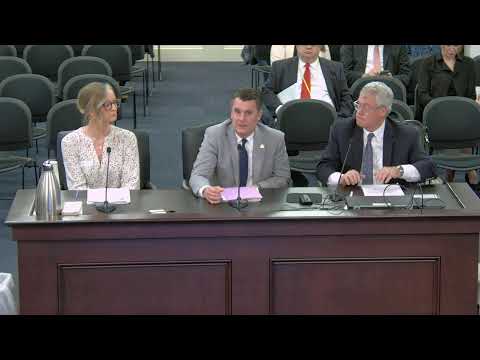
Representative John Blanton, the bill sponsor, told the committee the measure allows judges to petition state government entities (for example, motor vehicle or voting records) to withhold personal contact information and said the request would be void if a judge then posts the information publicly. Blanton also outlined a provision to remove identifying numbers — which he described as a DEA number in testimony — from medical examiner paperwork used during insurer reviews, and he said he intends to work on floor language to ensure hospitals retain access to needed information for appeals.
Hospital and provider representatives said they support protections for publicly available information but asked for clearer language to preserve provider-to-provider communications used in appeals and peer review. Corey Meadows, deputy executive vice president and director of advocacy for the Kentucky Medical Association, said the association accepts the sponsor’s commitment to craft a floor amendment ensuring providers retain access to the information they need for appeals.
Representatives asked whether the bill would impede appeals or administrative processes; sponsors and witnesses said the intent is to protect public-facing disclosures while preserving provider-facing communications. Representative Burke registered a pass vote and explained he supported part of the bill and planned to work with sponsors on improving later sections. The clerk recorded 15 yes votes, zero no votes and one pass; the committee reported that House Bill 662 passed.