Get Full Government Meeting Transcripts, Videos, & Alerts Forever!
Get email alerts on the Air Monitoring topic
No spam. Unsubscribe anytime.
Natural resources committee approves bill narrowing admissible air monitoring in enforcement proceedings
Summary
The Kentucky Legislature Natural Resources Committee approved House Bill 137, which would require air pollution enforcement to rely on EPA-approved or scientifically defensible monitoring methods; environmental groups warned the change could exclude community monitoring and conflict with the Clean Air Act.
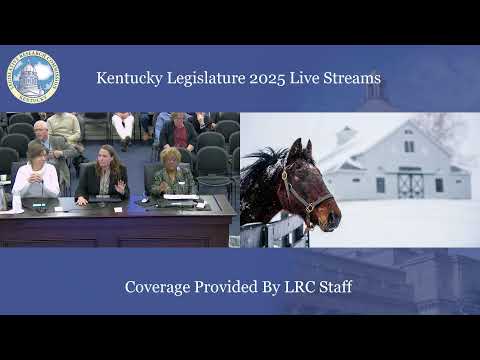
FRANKFORT, Ky. — The Kentucky Legislature Natural Resources Committee voted to approve House Bill 137 after a committee hearing in which industry representatives said the measure would ensure reliable data in air pollution enforcement and environmental groups warned it could bar community-collected data and conflict with federal law.
Rusty Chris, with the law firm Dinsmore & Shohl speaking on behalf of the Kentucky Association of Manufacturers, told the committee that “environmental compliance is a top priority” for manufacturers and that “we want to make sure that, when any evidence is used against us, it's based on data and monitoring methods that meet EPA approved guidelines and also produce scientifically defensible and quality assured data.”
The bill, as discussed in the hearing, would require that enforcement actions taken by the Energy and Environment Cabinet or the Louisville Metro Air Pollution Control District rely on monitoring methods approved by the Environmental Protection Agency or on methods that produce scientifically defensible, quality-assured data.
Audrey Ernstberger of the Kentucky Resources Council, which provides environmental legal services, opposed the bill. She said the measure “appears to prohibit consideration of any data collected by a method specified in an enforcement proceeding initiated by APCD, a control officer, or a private citizen,” and that such a restriction would be “in direct conflict with the Clean Air Act, which allows the use of any credible evidence for enforcement purposes.” Ernstberger cited the Clean Air Act’s provisions (identified in testimony as section 113a and section 113e) and the EPA’s credible-evidence rule in arguing the bill could prevent state agencies from fully implementing federal requirements.
Arnitta Gadsden, executive director of the West Jefferson County Community Task Force and state and local NAACP chair for environmental issues, said the bill would “eliminate the use of some lower cost air quality monitors that are used by community groups and requires the agencies to ignore the lived experience of community members.” Ernstberger added that community monitoring often “fills the gaps” left by government monitors and can identify local pollution “hot spots.”
Catherine Hargraves, who described a long career at what used to be the Natural Resources and Environmental Protection Cabinet, urged caution about the bill’s wording. She said the bill’s title and drafting could limit the agencies’ enforcement authority and noted that resident testimony — for example, a parent reporting strong ammonia odors affecting a child with asthma — could be rendered inadmissible under a too-narrow evidentiary definition.
Senators questioned how the evidentiary rules would work in practice. Senator Vernie Elkins asked whether subjective or “very unscientific” methods would qualify as credible evidence; Ernstberger said the Clean Air Act and EPA interpretations permit a range of relevant information and that there is a place for data that are not EPA-monitor-class but nonetheless probative. Several senators and witnesses referred to legal standards that can exclude poor-quality evidence in adjudications, including the Daubert standard for scientific evidence in court proceedings, while noting administrative hearings can consider evidence for its probative value.
Ernstberger cited agency enforcement statistics during testimony, saying the Kentucky Air Pollution Control District’s penalties last year totaled $253,250 across 14 enforcement actions and that, by her calculation, that averages roughly $3,800 per penalty; she raised that figure in arguing penalties may not be large enough, compared with health costs, to deter violations.
After public testimony and questions, the committee called the roll. Senators Boswell, Carpenter, Elkins, Girdler, Maiden, Mills, Wheeler, Williams and committee Chair Smith recorded votes of “aye”; Senator Herron recorded “no.” The committee chair announced the bill “passes” and was approved favorable by the committee.
The measure was advanced by the committee; the hearing record shows testimony and questions but the transcript does not list a next-floor assignment or calendar date.