Get Full Government Meeting Transcripts, Videos, & Alerts Forever!
Get email alerts on the Military Facilities Funding topic
No spam. Unsubscribe anytime.
Committee recommends raising armory bonding cap to $45 million to match rising construction costs
Summary
The division recommended re-referral of House File 14 43 to the general register to increase the Minnesota State Armory Building Commission bonding limit from $15 million to $45 million to help fund new and renovated armories amid rising construction costs.
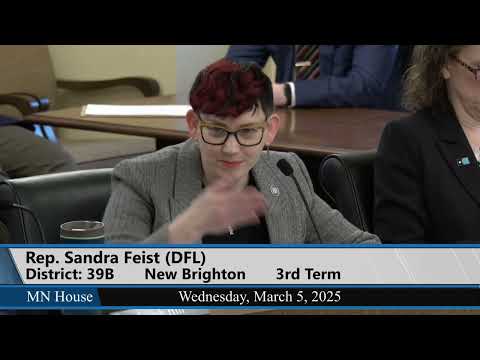
The House Veterans and Military Affairs Division on March 5 recommended re-referral of House File 14 43 to the general register, a departmental bill that would raise the Minnesota State Armory Building Commission’s bonding limit from $15,000,000 to $45,000,000.
Vice Chair Erik Olsen moved the bill and said the change is intended to allow the Department of Military Affairs and the Minnesota State Armory Building Commission (MSABC) to fund construction and modernization of armories and related facilities. “This number has not been increased since February,” Olsen said, describing the proposed increase as necessary because construction costs have grown.
Major General Shawn Manske (Adjutant General of the Minnesota National Guard) testified in support and provided historical and project examples, saying state cost shares vary by project and describing the Anoka armory as a near-term priority. “We think it's going to cost close to $926 a square foot,” Manske said when discussing projected construction costs for the Anoka facility, while noting prior armories cost far less per square foot in earlier projects.
Don Kerr, executive director of the Department of Military Affairs, added that the bill mainly updates a numeric limit in statute but does not change the state’s overall debt service or capital investment limits because the armory commission’s bonding authority is separate.
Committee members asked questions about the statutory structure that gives the MSABC authority to bond and about whether similar authorities exist elsewhere in state government. A staff member explained the MSABC is a statutory corporation chaired by the Adjutant General; the mechanism lets the commission time state matches to federal funds and provides legislative oversight over the commission’s bonding authority.
After questions and brief remarks emphasizing the National Guard’s readiness needs, the division voice-voted to recommend re-referral of the bill to the general register.