Get Full Government Meeting Transcripts, Videos, & Alerts Forever!
Get email alerts on the Medicaid Managed Care Reform topic
No spam. Unsubscribe anytime.
Senator Marty presents bill to replace Medicaid managed care with direct provider payments
Summary
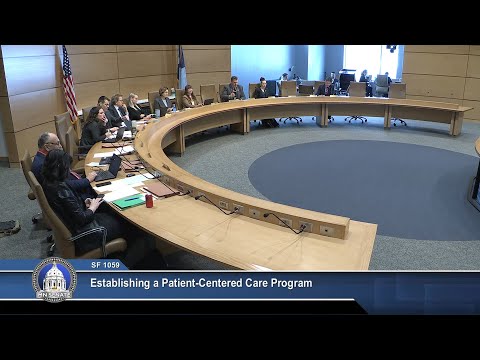
Senate File 1059, presented to the Health and Human Services Finance and Policy Committee, would end use of managed care organizations for Medicaid and MinnesotaCare and pay clinics and providers directly while funding primary-care coordination and community outreach from savings. The committee laid the bill over for further study.
Senator Marty presented Senate File 1059, a proposal he labeled “patient-centered care,” to the Health and Human Services Finance and Policy Committee, arguing the bill would end the state's managed-care contracts for Medicaid and MinnesotaCare and instead pay clinics, providers and hospitals directly for services while adding modest monthly care-coordination payments to primary-care providers.
The bill's author told the committee the plan would continue county-based purchasing in counties that already use it, let other counties choose whether to participate, and direct some savings toward community outreach and hiring community health workers. "We would not renew managed-care contracts when they expire," Senator Marty said during his presentation. He asked the Department of Human Services to consider the proposal as one alternate delivery model in a statutorily directed review due to the Legislature next year.
Why it matters: Marty said the managed-care middleman is costly and can delay or deny care through prior authorization and narrow networks. He cited an article reporting large earnings by nonprofit health plans on public programs and argued simplifying payments could reduce administrative waste and improve access. Supporters and opponents disagreed sharply on whether replacing managed care would improve outcomes or reduce costs.
Supporters' testimony: Sonia Batauldin, a nurse midwife with three decades of community practice, described how frequent plan changes and complex PMAP (prepaid medical assistance program) rules create gaps in care and consume clinic staff time. "As proposed in Senator Marty's bill, if we could take some of the repurposed dollars from PMAP spending and direct them to the boots on the ground community health workers and health navigators in the clinic, Minnesotans could receive much more valuable support at the point of care," Batauldin said, describing examples including medication gaps, disrupted prenatal care and staff time spent on prior authorizations.
Opposition and caution: Chelsea Olsen of the Minnesota Council of Health Plans and Joel Uland, vice president of public affairs at UCare, urged caution. Olsen said the Department of Human Services is studying alternate delivery models and the committee should wait for that report, due Jan. 15, 2026. Uland said Minnesota's nonprofit managed-care model includes financial controls and community investments that would be hard to replicate. He noted statutory limits on managed-care administrative expenses and ongoing audits and monitoring by state and federal entities.
Committee discussion and next steps: Committee members voiced a range of concerns, including whether DHS could scale to administer direct payments for more than a million enrollees, how savings would be realized and distributed, and the potential effect on county-based purchasing models. Multiple senators said they support further study rather than immediate action. The chair laid Senate File 1059 over for continued consideration and noted DHS's ongoing vendor study of alternative models.
Ending note: The bill was presented for discussion and placed on hold; no final vote on adoption or referrals occurred during the hearing. The author urged DHS to include this proposal among the alternative models the department is required to examine.